Birds in black and white
Colour is noisy. A bird photograph is often a contest between the bird and everything around it: green leaves, blue sky, bright flowers. Taking the colour away quiets all of that, and what is left is the thing I wanted to look at in the first place: the pattern on a vulture’s wings, the sheen on a crow, the mottled feathers on a young eagle, the shape of a pelican’s bill. Every animal has details that make it unique, and black and white lets me see them. Here are nine black and white bird photographs from the past year.
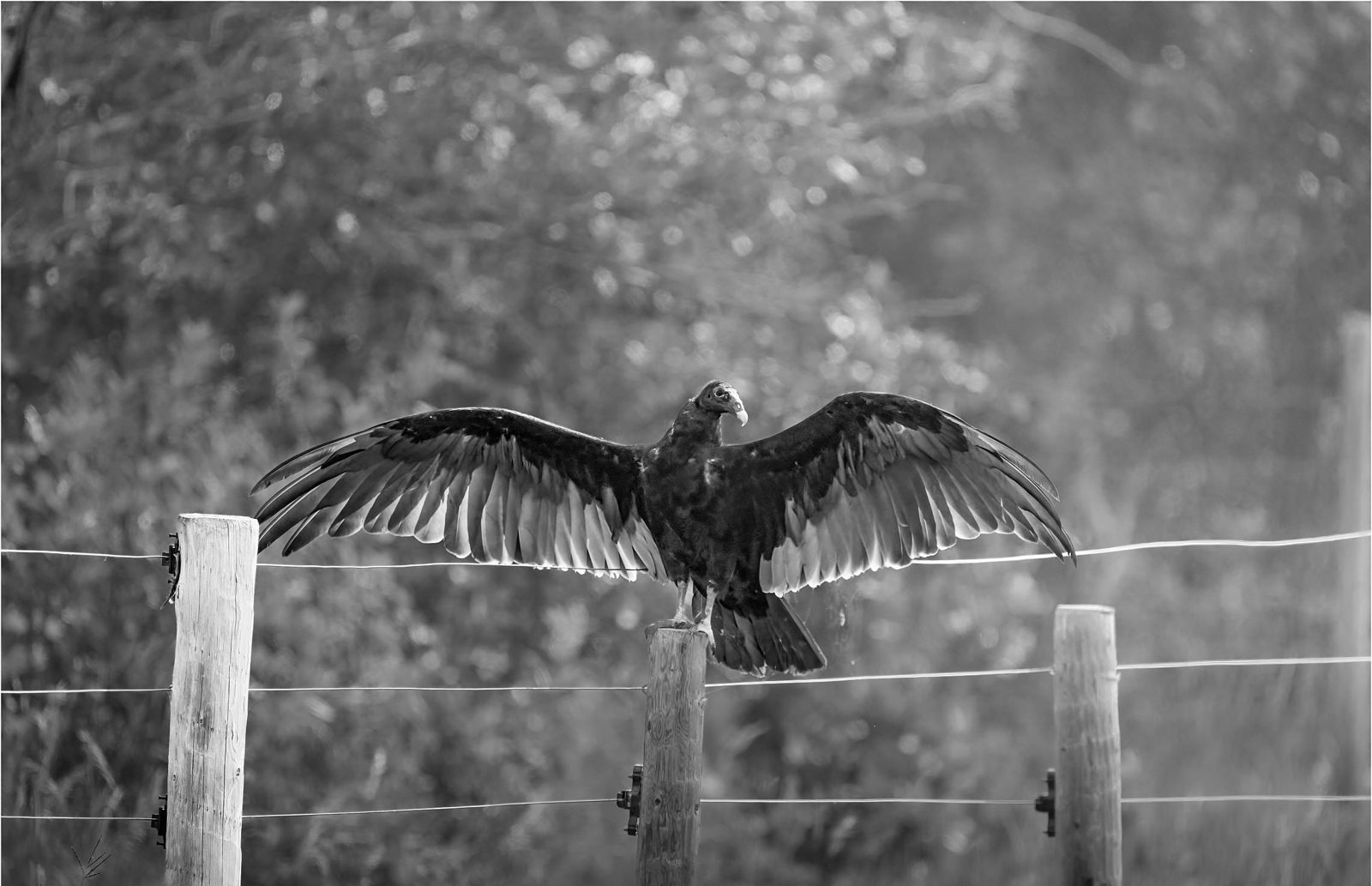
In colour this is a dark bird against a busy green hedge. Without it, the eye goes straight to the wings: dark leading edges, pale flight feathers, and every feather edge separate and sharp. Vultures stand like this to dry off and warm up, and turkey vultures spend the summer in southern Manitoba before heading south in the fall.
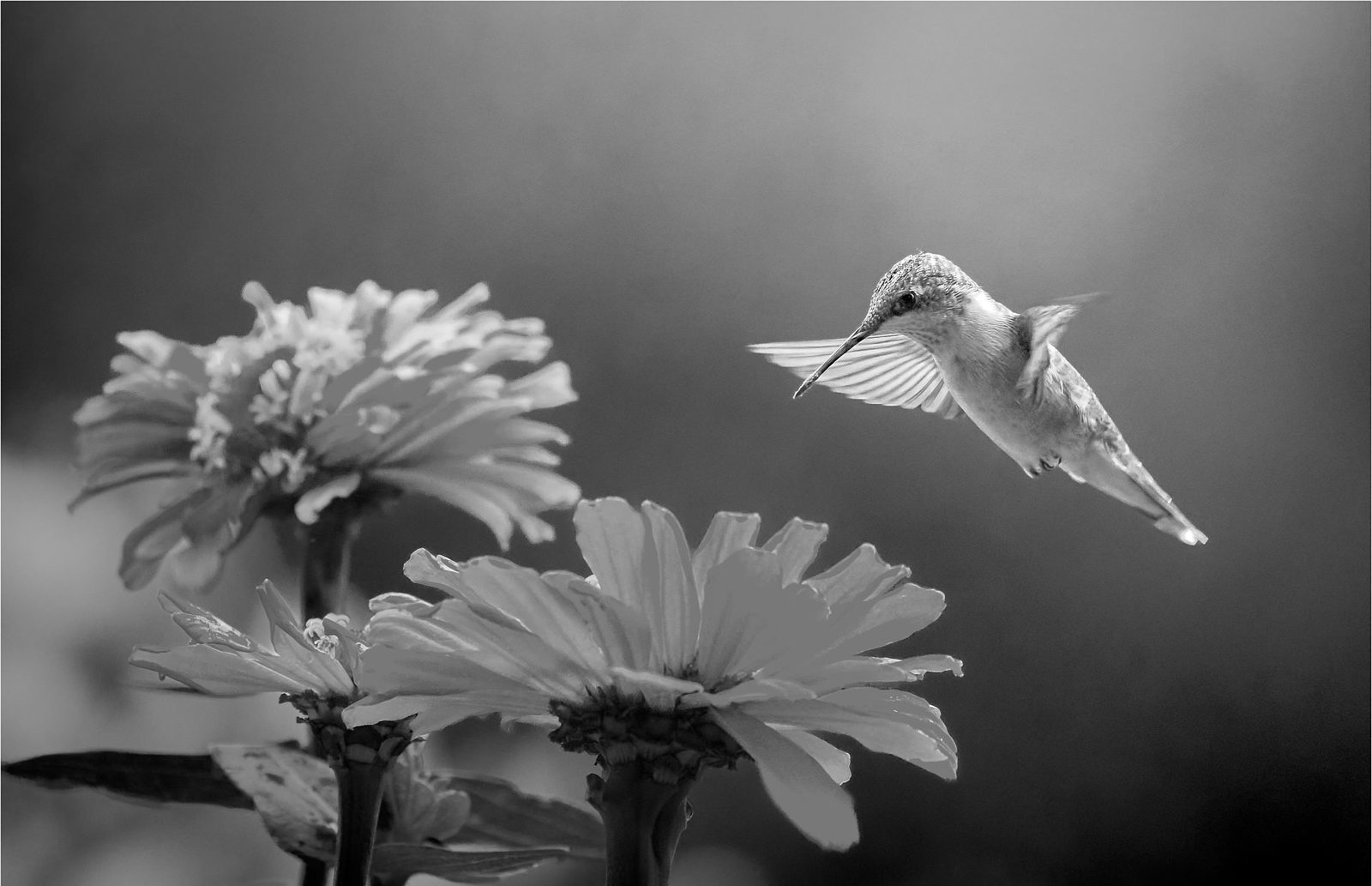
The flowers would steal this picture in colour. In black and white they fall back into soft tones and the hummingbird takes over: the thin bill, the blur of the wing, and the small, tilted body hanging in the air. Ruby-throated hummingbirds reach Manitoba in May and are usually gone by the start of September.
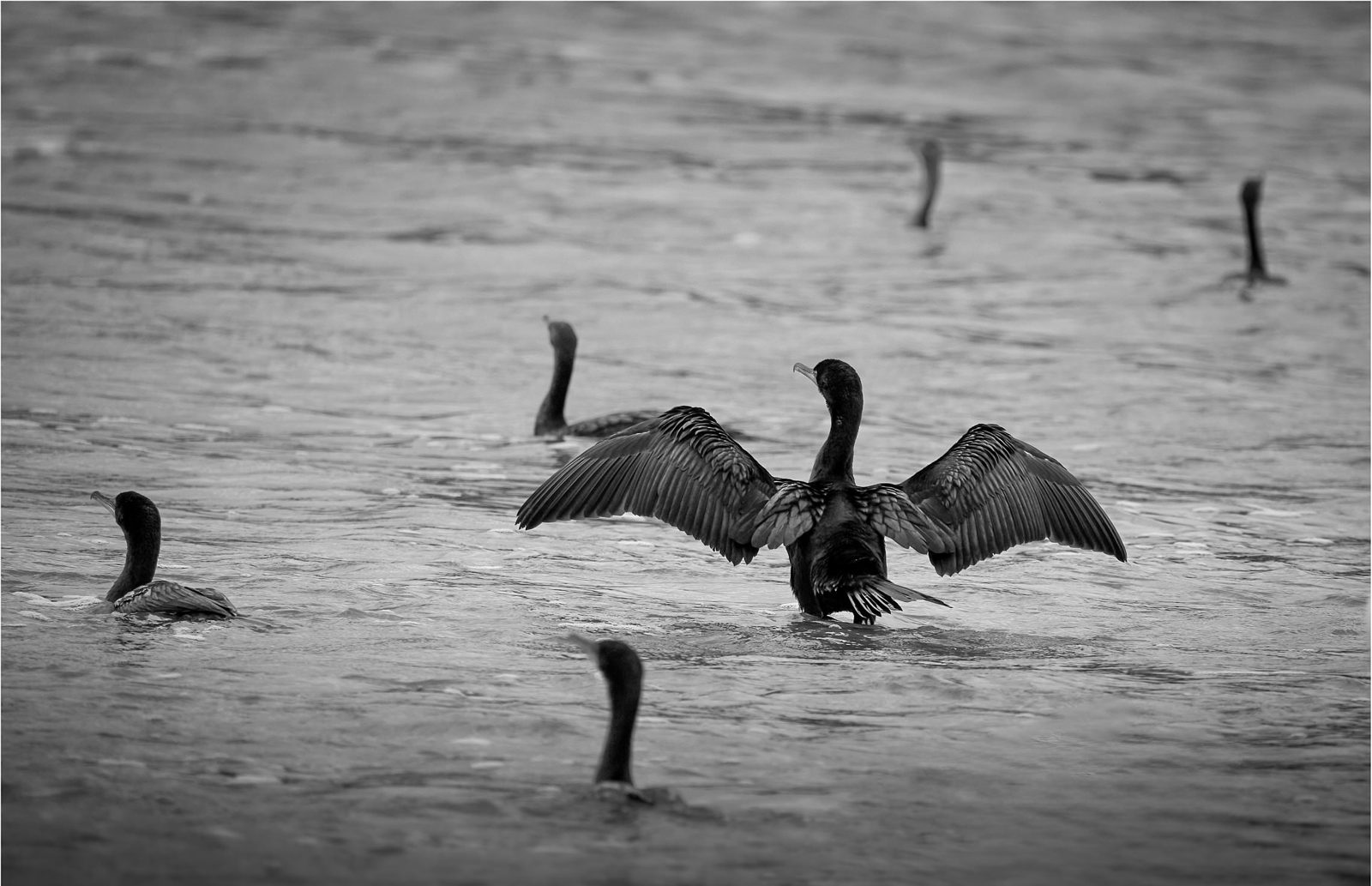
Double-crested cormorant feathers soak through, which helps them dive, so they spend a lot of time standing with their wings held open to dry. With no colour to distract, you can see the shape of the open wings, the long neck, and the hooked bill, along with the ripples around them. They are heavy, dark birds, and black and white suits them.
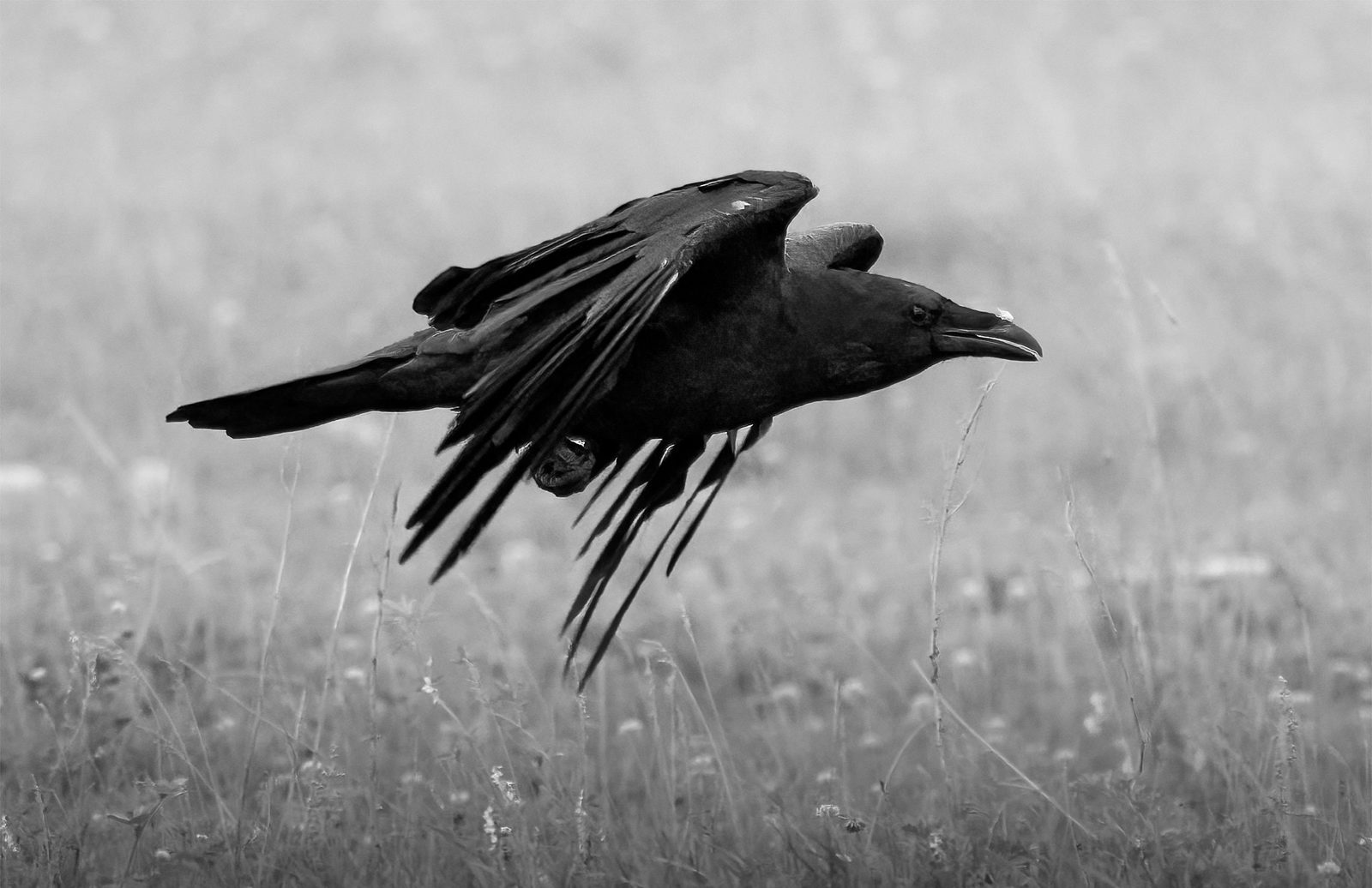
A crow looks plain black until the colour is gone. Then you see the glossy sheen across the back, the wing feathers spread like fingers, and the heavy bill. This one barely cleared the meadow, and the pale, soft grass behind it keeps the dark bird from turning into a silhouette.
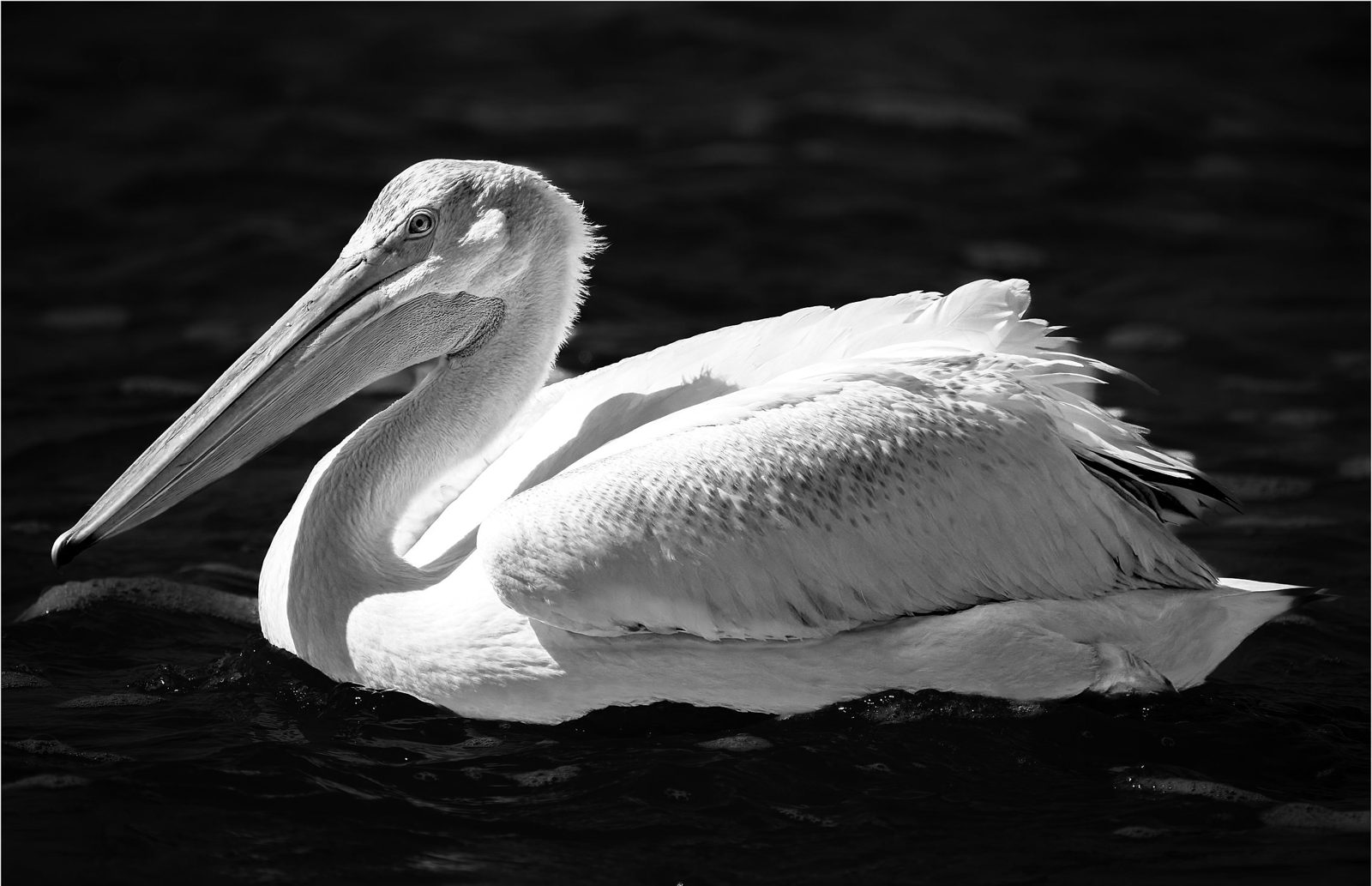
Dark water and bright sun make this one easy to convert, because the pelican becomes a white shape on black and every feather catches the light. You can see the ridges in the long bill, the fine edges of the wing feathers, and the calm in the way it sits on the water. Pelicans return to Manitoba in the spring and stay into the fall, feeding together in rapids and shallows.
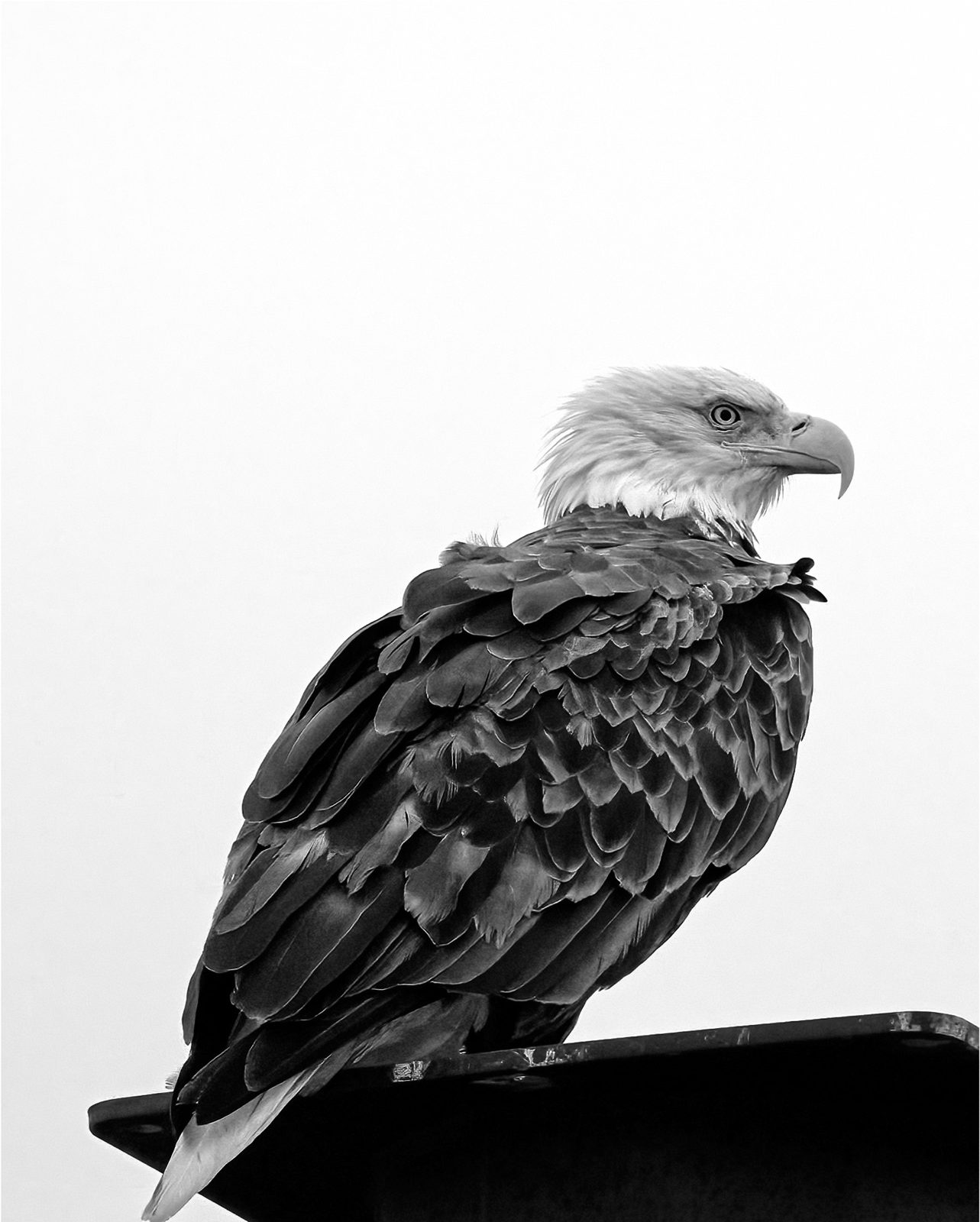
A white sky and a dark bird is what black and white does best. The head and tail, the only bright parts of the eagle, almost glow, and the overlapping feathers on its back look like armour. Some bald eagles stay in Manitoba through the winter wherever there is open water.
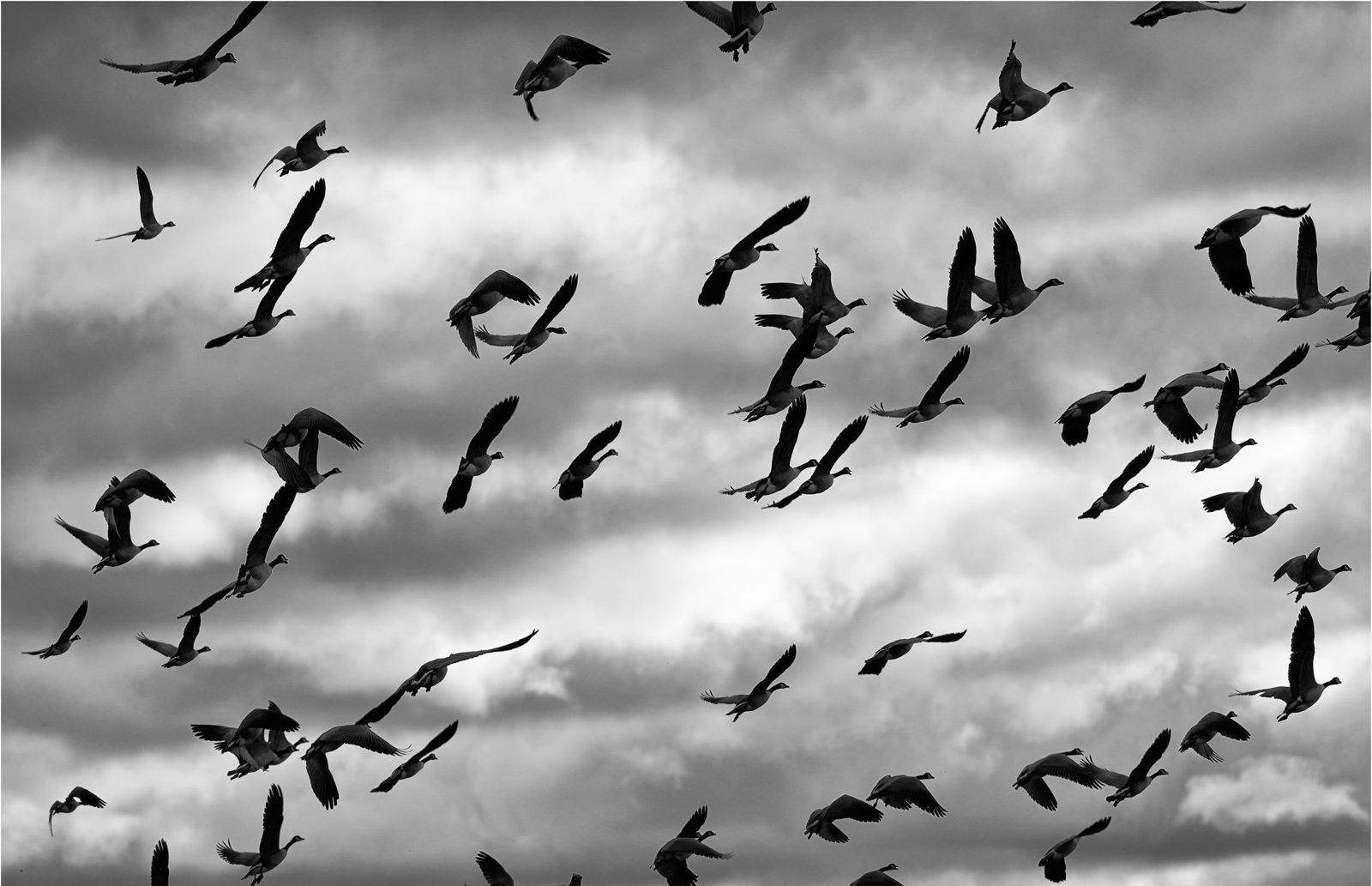
By November most of the Canada geese are on their way south. The flock came apart and re-formed above me in a few seconds. In colour it is brown birds on a grey sky. In black and white the cloud turns into texture, and every goose becomes a clear mark on it, with its long neck and wings in different positions.
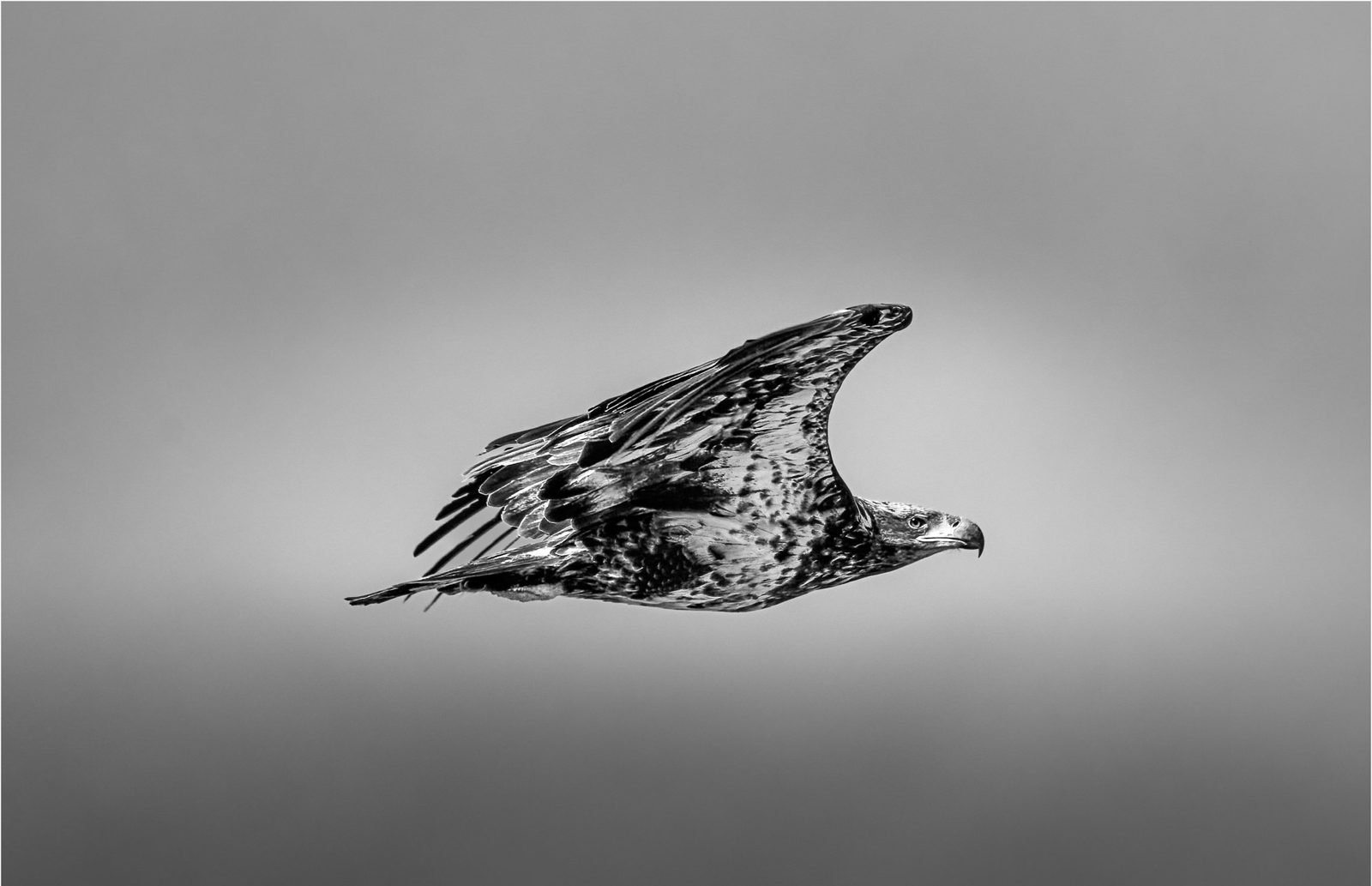
Young bald eagles are mottled brown and white for their first few years, and the white head does not come until they are about five. In black and white that mottled plumage becomes the subject, with every feather picked out against a smooth grey sky.
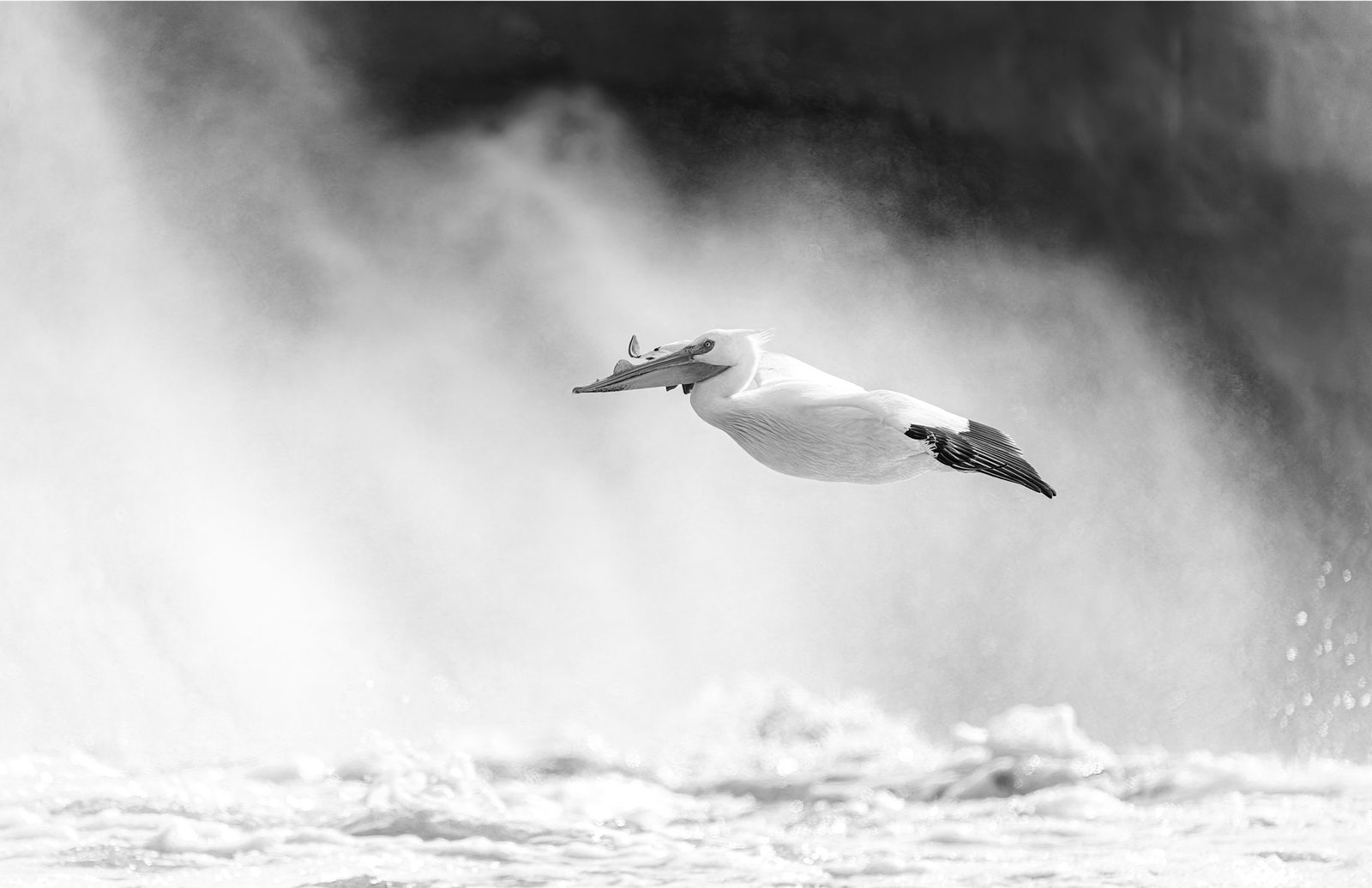
I like this one because the bird is small and the scene is mostly weather: a wall of spray, a dark sky above, and a white bird crossing it in no hurry at all. Without colour there is nothing but tone and shape, and the pelican reads clearly. Pelicans gather at rapids like this every spring to feed.
These are some of my favourites from the past year. You can see more in the black and white section of the portfolio, or browse the Manitoba birds collection in colour.