Dressed for autumn
There is a week or two each fall when the whole prairie turns the same colour. The grass goes gold, the crops stand ripe, and the evening light comes in low and warm and settles over everything. I spend those weeks out along field edges and quiet roads, moving slowly and looking twice, because the animals already know the trick: out here, the best way to hide is to match the season. These are nine photographs of Manitoba wildlife in fall, each of an animal that has dressed for the occasion.
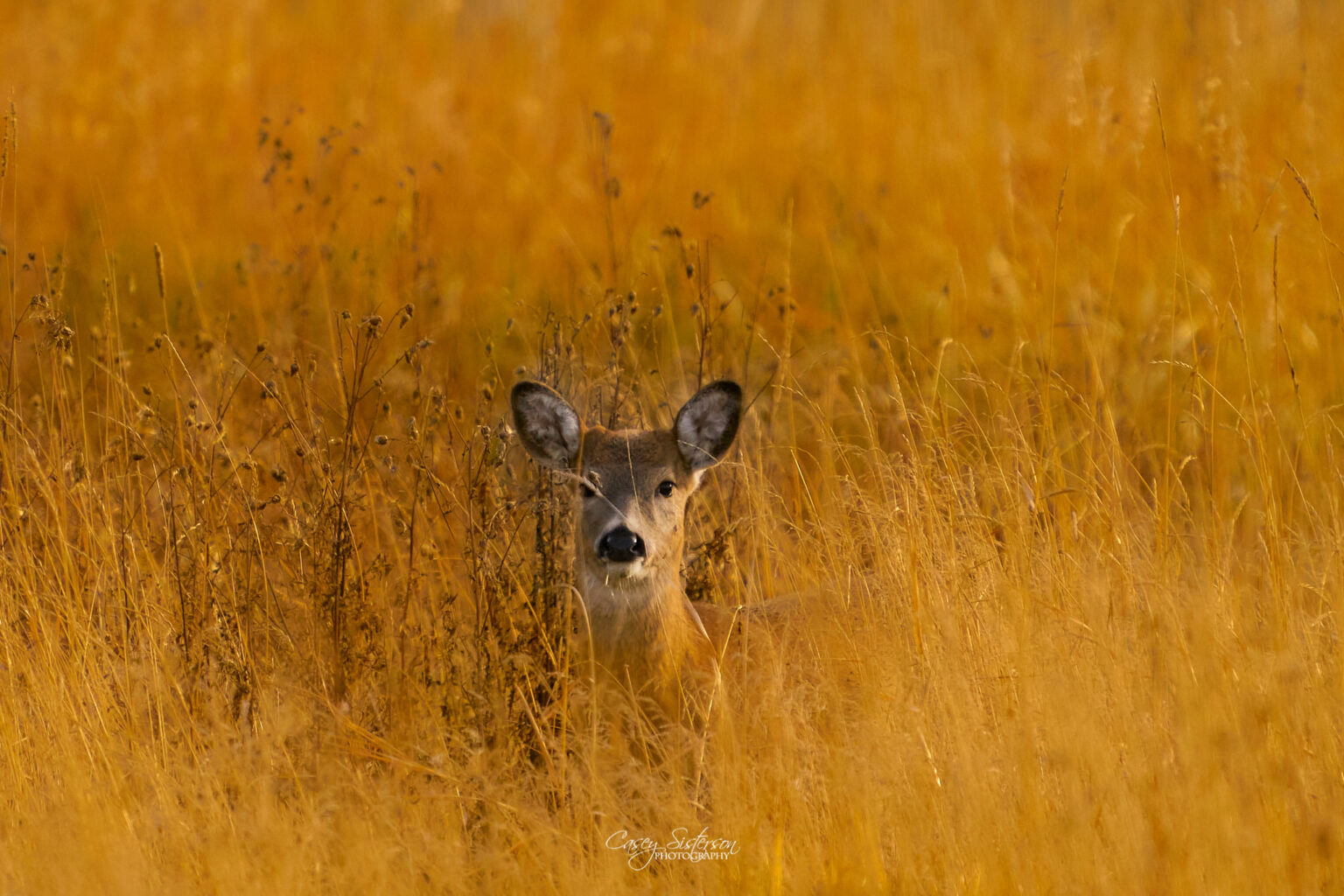
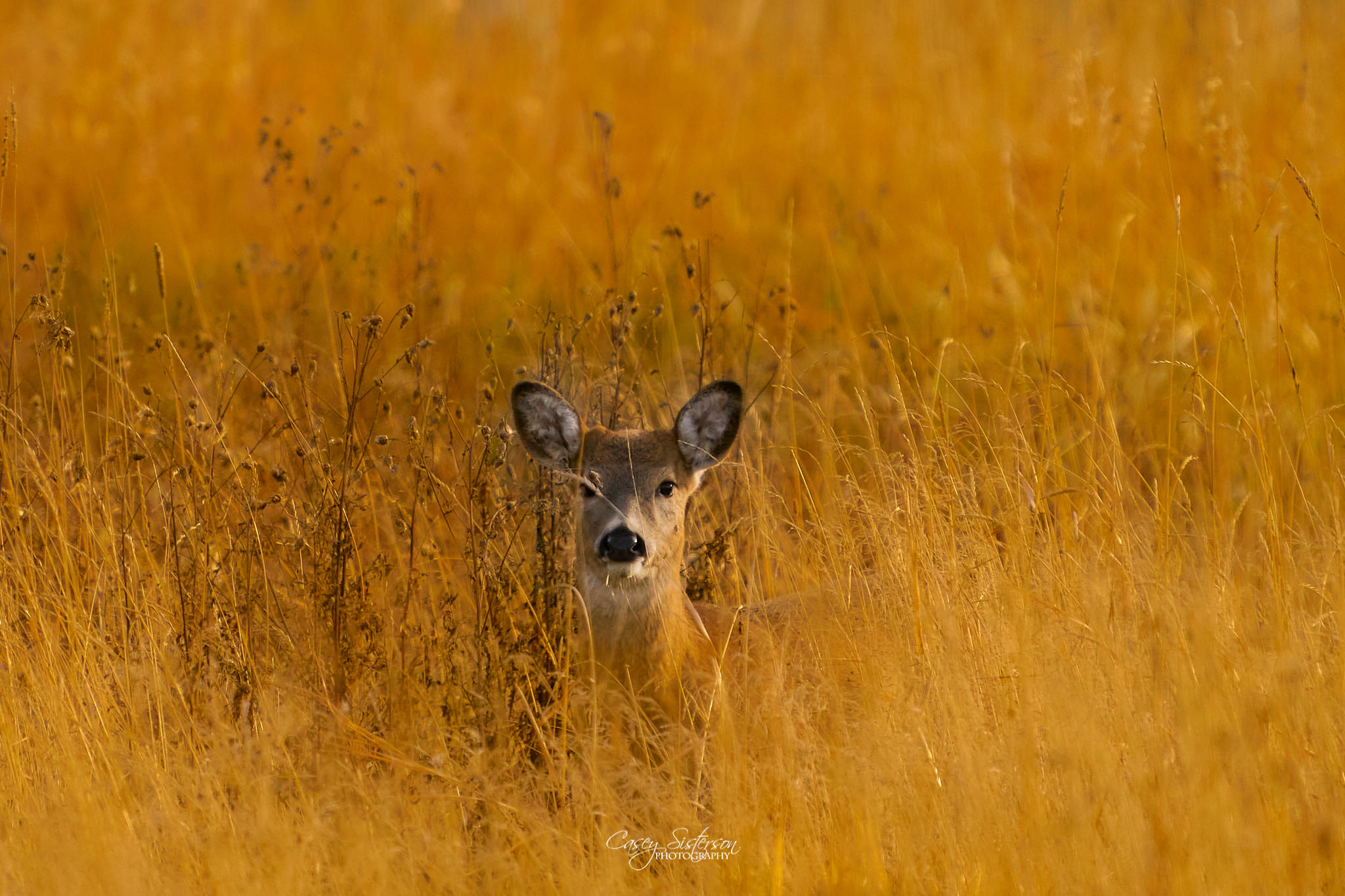
This white-tailed deer was nearly invisible until it lifted its head. It stood in grass the same shade as its coat, and for a long moment neither of us moved. Then the ears turned toward me, and that was the picture.
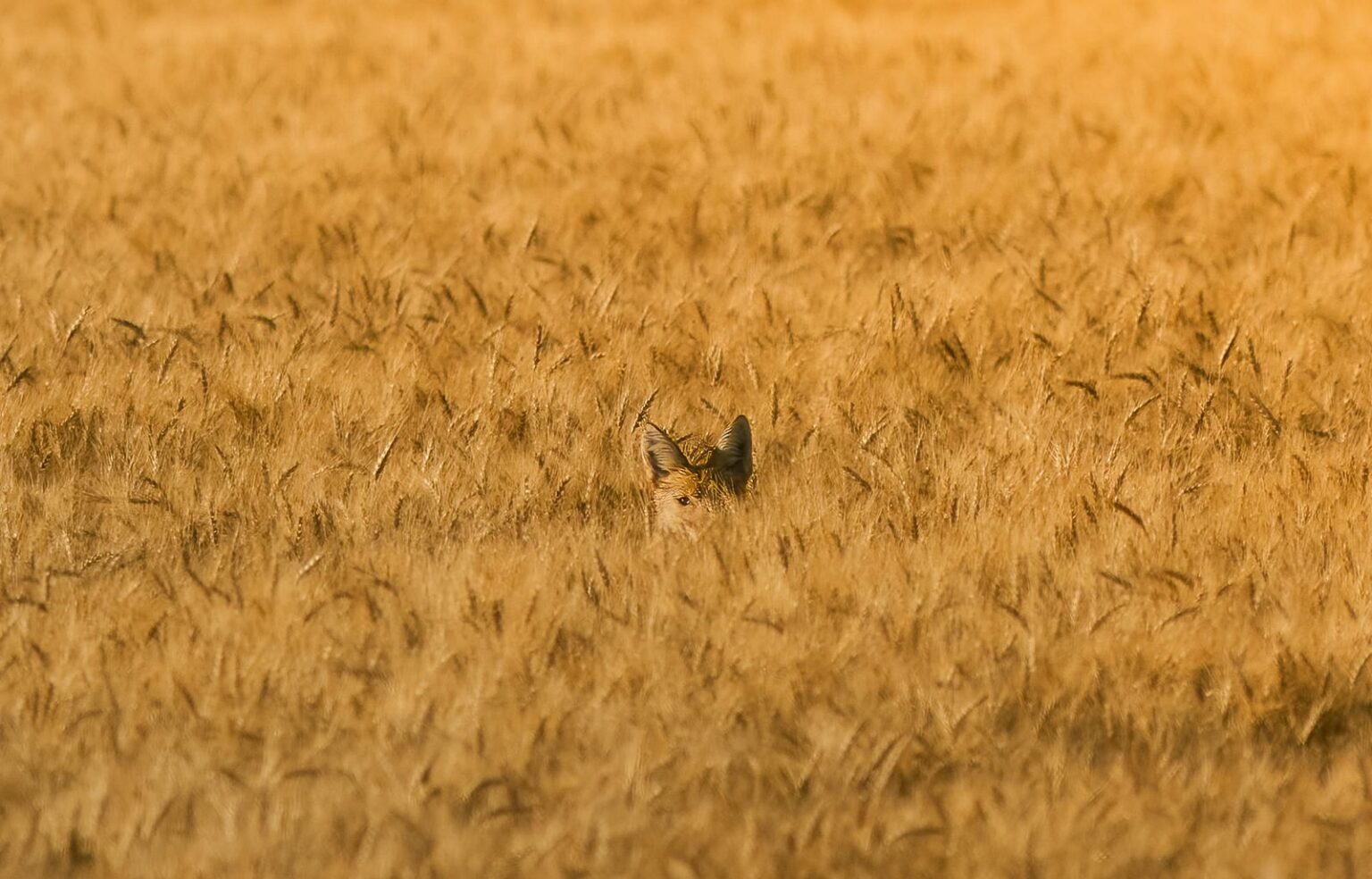
The next one is a game of hide and seek. A coyote is lying low in a field of ripe grain, and the only proof is a pair of ears above the crop. Coyotes are patient hunters, and in cover like this, they can wait for as long as it takes.
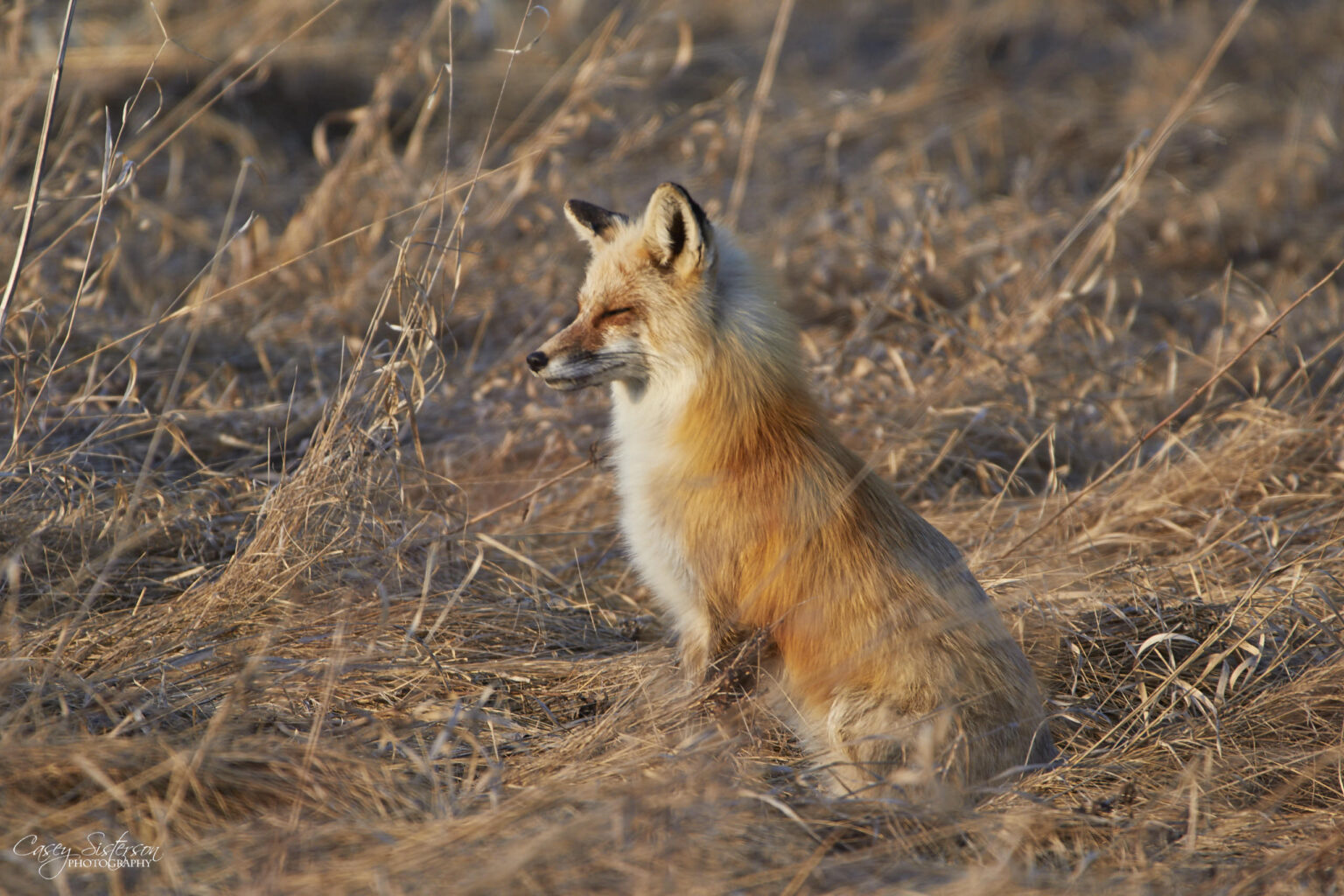
The late-day sun hit this red fox just right. It sat in the dry grass with its eyes closed, leaning into the warmth like a cat on a windowsill, and the colour of its coat melted into the colour of the field. I stayed quiet and let it enjoy the moment.
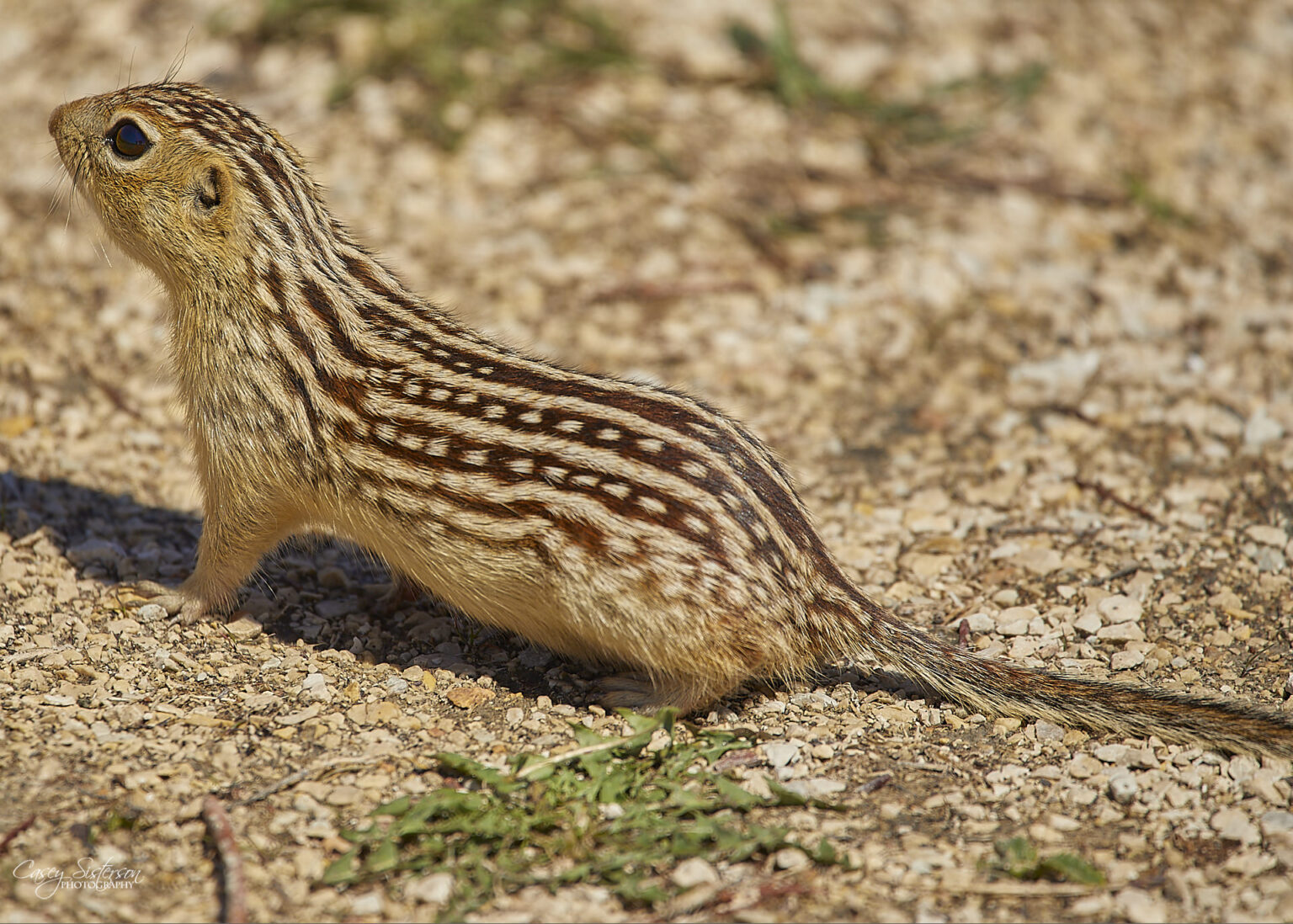
A thirteen-lined ground squirrel stretched out across a patch of gravel with its striped back catching the light. Up close, the pattern is remarkable: rows of pale spots between dark stripes, like sunlight falling through dry grass. Even on bare ground, it is surprisingly hard to pick out.
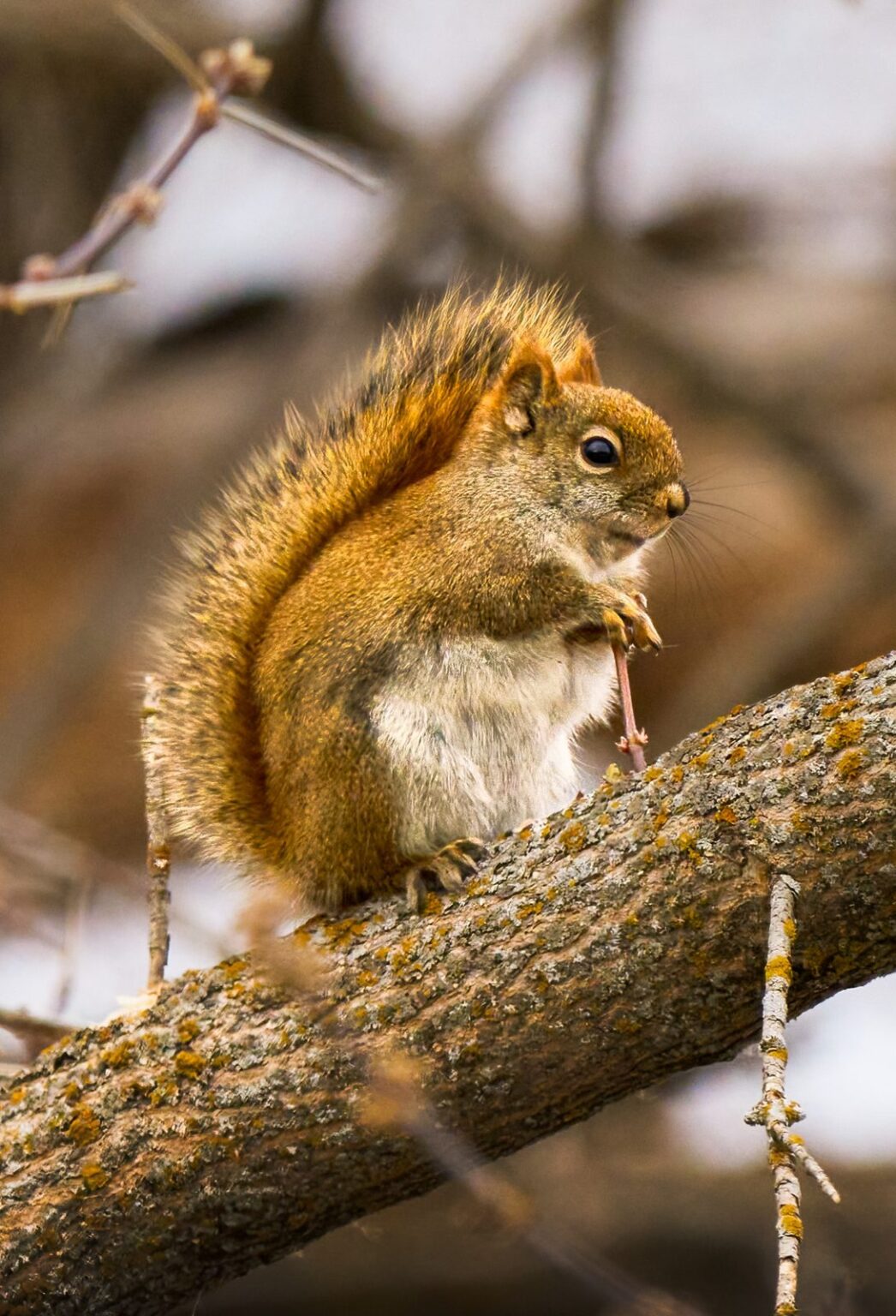
A red squirrel stopped on a lichen-covered branch with something to nibble, its tail curled over its back like a flame. Its fur is the colour of the turning leaves, which suits the season perfectly. Unlike many of its neighbours, it stays busy all winter, so fall is the time for stocking the pantry.
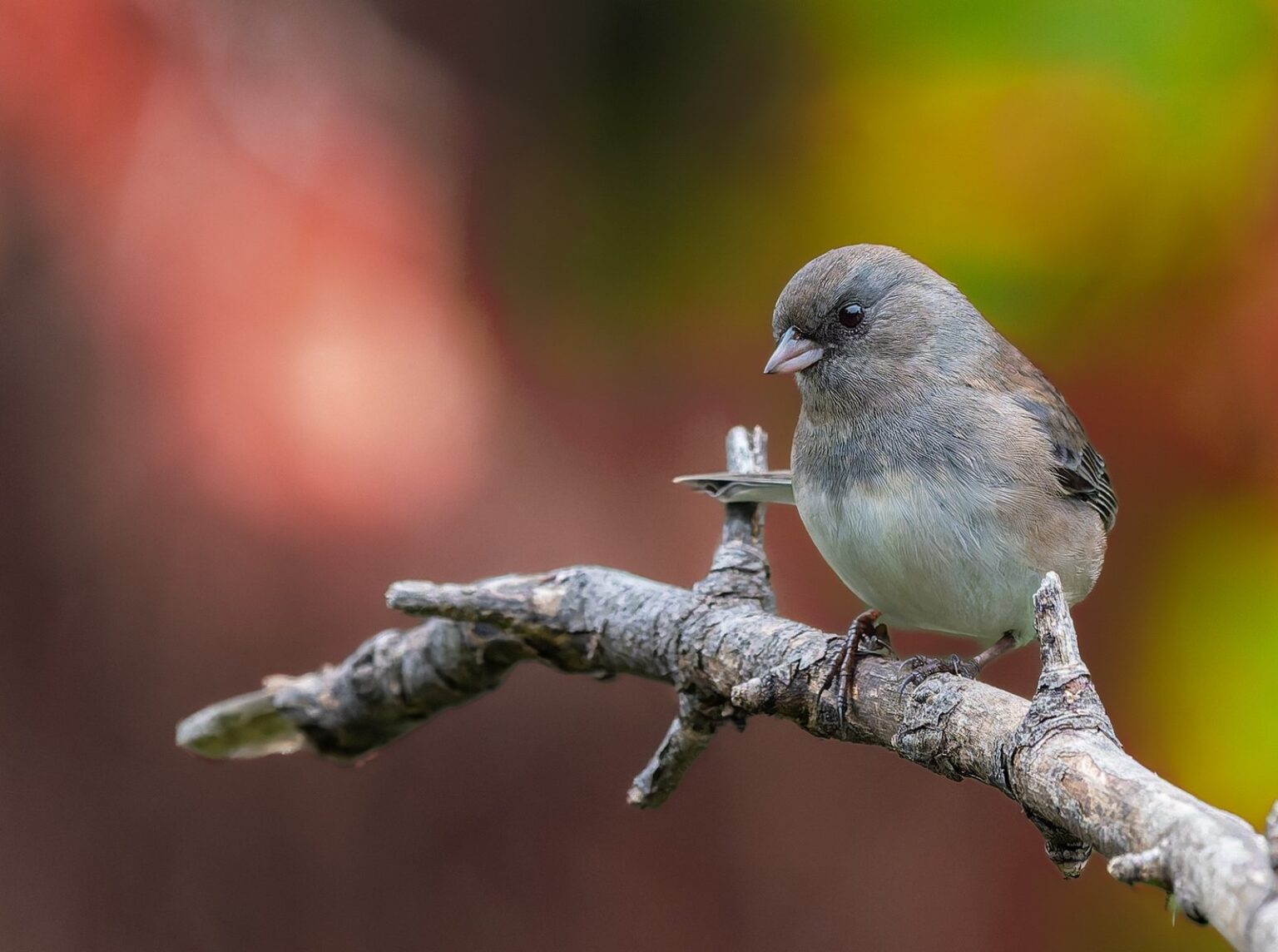
In this one, the background does half the work. A dark-eyed junco sits on a weathered branch, soft and grey, in front of a blur of red, orange, and gold leaves. Juncos are often called snowbirds because many of them show up in fall just ahead of the snow, so seeing them back at the feeders and field edges is a reliable sign of the season.
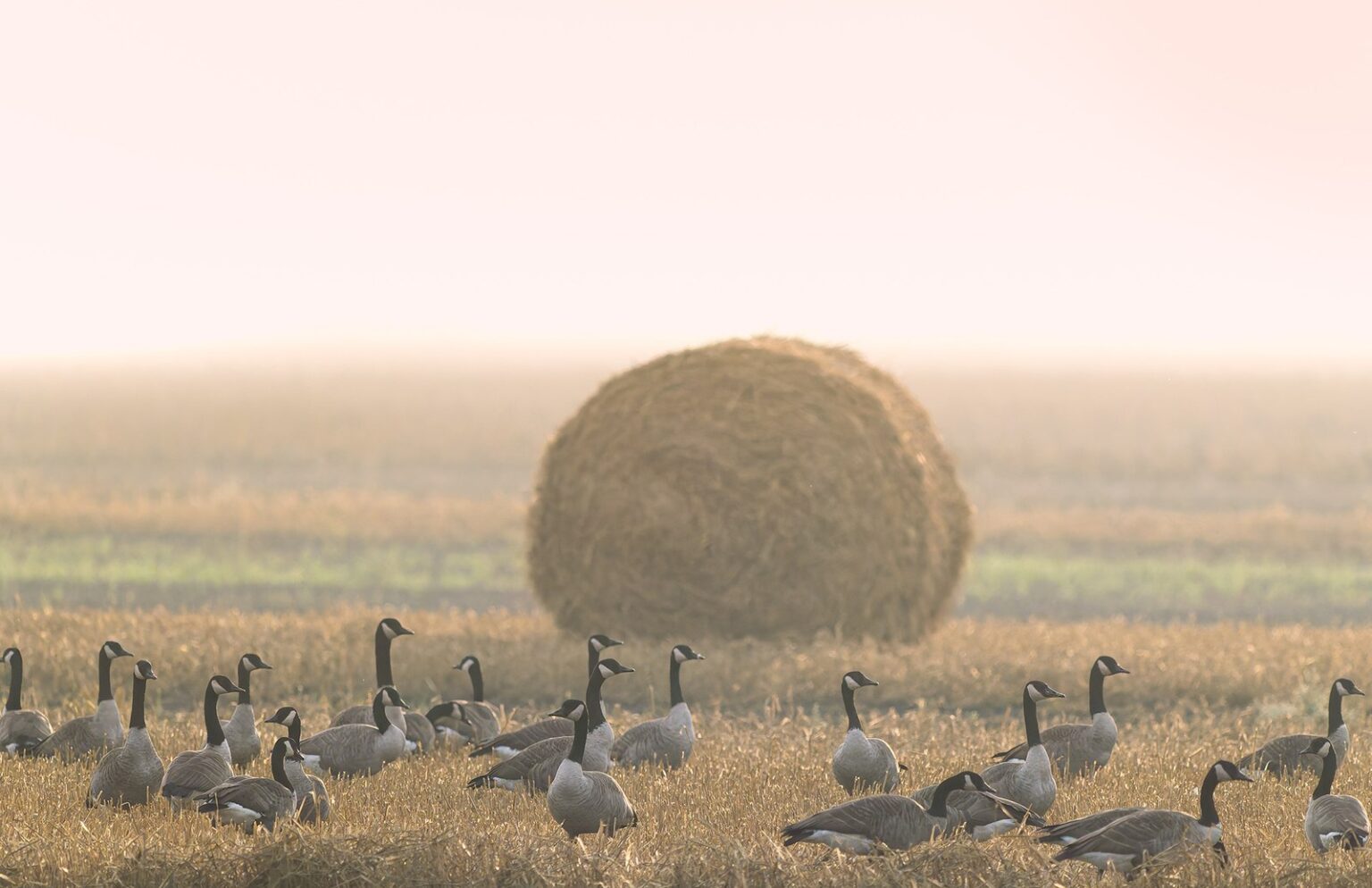
Some mornings, the whole picture is a mood. A flock of Canada geese stands in a harvested field in the morning haze, with a round hay bale glowing soft and pale behind them. In fall, geese gather in fields like this to feed and rest before the long flight south, and for a few weeks the sound of them overhead is part of the season.
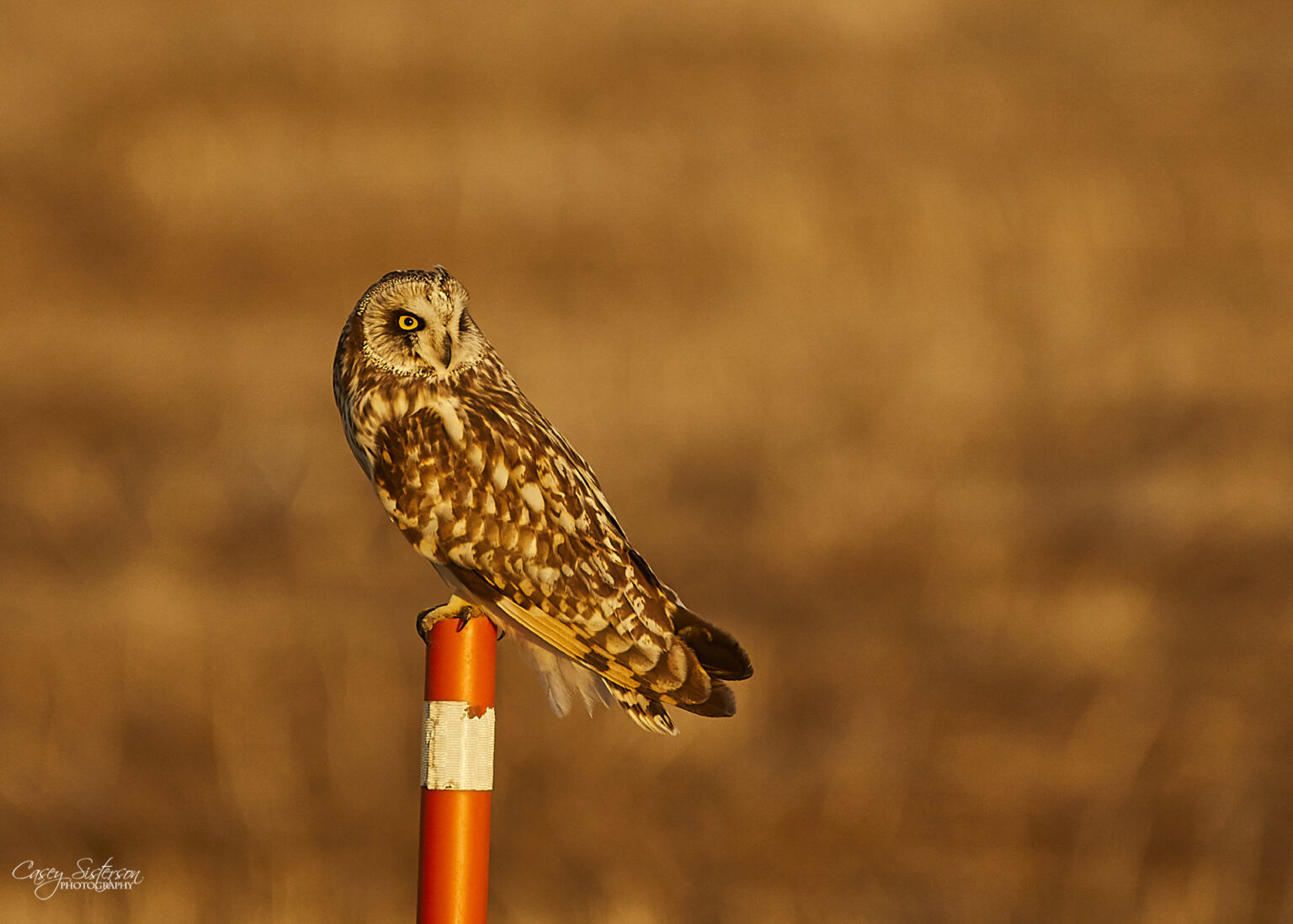
As the light fades, the fields belong to the short-eared owl. Streaked in tawny browns and creams, it looks like a bundle of dry grass, and it hunts low over open ground around dusk. This one paused on a post long enough for a portrait while the background glowed orange behind it.
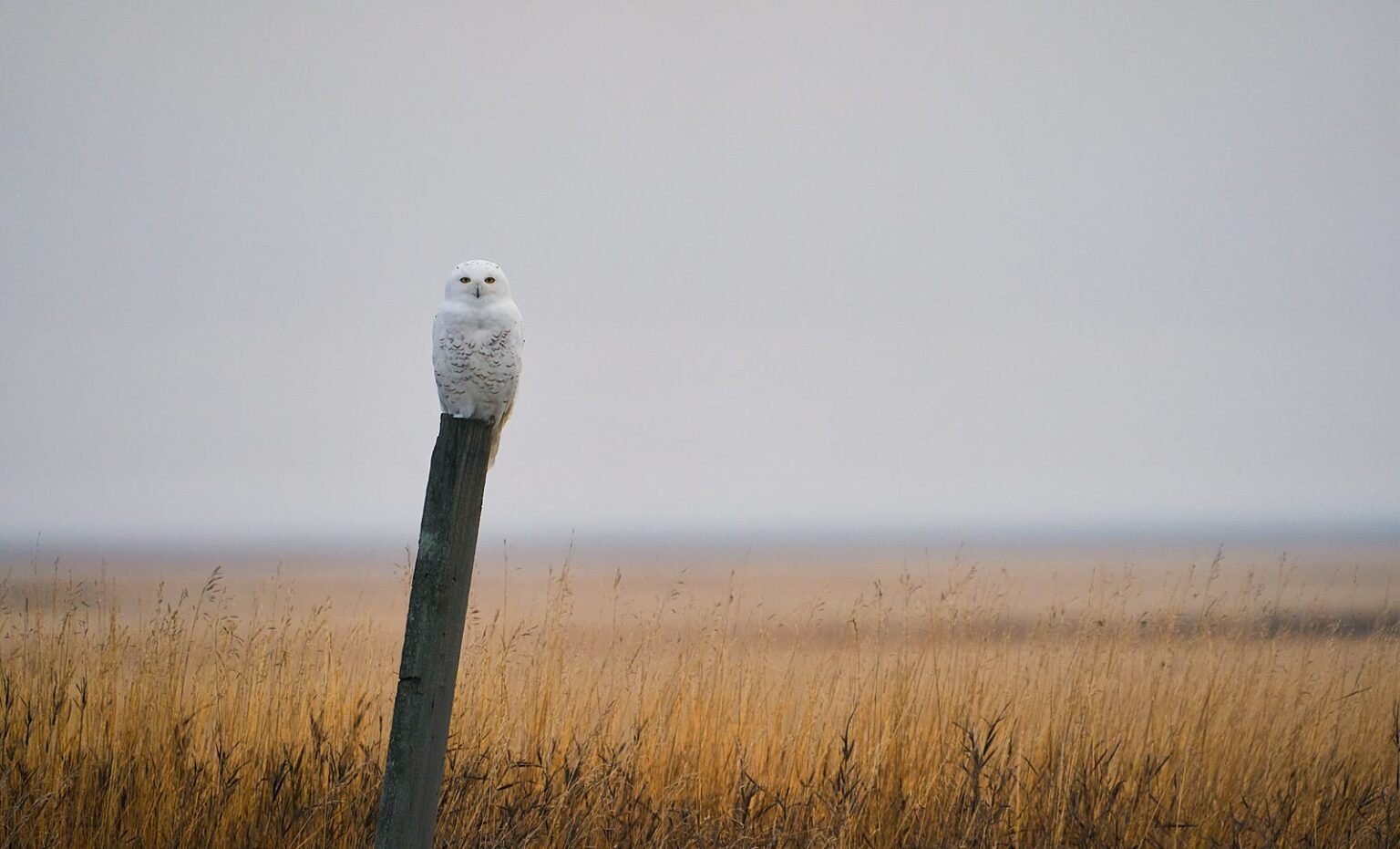
I like to end on one that looks ahead. The snowy owl is an Arctic bird that comes south in late fall, so seeing one is a sign that winter is close. This one sat on a post in the haze, pale against a pale sky, with the last gold grass of the season still glowing below.
Where to see Manitoba wildlife in fall
Fall is one of the best times to look for wildlife in Manitoba. The animals are active in the cooler weather, and the open fields and bare trees make them easier to spot. Dawn and dusk are the best times to look, and watching quietly from a parked vehicle usually works better than getting out. For ideas on where to go, Travel Manitoba lists parks and trails across the province, and eBird shows recent bird sightings near you.
Fall does not last long out here, but the animals wear it well. These are some of my favourites from the season. You can see more in the Manitoba wildlife section and in the autumn colour landscapes.