Stunning Bird Reflections in Manitoba: A Love Letter to Still Water
Bird reflections in Manitoba come down to one moment I wait for at the edge of a shallow pond. First, the wind drops. Then the surface goes quiet, and the whole scene turns over. As a result, everything above the waterline has a twin below it, a little darker, a little softer, and somehow more honest about the light. I have never tired of it, because a reflection does not add anything to the bird. Instead, it shows you the bird from the other side, and the world from a direction you rarely look.
Bird reflections in Manitoba: the plover and its twin
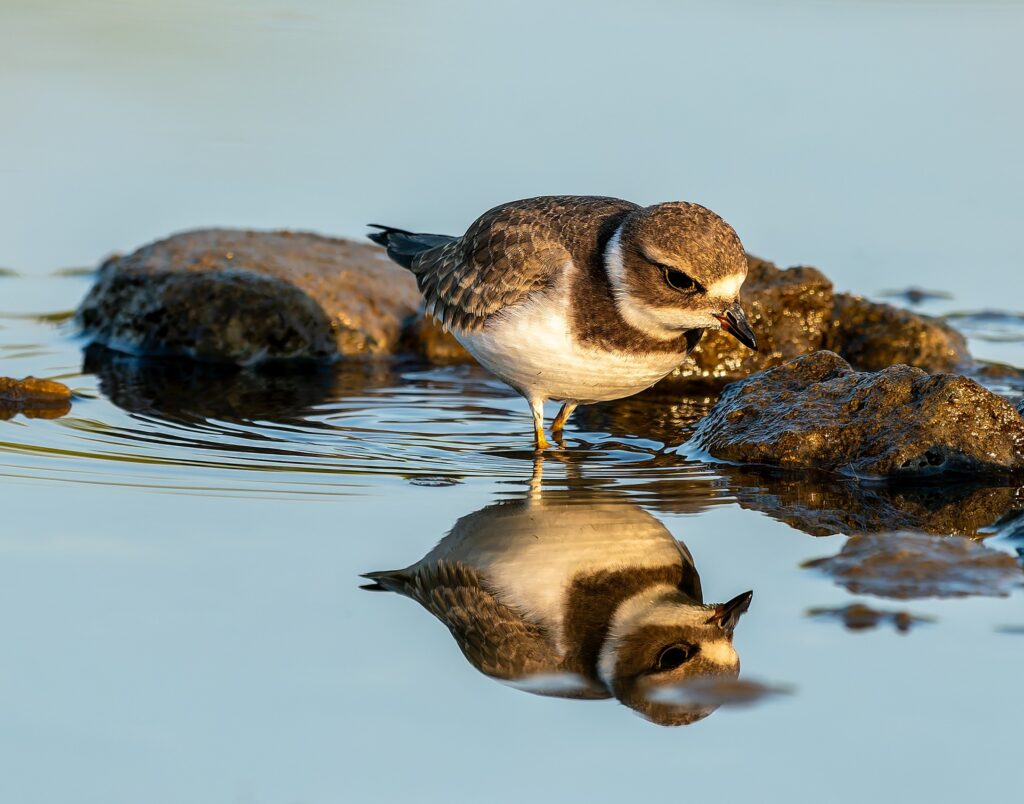
The semipalmated plover was the first to stop me. It paused between steps, then tipped its head down, and for a moment it seemed to be studying the bird below. Because the light was low and warm, the white breast glowed, while the water stayed a cool, pale blue around it. In fact, only the faint ripples near its feet gave away that the surface was not glass.
The Other Side of Me
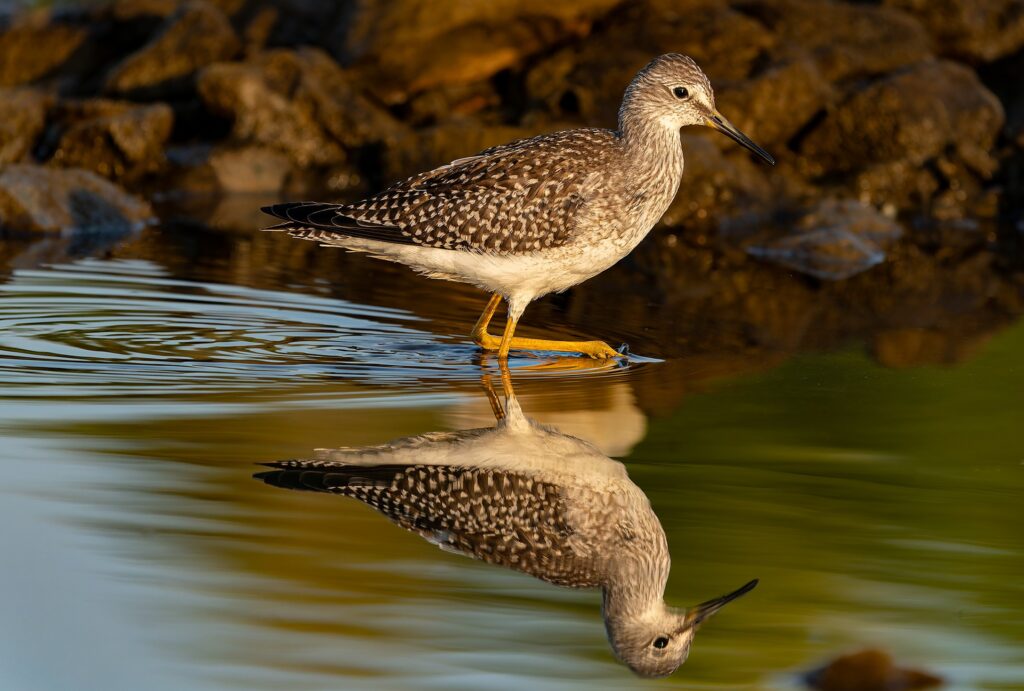
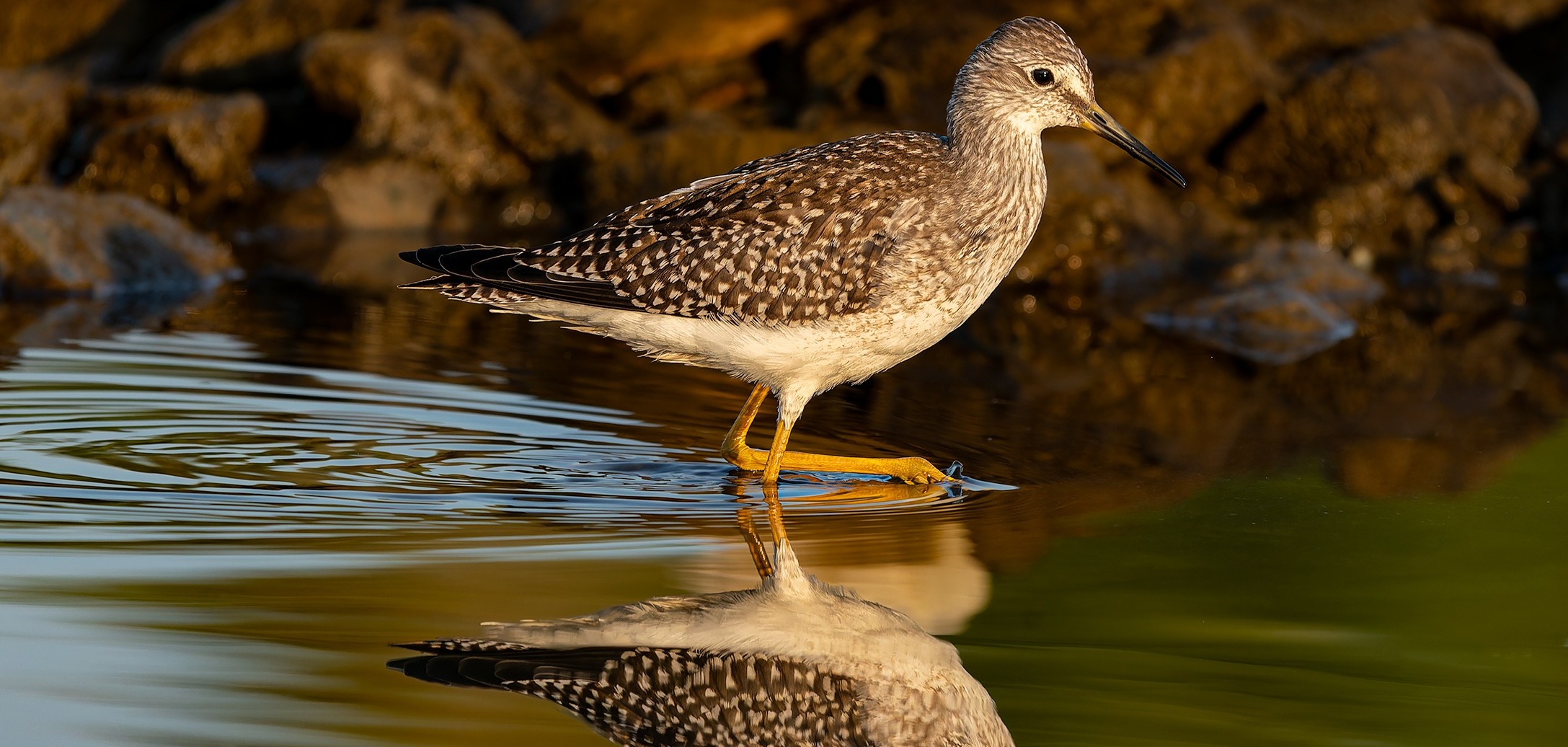
Next came the lesser yellowlegs, and the picture practically built itself. Its legs reach down and meet their own reflection right at the waterline, so the bird and its twin join like a single shape folded in half. Meanwhile, the rocks glow amber and the water drifts into green and gold. As a result, the reflection feels like a quieter, moodier version of every colour above it. That is why I called this one The Other Side of Me.
Bird reflections in Manitoba without the colour
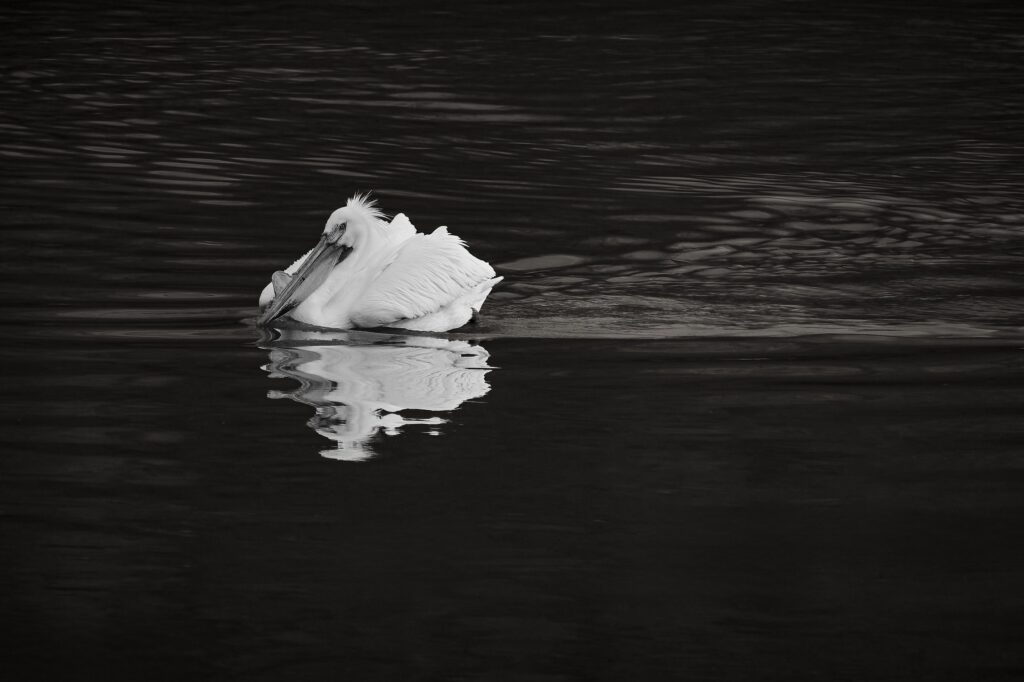
Take the colour away, and the reflection becomes even more interesting. The white pelican floats nearly pure white against nearly black water, and its twin hangs below with a few soft ripples running in from the right. Because there is nothing else to look at, the eye settles on the quiet. Still, it is the simplest frame in this group, and maybe the calmest.
When the water moves
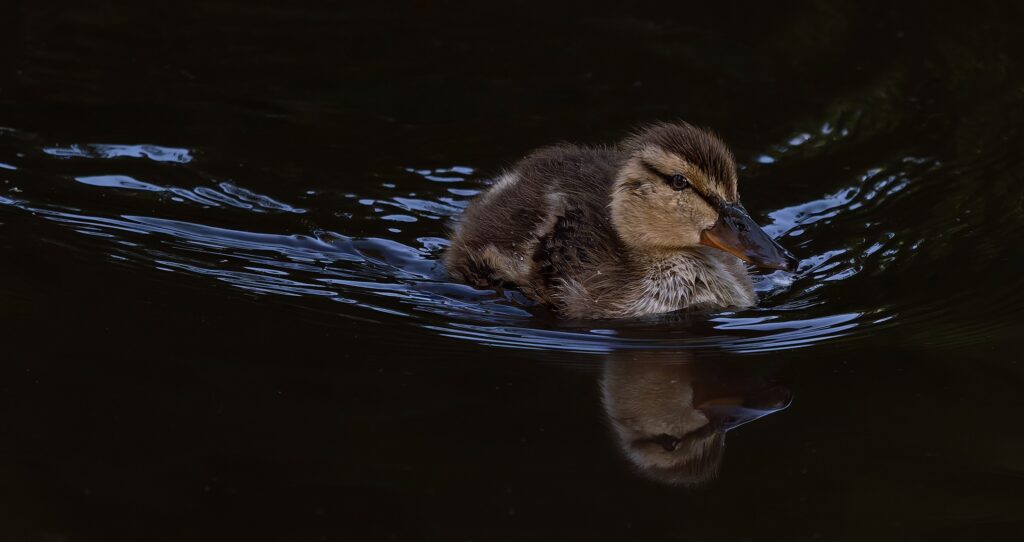
A duckling this small still makes its own weather. However, its movement sends rings across the water, and they bend the reflection into soft curves. Instead of a mirror, the copy below becomes a watercolour of the bird. That is why I love this one: the reflection is not perfect, so the movement is the point, and the water gets to have a say.
A quiet ending
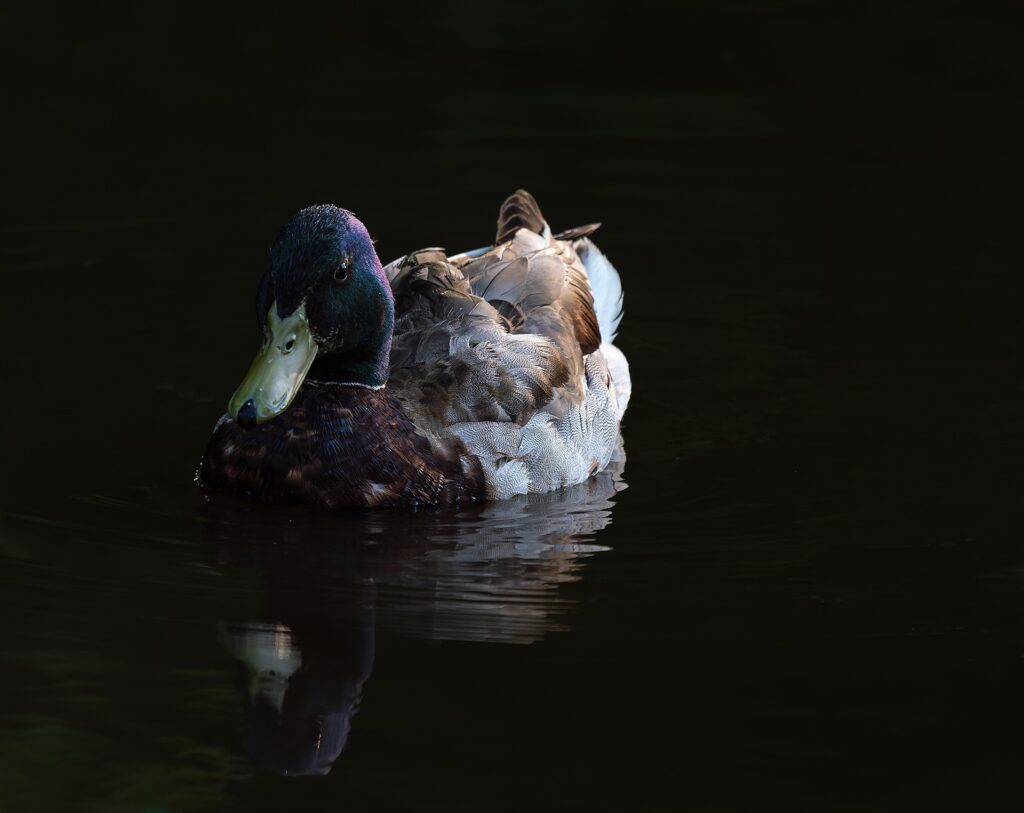
Finally, the drake closes the series. His green head catches the light while the rest of him sinks into shadow, so the reflection below is almost as dark as the water around it. As a result, only the subtle highlights remain, a glint on the head and a thin bright edge on the water. After the ripples and the colour, it feels like the last quiet breath at the end of a long day.
Photographing bird reflections in Manitoba
The best bird reflections in Manitoba come on calm mornings and evenings, because the wind is light and the water is still. First, put the light behind you, with the sun over your shoulder, so it falls on the bird and the water in front of you. Then the bird is lit evenly, the reflection shows its colours, and you avoid the glare that comes from shooting into the sun. Next, get low if you can, because the closer your lens is to the surface, the more of the reflection fits in the frame. Finally, watch the bird and the water together, since a single ripple can break a good reflection in seconds. Also, to learn more about the shorebird in the second photo, see the Lesser Yellowlegs guide at All About Birds.
You can see more of the birds behind these bird reflections in Manitoba on their own pages: semipalmated plover, lesser yellowlegs, American white pelican, and mallard.