
Snow bunting
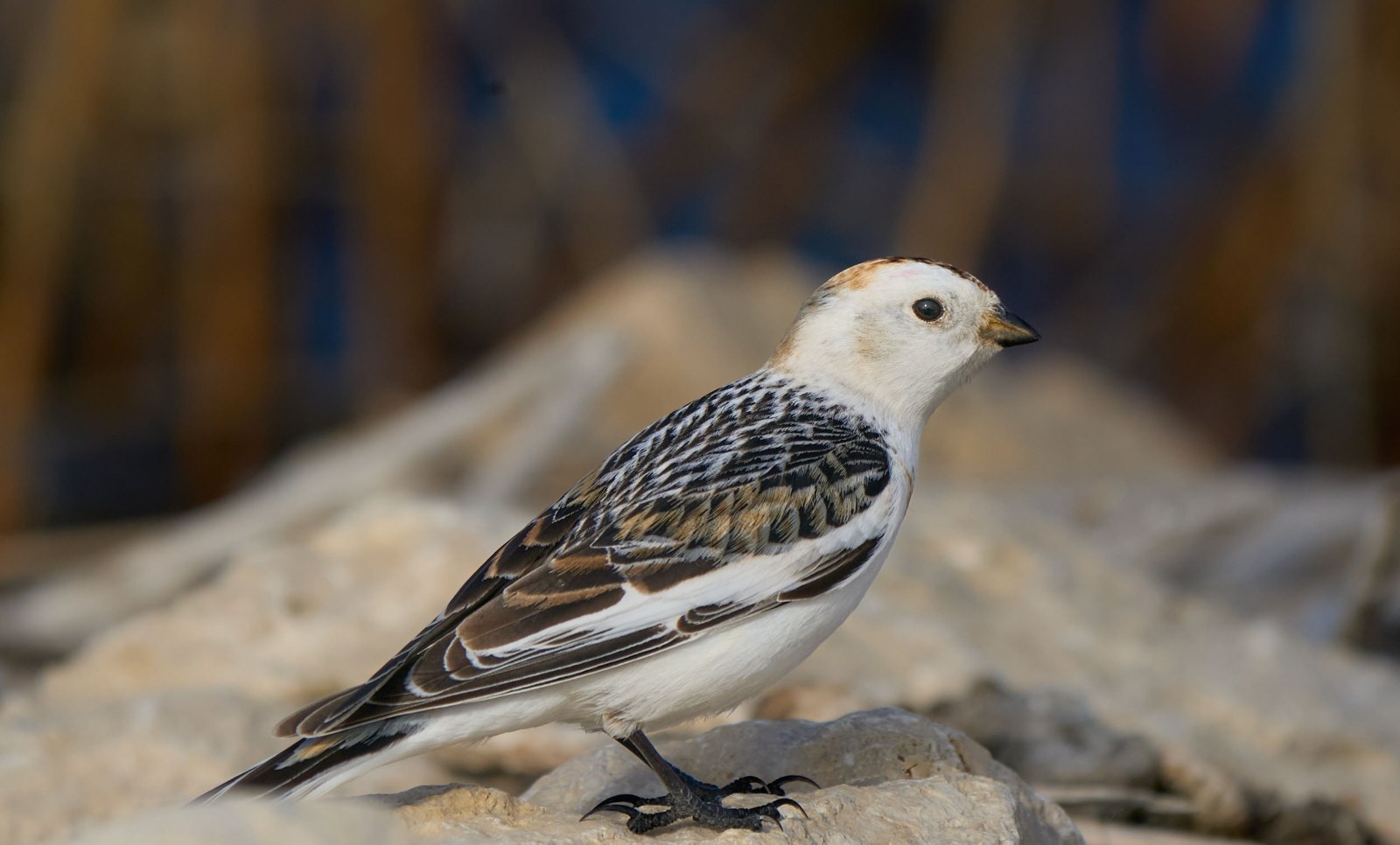
Here is one of my favourite frames of this bird, perched on a shoreline rock.
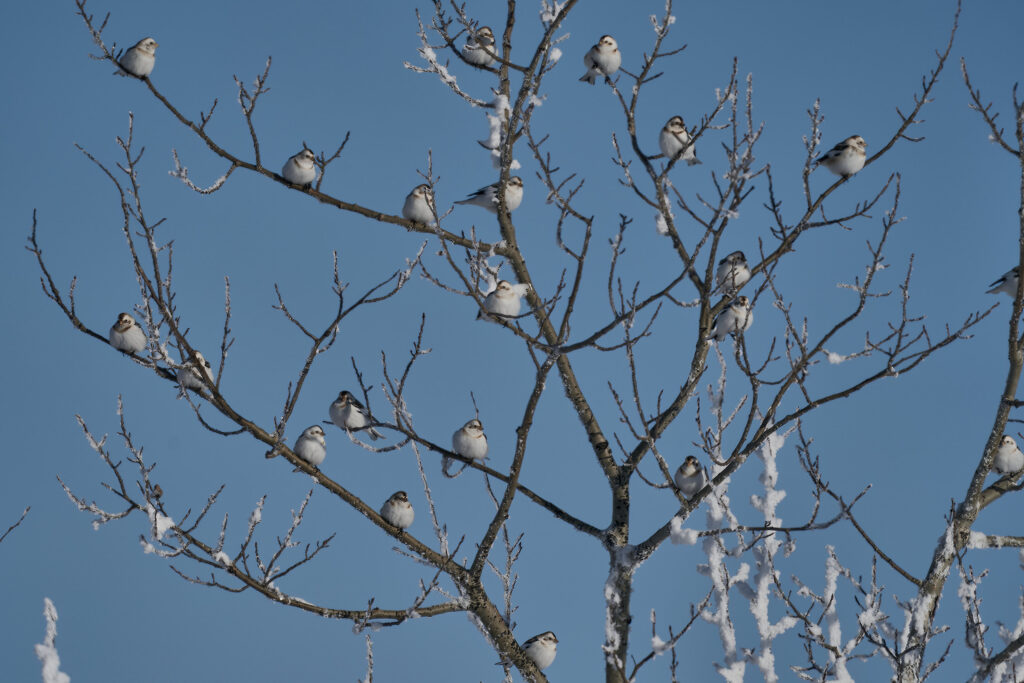
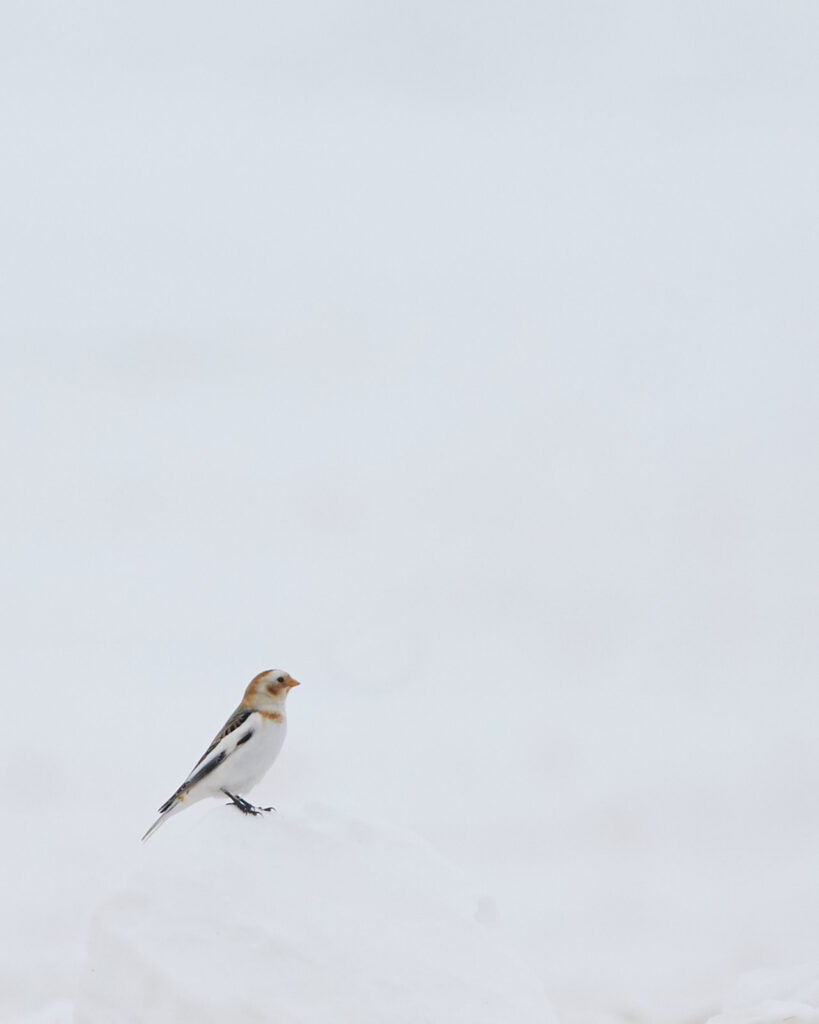
With a snow-white body, black-and-white wings, and a rusty wash across the crown, the snow bunting looks made for winter, and in Manitoba it is. These small songbirds breed on the Arctic tundra and arrive on the prairies as the cold sets in, bringing a flash of white to bare fields, gravel roads, and lake shorelines. Their flocks lift and settle like drifting snow, which has earned them the nickname snowflakes.
Snow buntings feed on weed and grass seeds picked from the ground, often shuffling along in tight flocks that wheel together when startled. They usually reach Manitoba in late fall and head north again by early spring, and they nest far to the north in rock crevices on the tundra, so winter is the only time most of us ever see them.
Curious about the snow bunting and its habitat? Learn more on its page at All About Birds.
Field notes in photographs
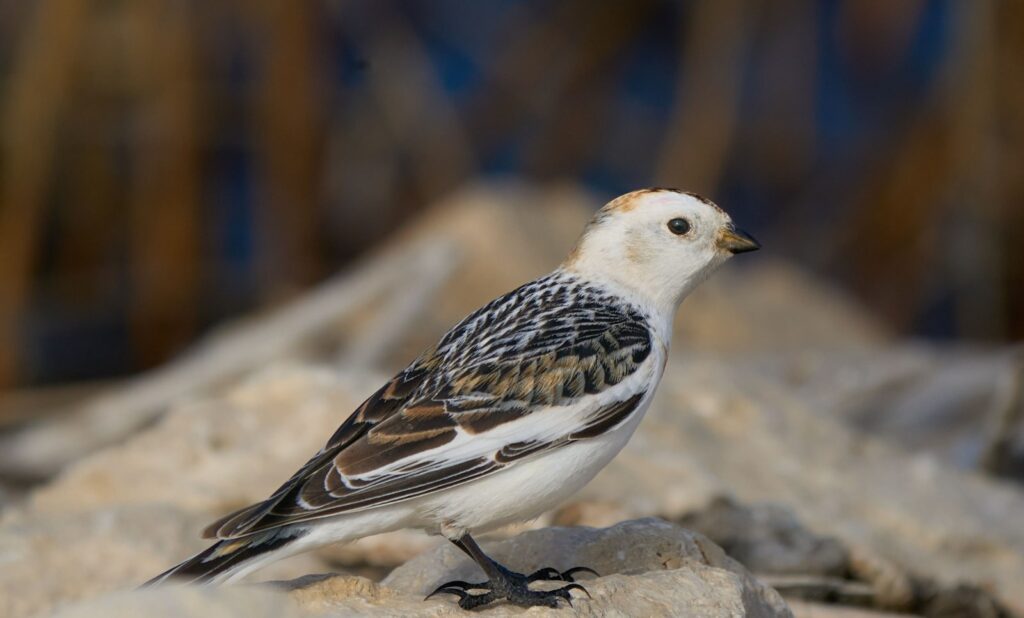
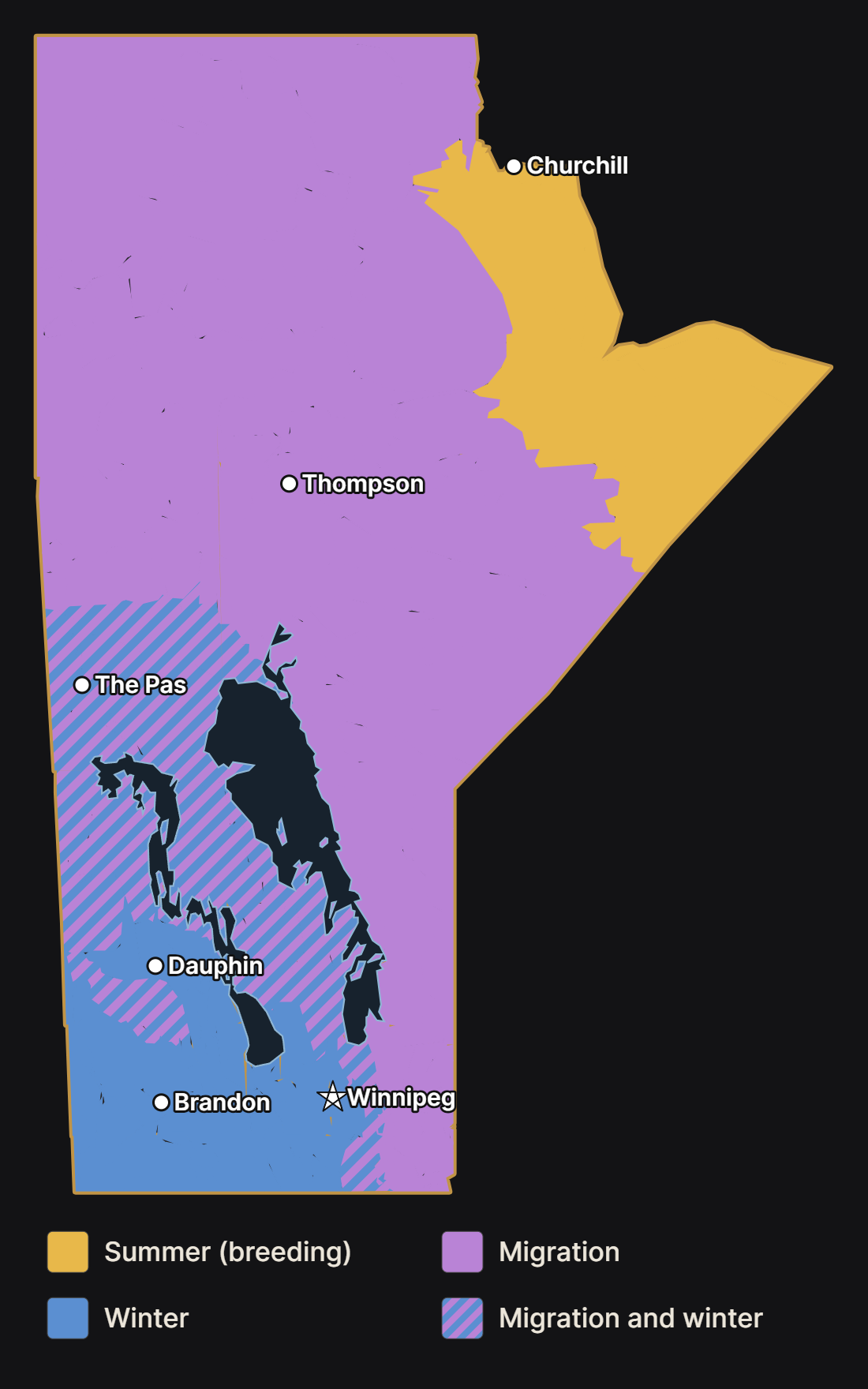
Snow bunting Manitoba sightings
Where and when you can find the snow bunting in Manitoba depends on the season and the habitat. You can see more species in the Manitoba birds section.
Back to Manitoba bird photography, or see the portfolio.