
Sandhill crane
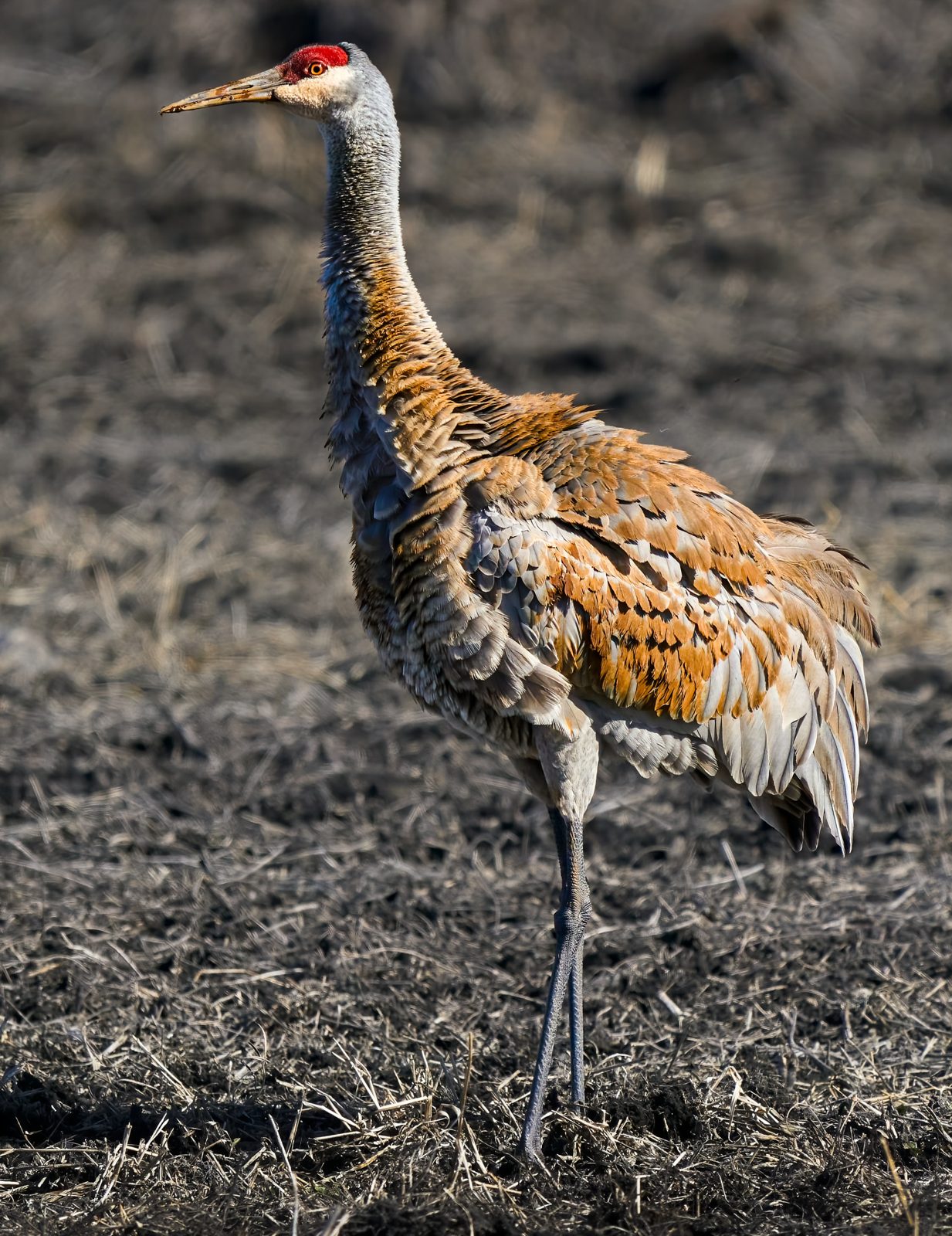
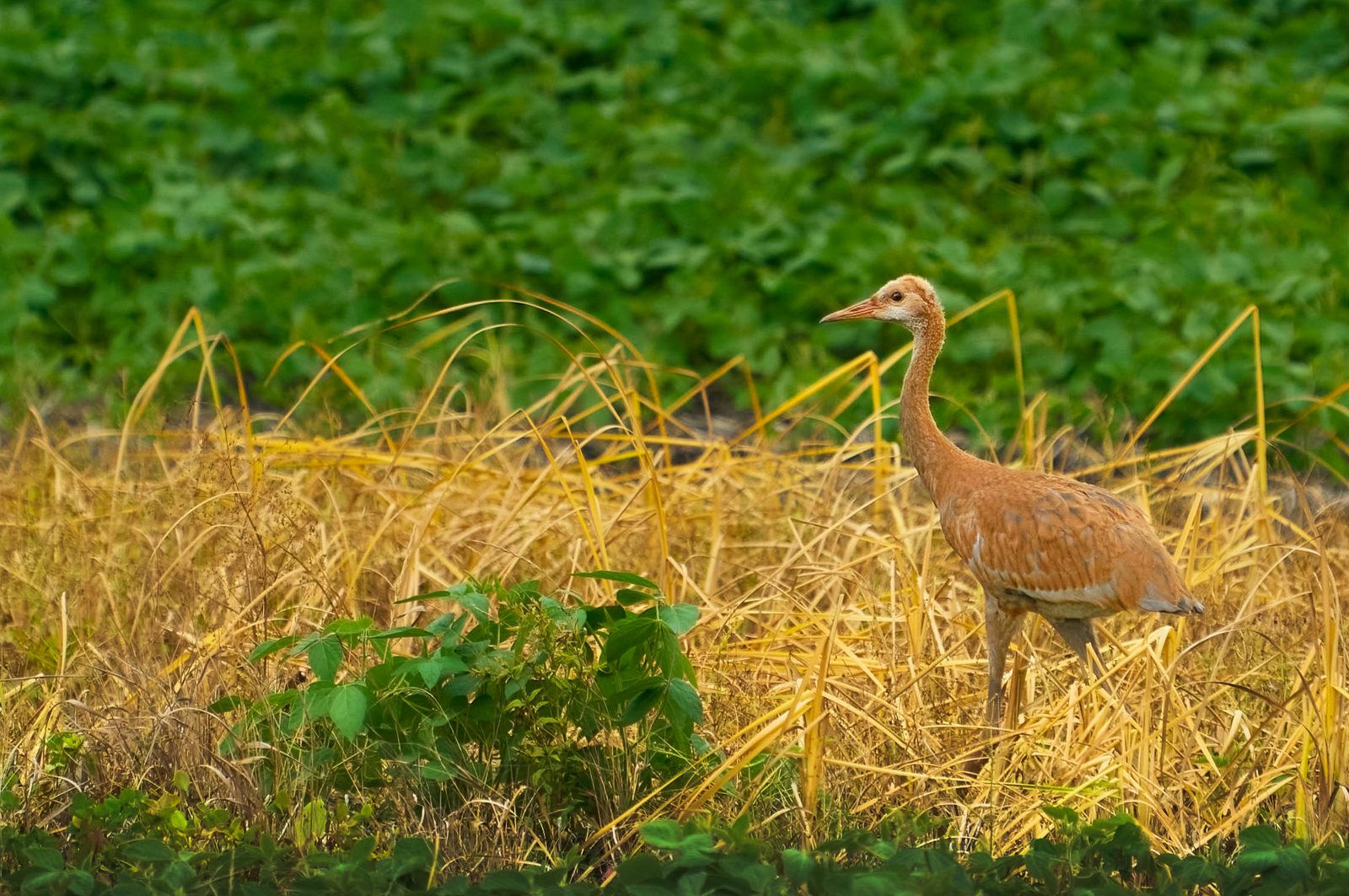
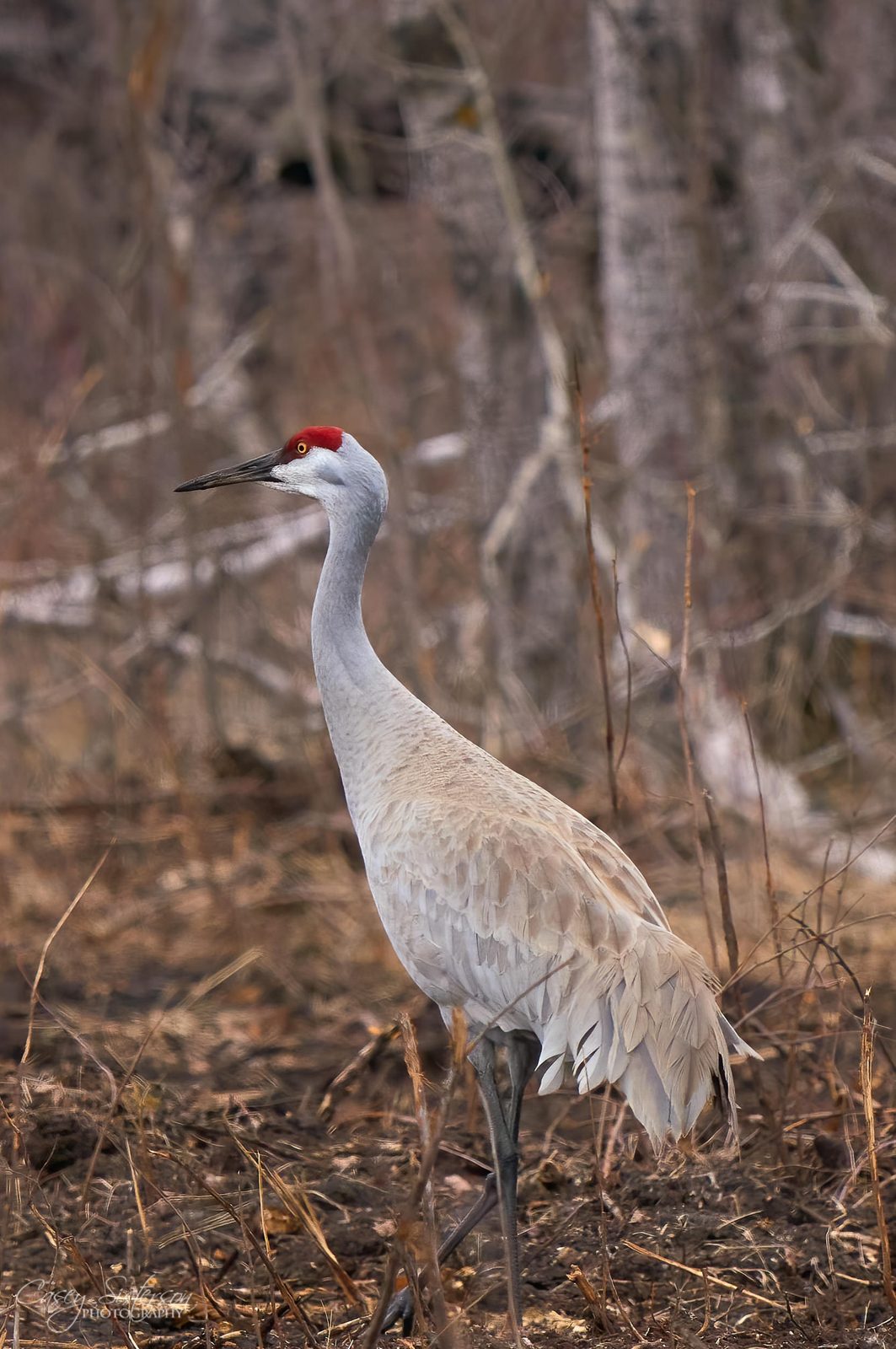
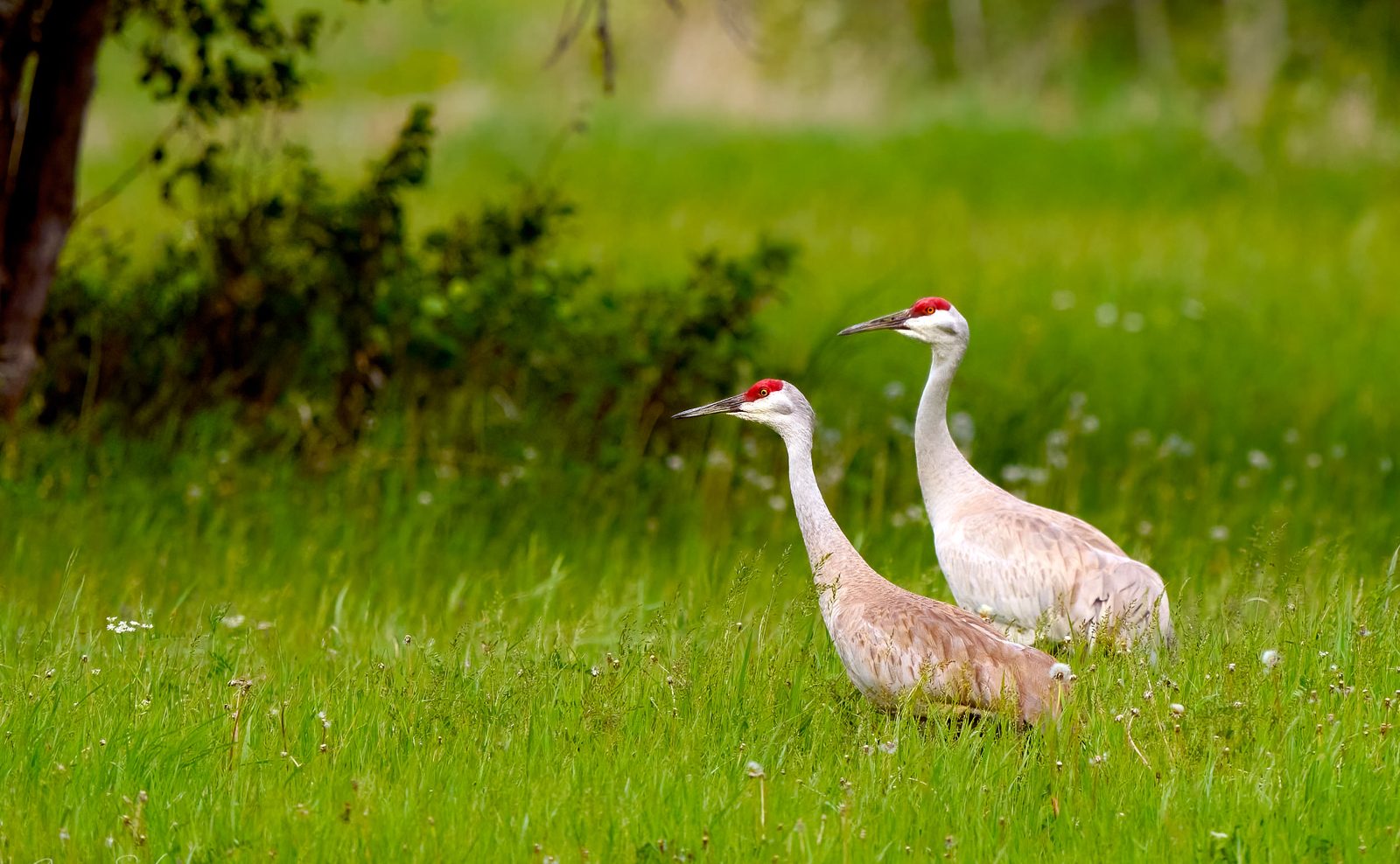
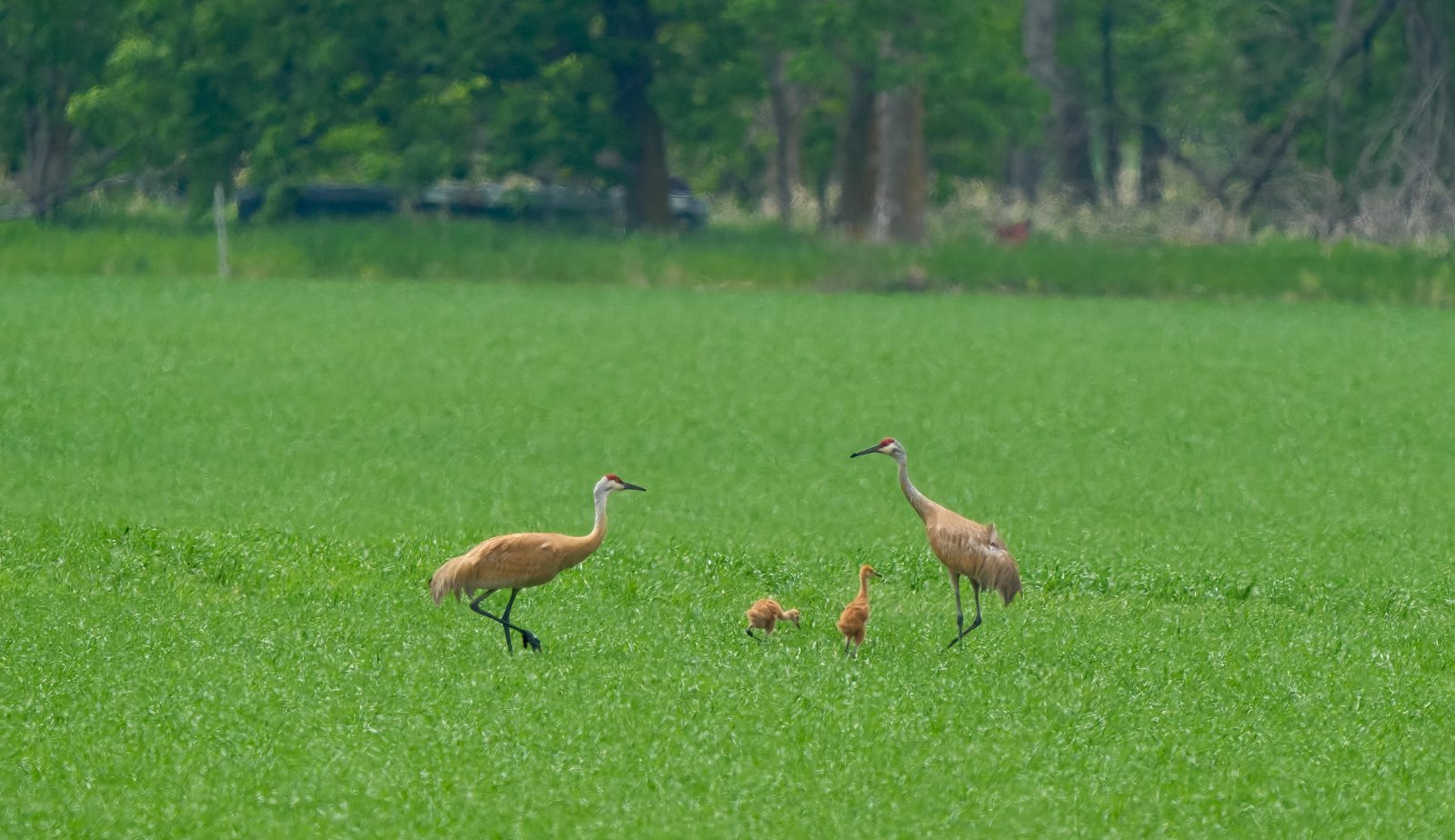
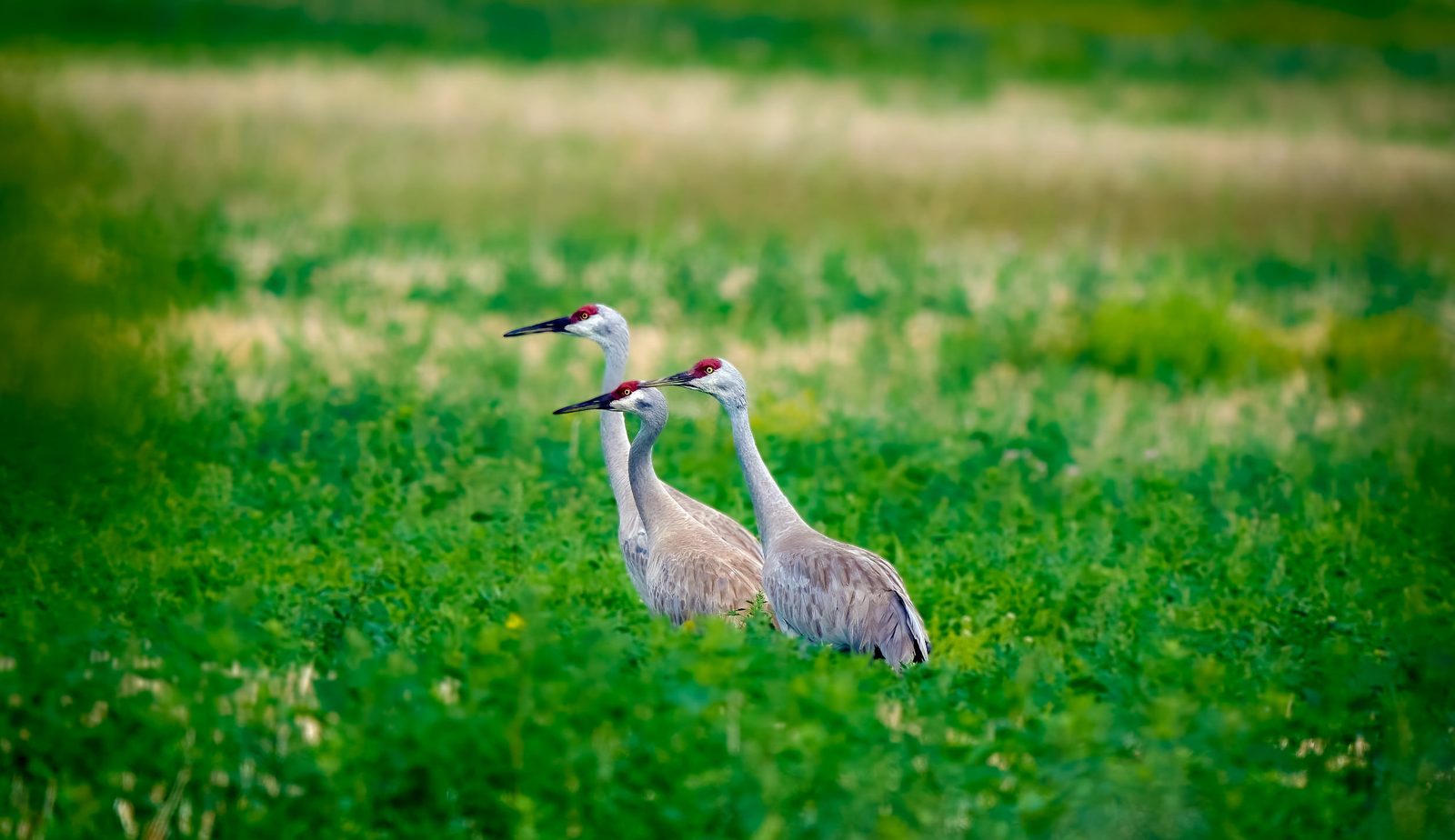
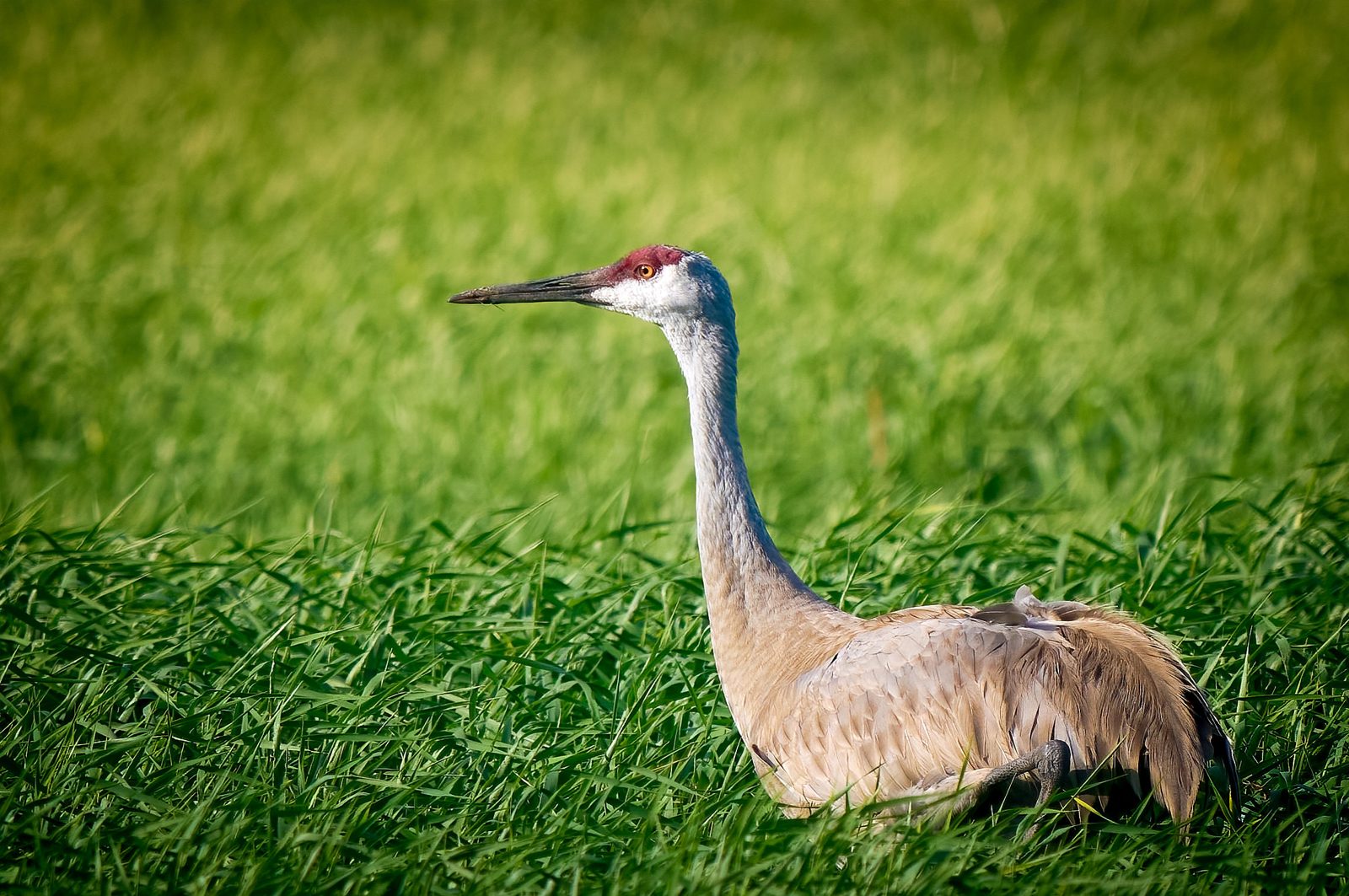
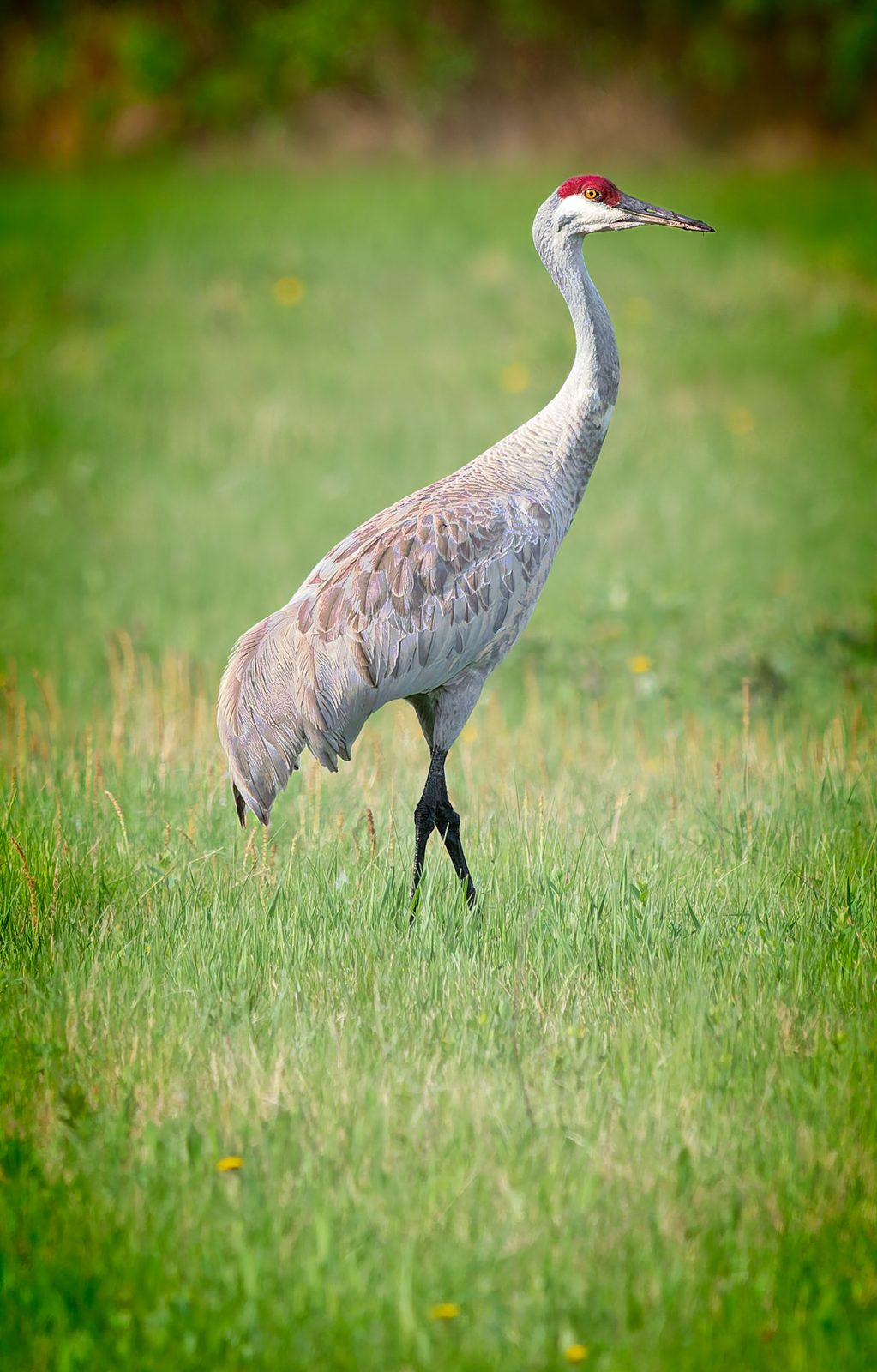
You usually hear sandhill cranes before you see them: a rolling, rattling call carrying across the fields in April as the pairs return. Out in the open they are hard to miss, tall and grey with a red crown, stepping through last year’s stubble as if they own it. By late spring they have tucked into the wetlands to nest, and by June the rust-coloured chicks are trailing along behind.
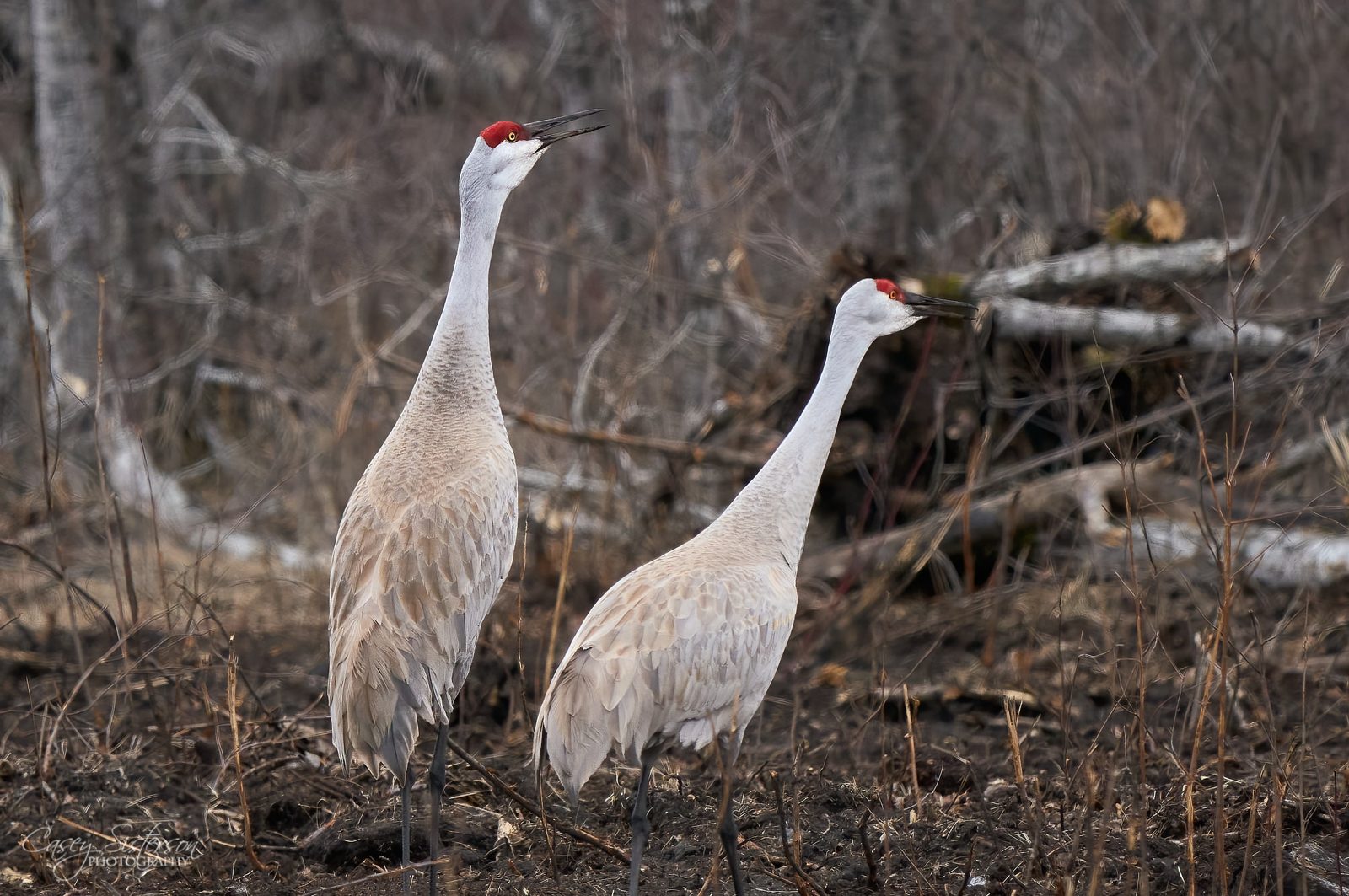
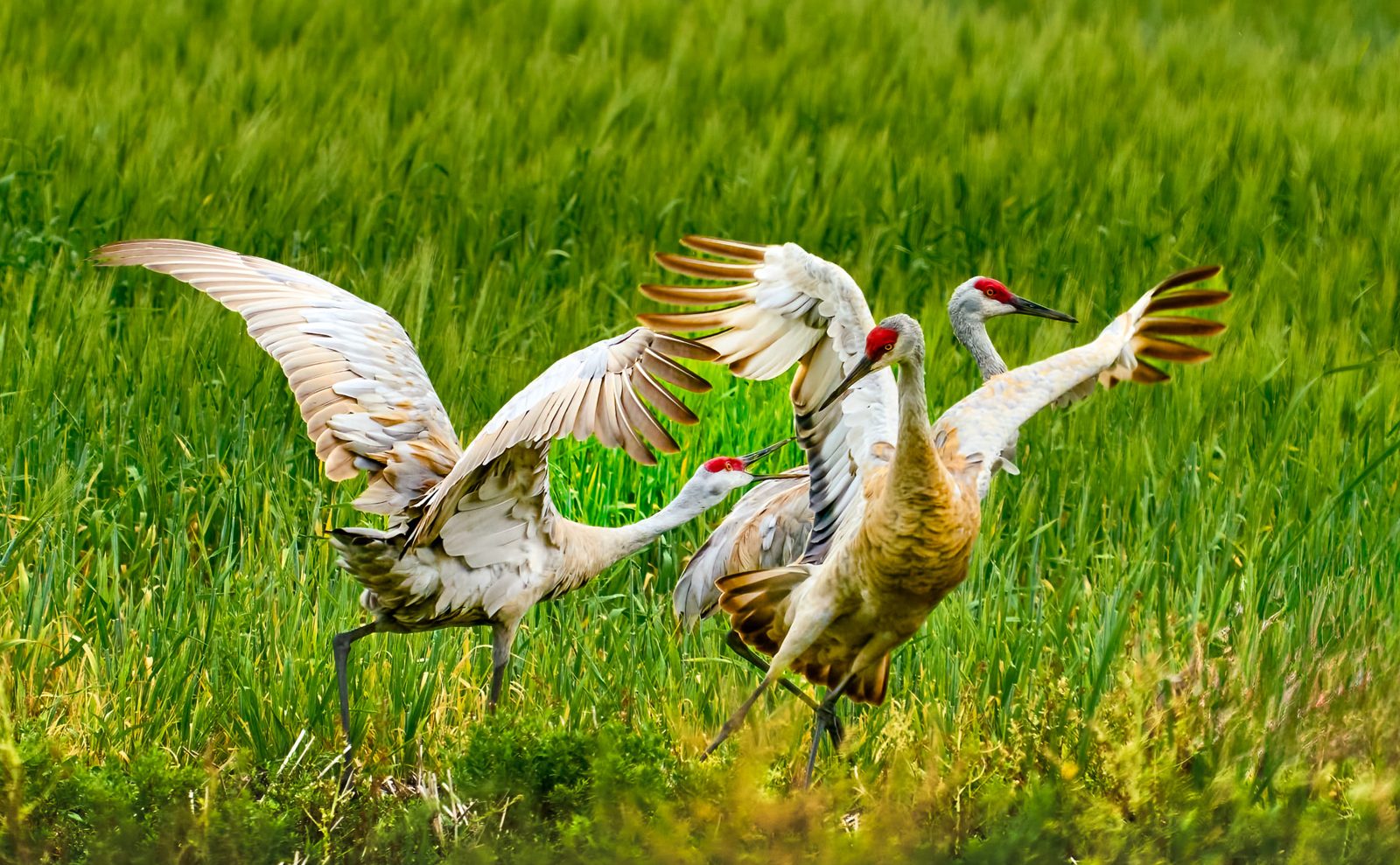
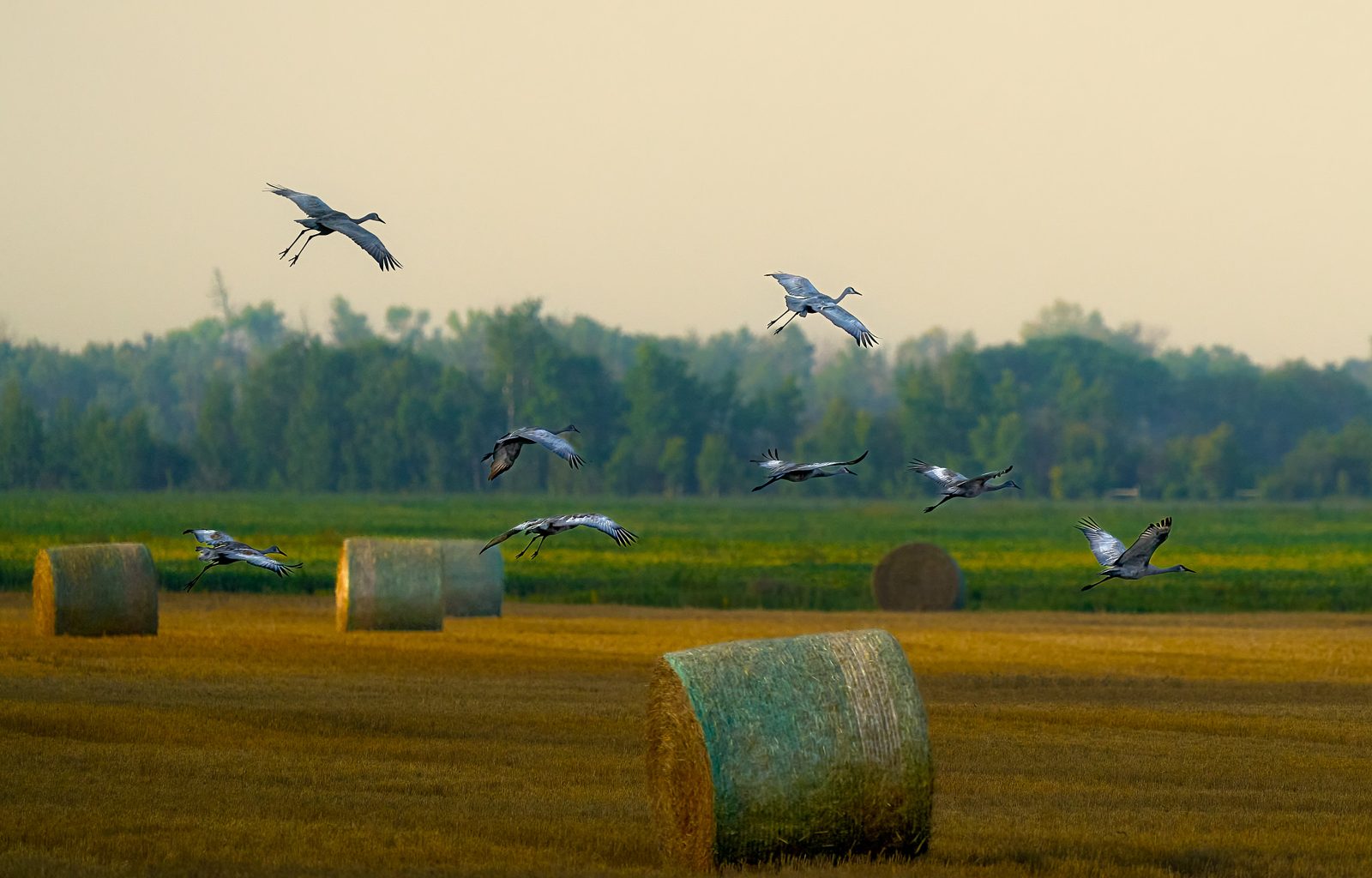
Sandhill cranes mate for life, and their dancing, with bowing, leaping, and tossing grass, isn’t only for courtship. The rusty colour on many birds isn’t natural: they preen mud and iron-stained plant matter into their feathers. The chicks, called colts, can walk within a day of hatching. Cranes are one of the oldest bird lineages on earth, with fossils going back some 2.5 million years. By September and October they gather in flocks and head south.
To learn more about this bird and its habitat, visit the sandhill crane page at All About Birds.
Field notes in photographs
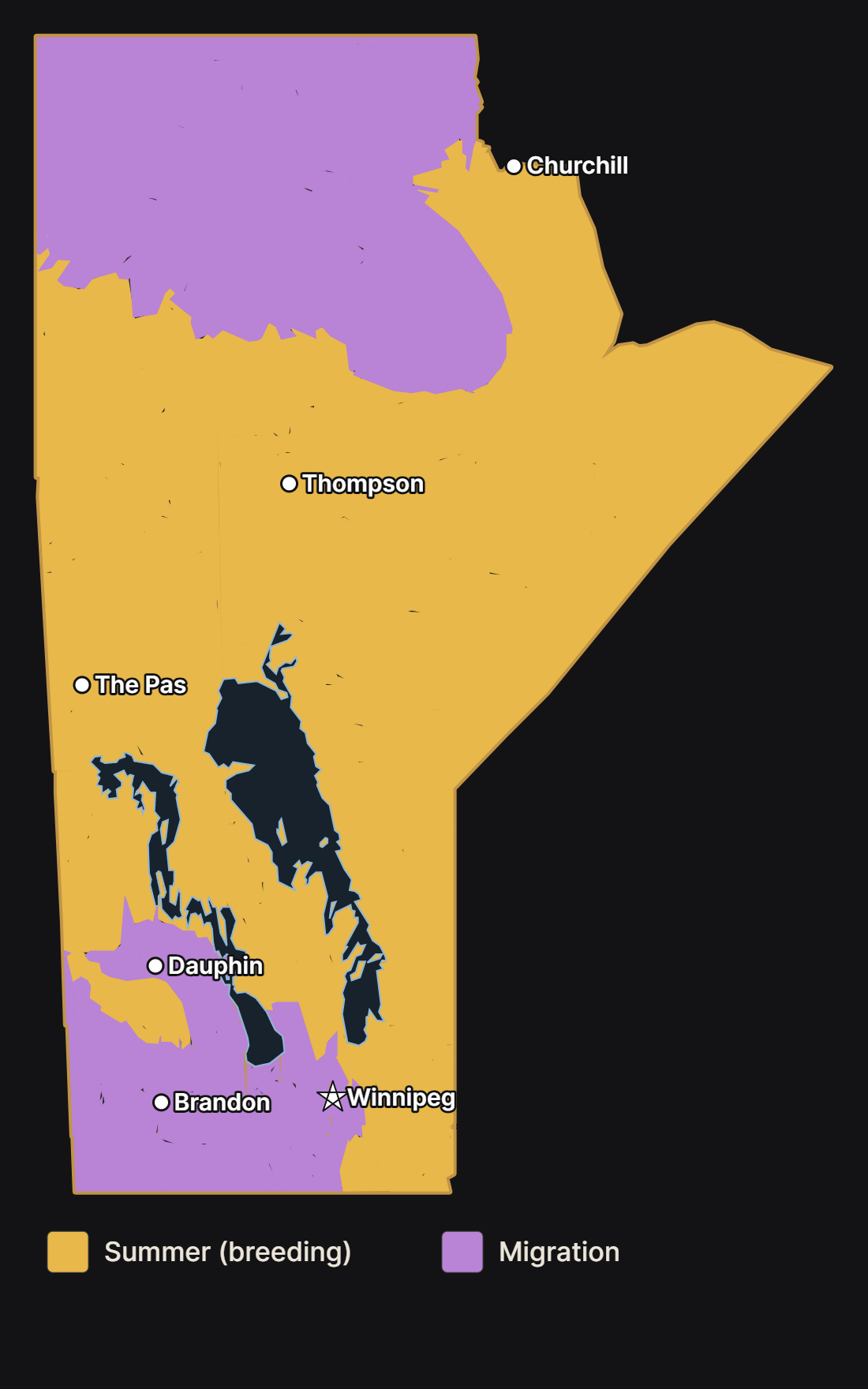
Sandhill crane Manitoba sightings
Where and when you can find the sandhill crane in Manitoba depends on the season and the habitat. You can see more species in the Manitoba birds section.
Back to Manitoba bird photography, or see the portfolio.