
Great horned owl
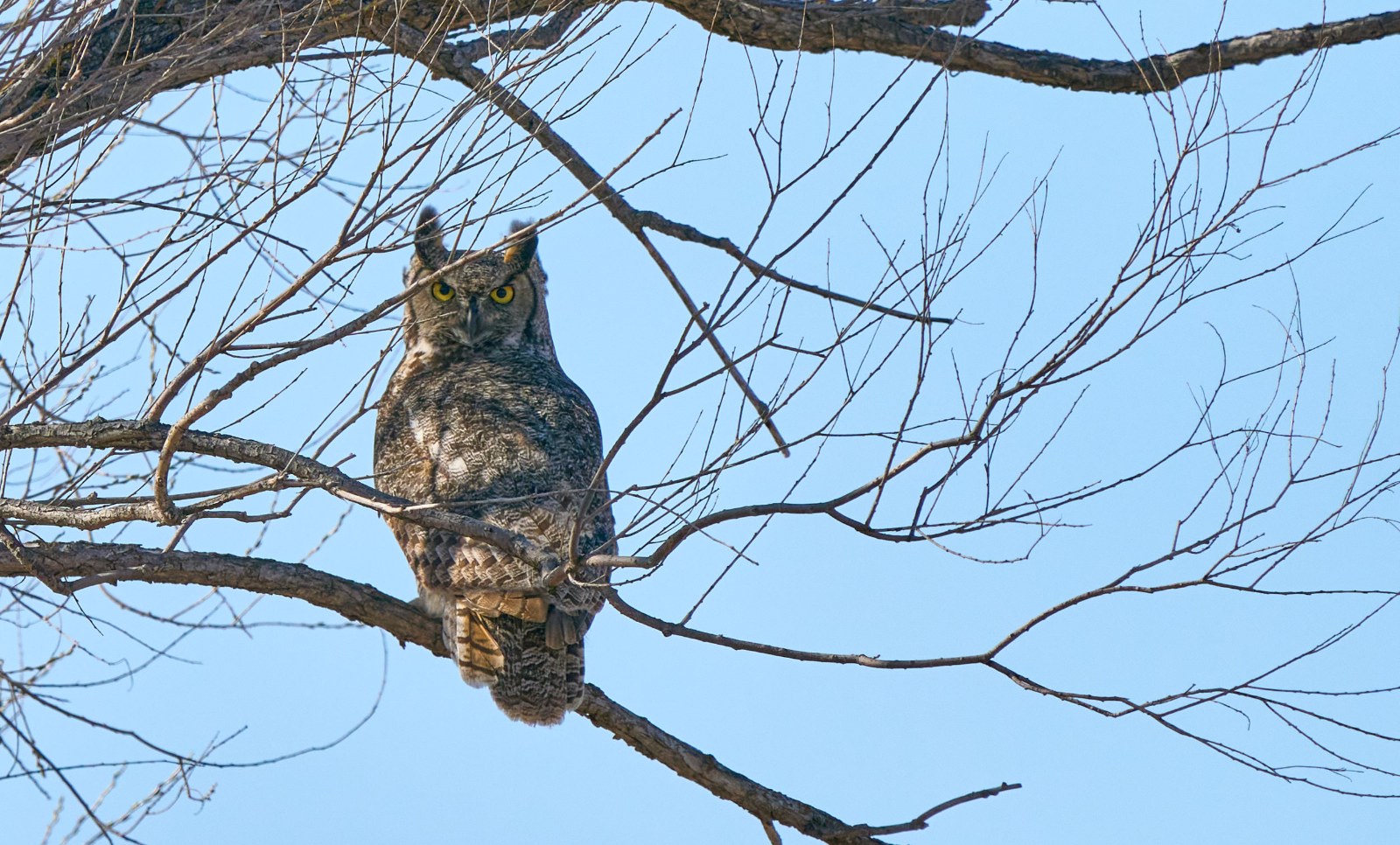
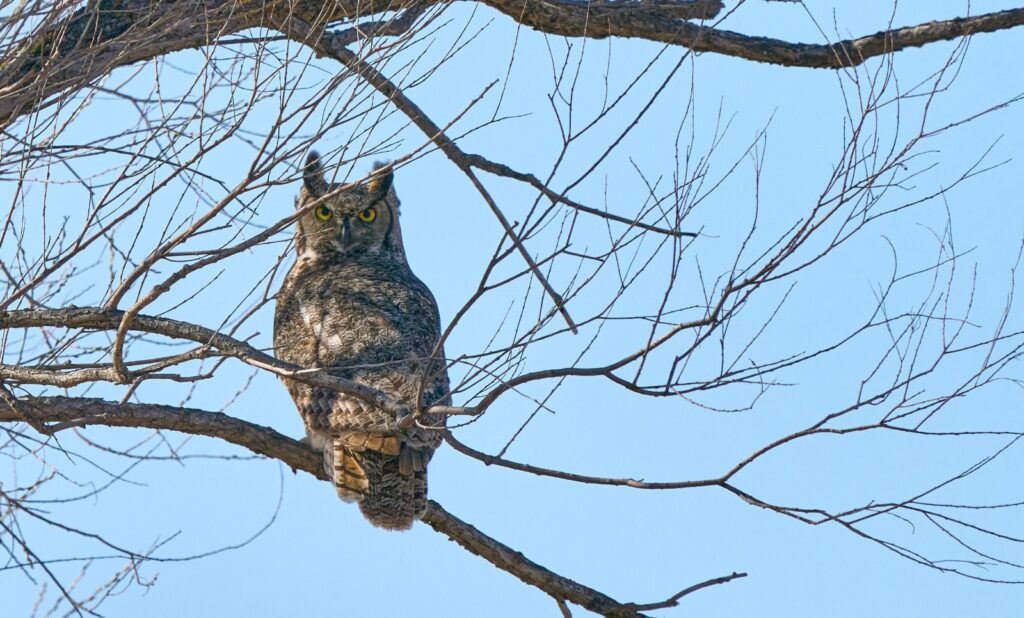
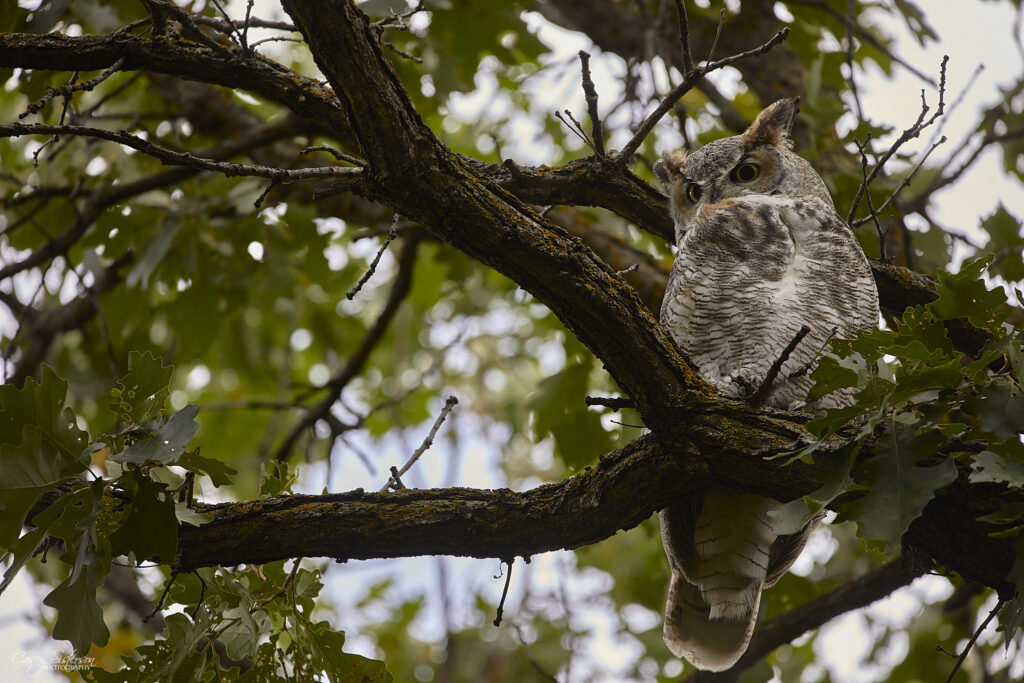
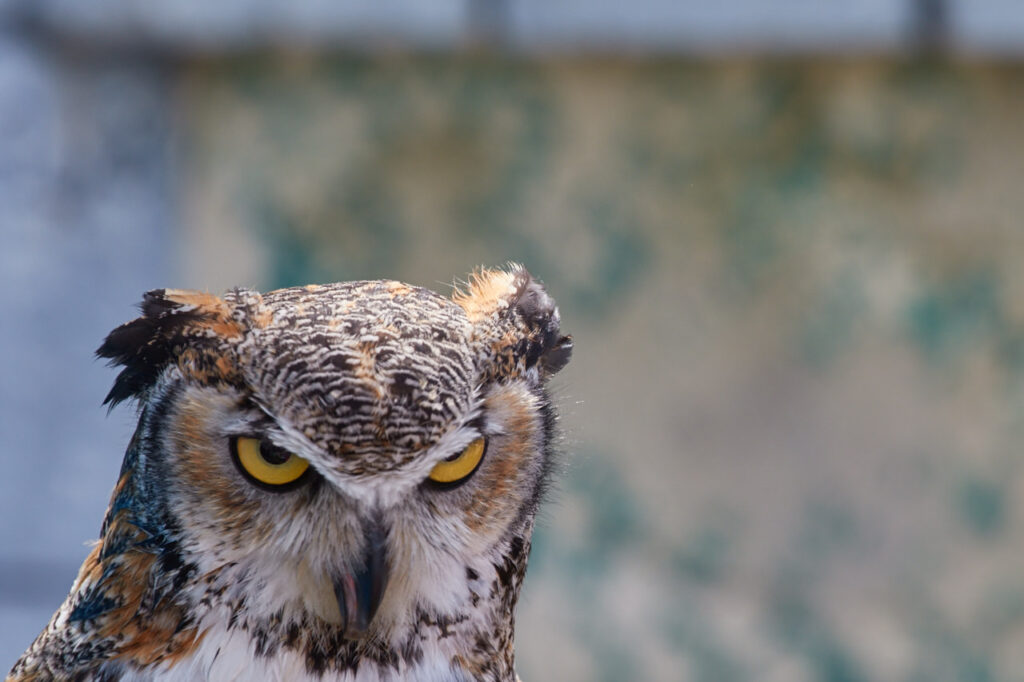
With tufted ears, fierce yellow eyes, and a mottled grey-brown coat that blends into bare branches, the great horned owl is one of the largest and most widespread owls in Manitoba. It stays through the winter in forests, parklands, and farm shelterbelts, and a motionless owl in a leafless tree is easy to walk right past. Its deep, hooting call carries through the cold nights.
Great horned owls hunt mostly at night, taking mice, rabbits, skunks, and even other birds, and their soft-edged feathers let them fly almost silently. They are among the earliest nesters, laying eggs in late winter, often in an old hawk or crow nest, so pairs can be heard calling to each other in January and February while snow still covers the ground.
To learn more about this bird and its habitat, visit the great horned owl page at All About Birds.
Here is one of my favourite frames of this bird, watching from a bare tree.
Field notes in photographs
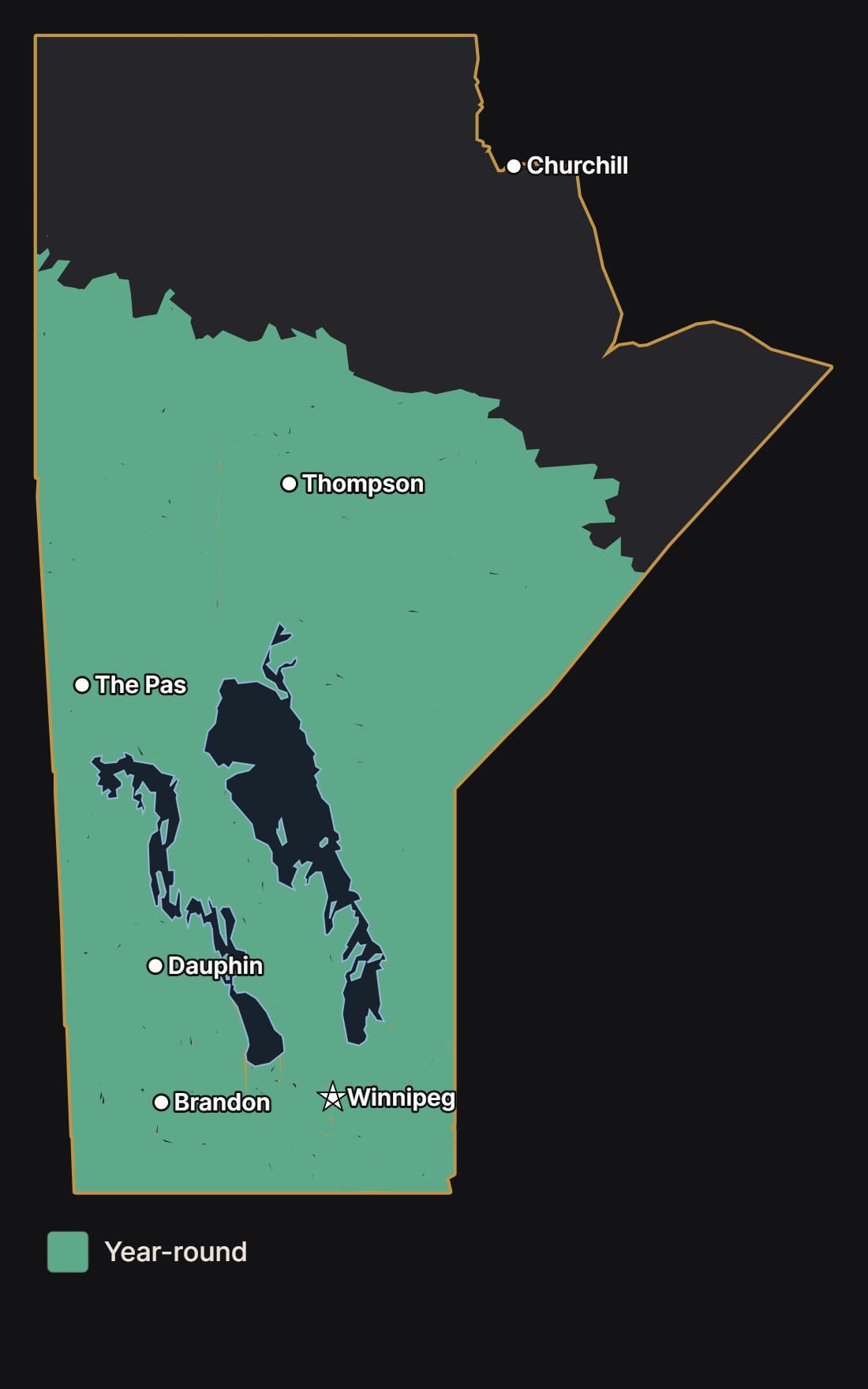
Great horned owl Manitoba sightings
Where and when you can find the great horned owl in Manitoba depends on the season and the habitat. You can see more species in the Manitoba birds section.
Back to Manitoba bird photography, or see the portfolio.