
Great blue heron
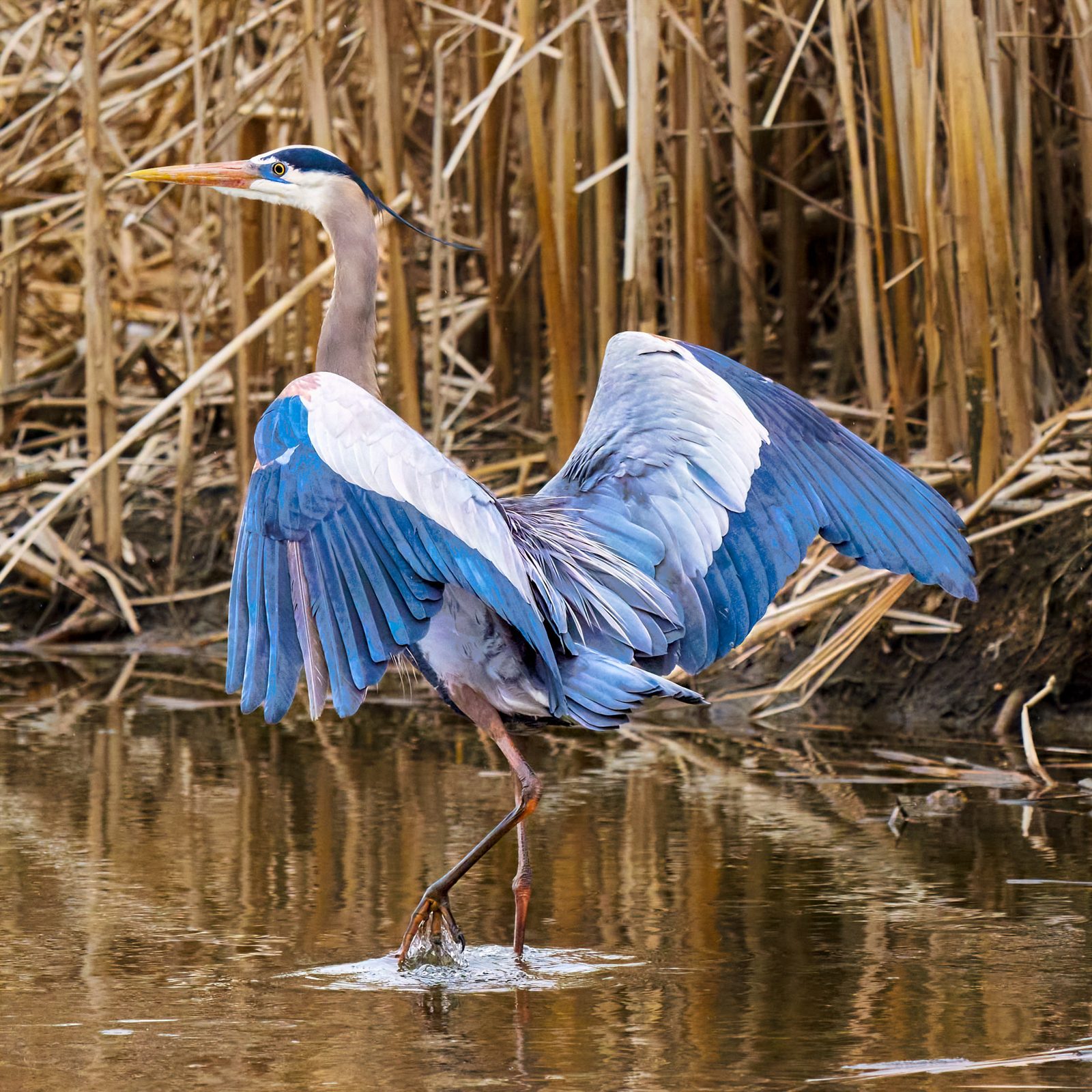
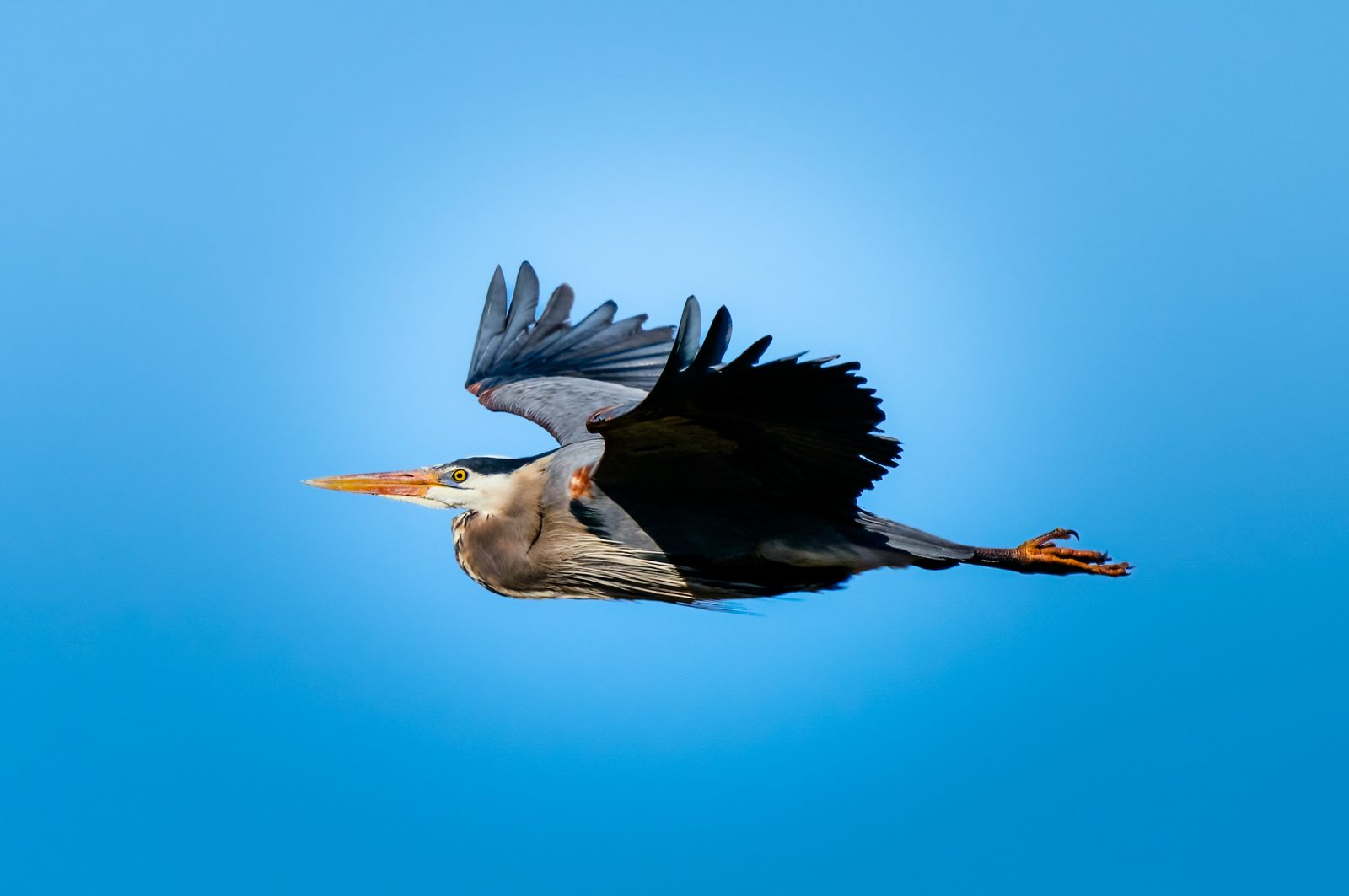
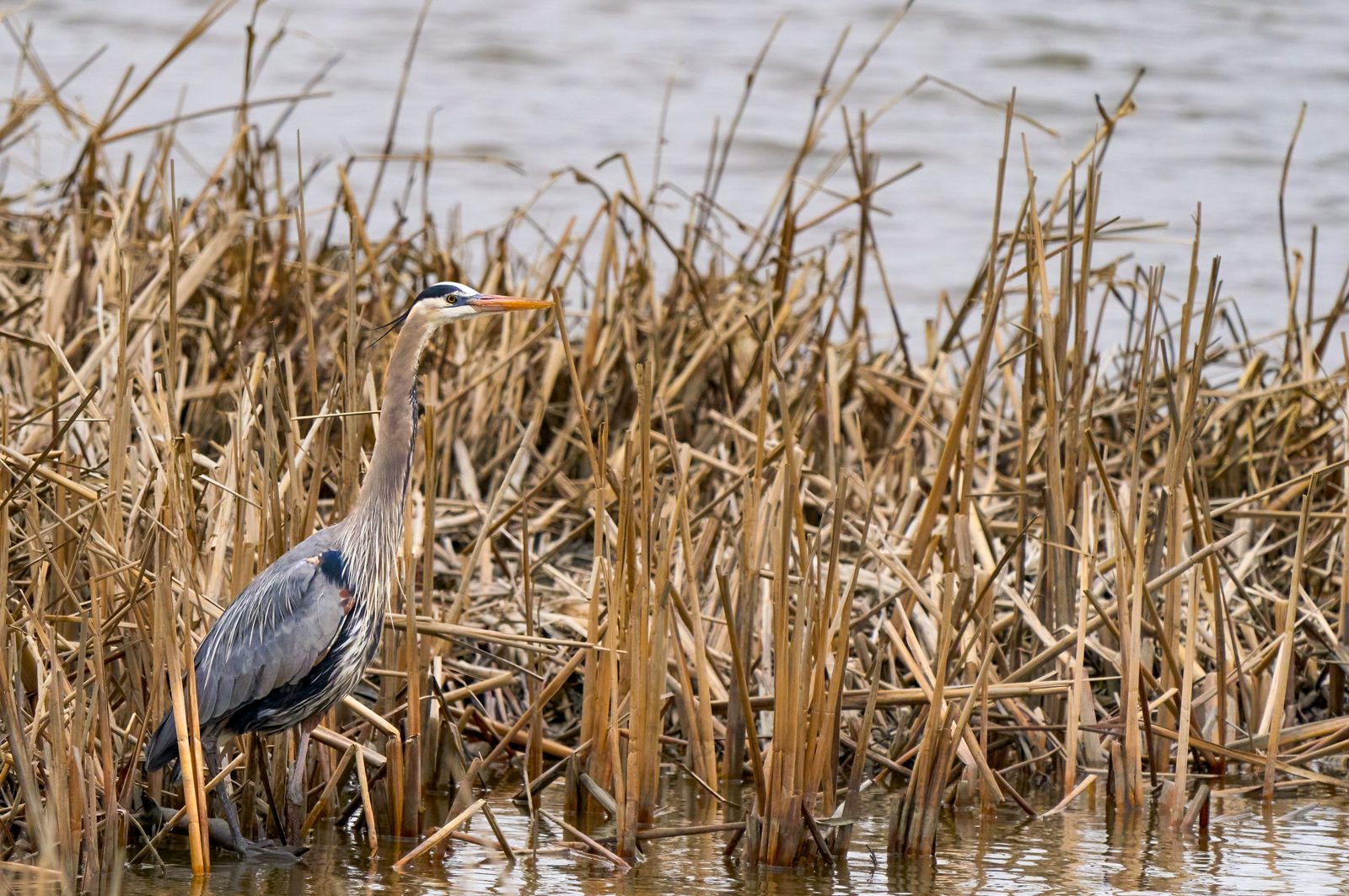
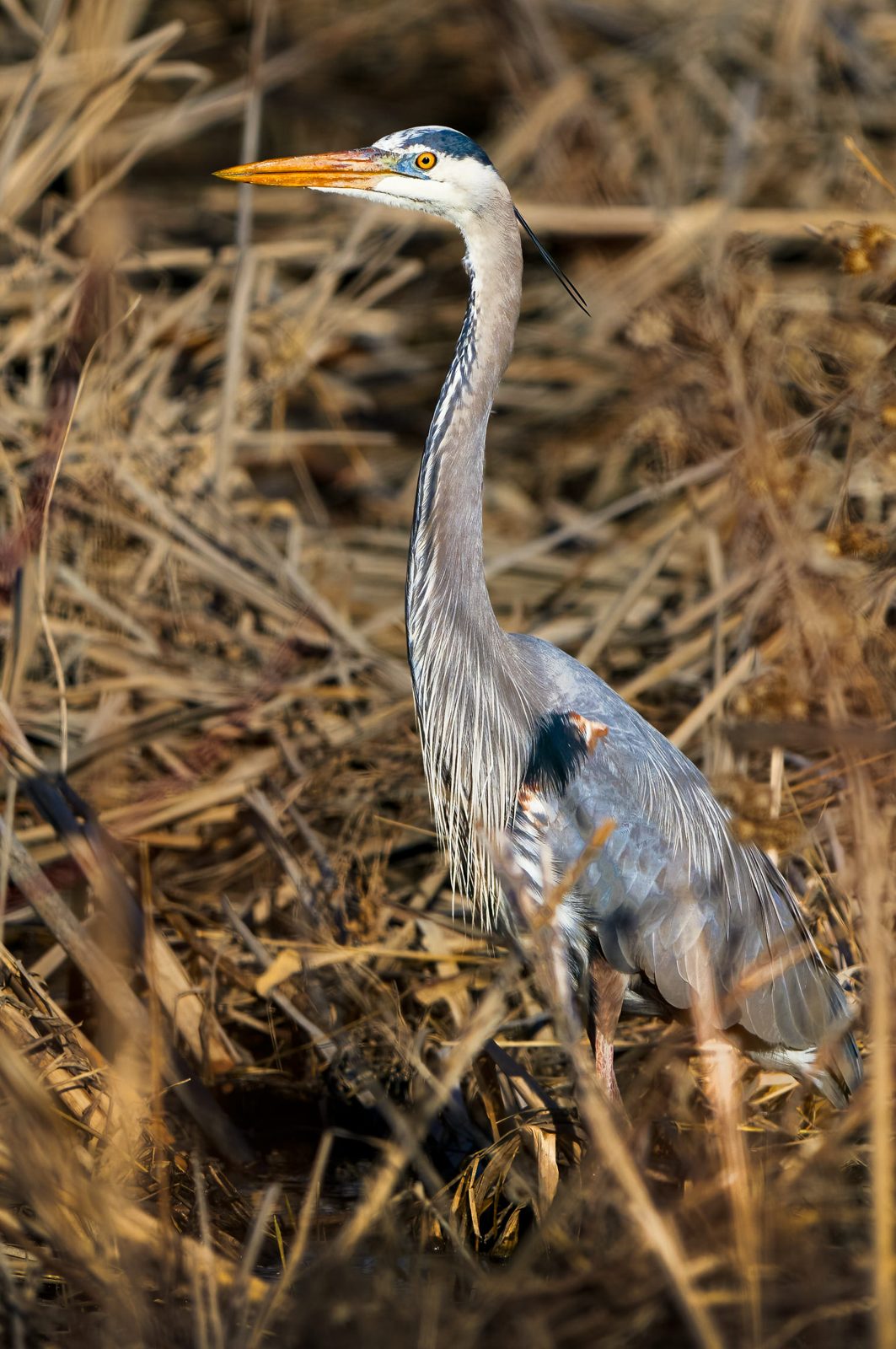
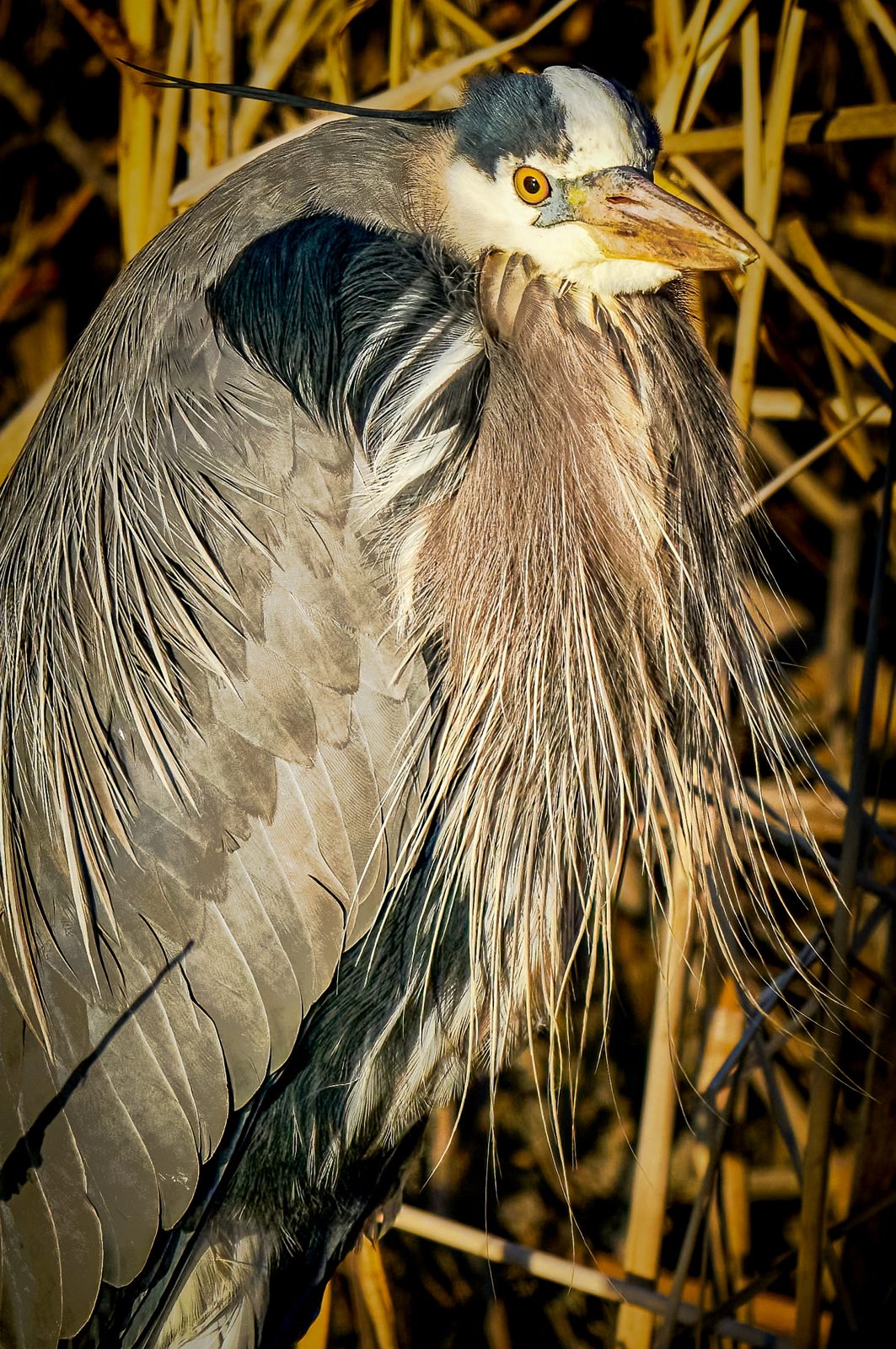
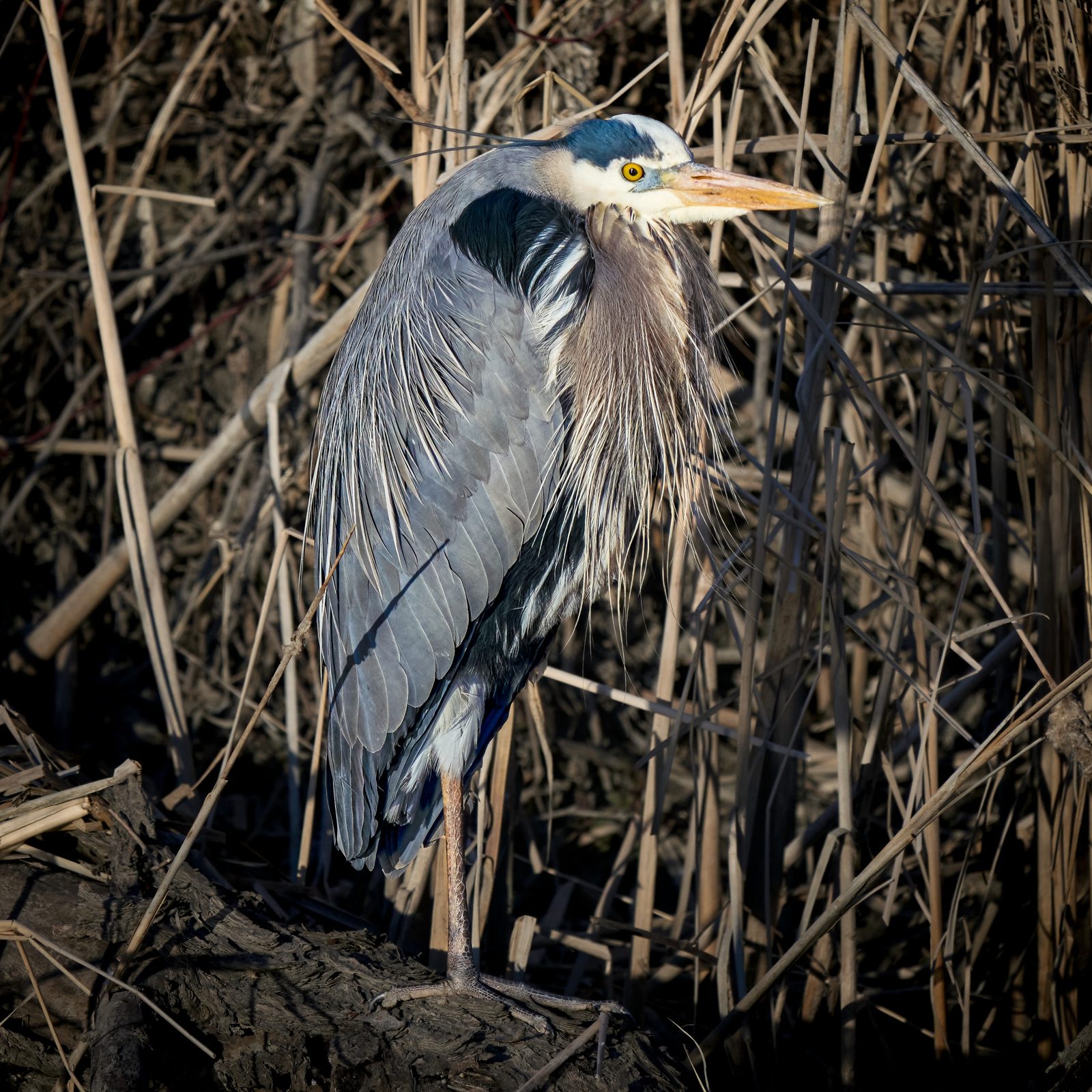
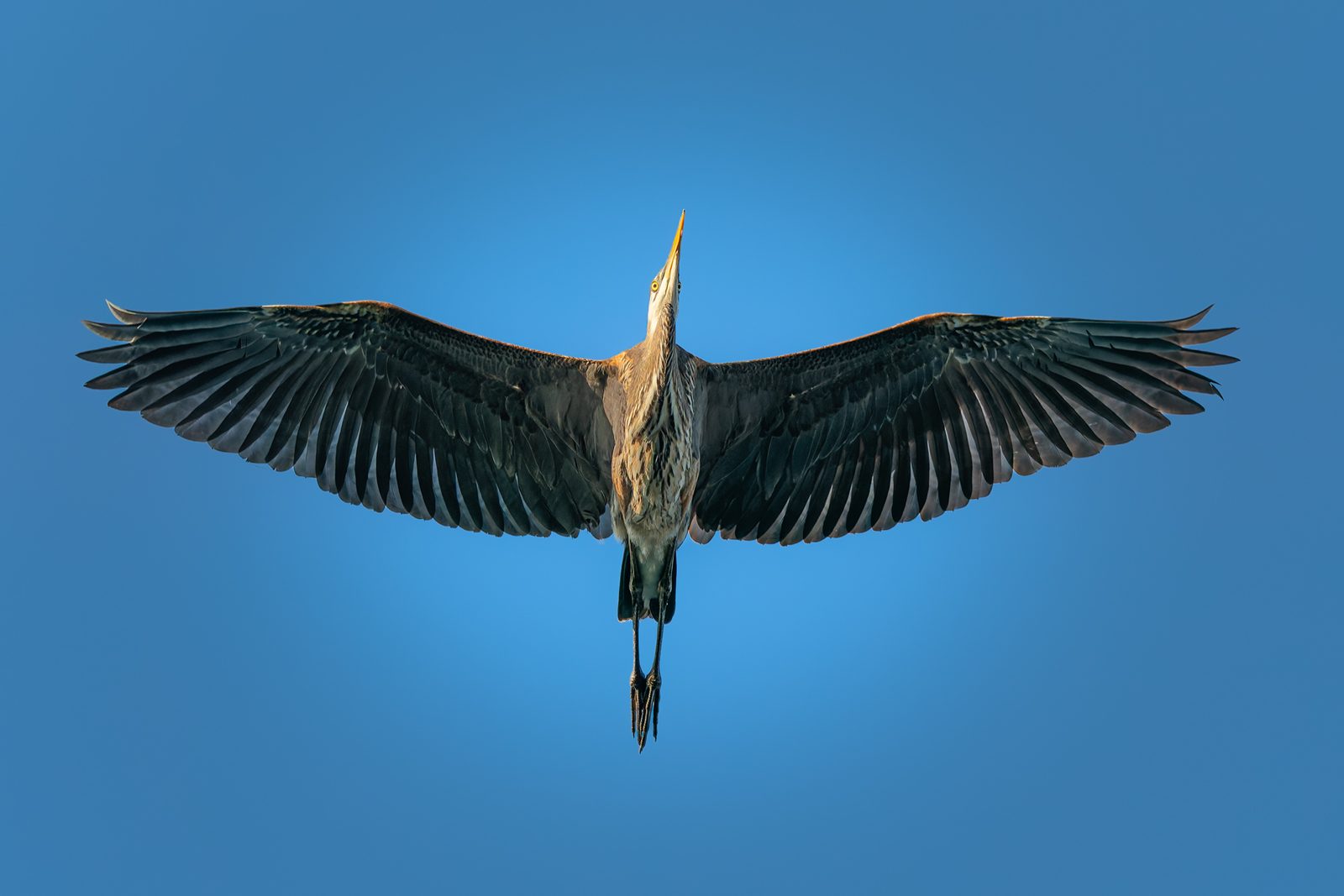
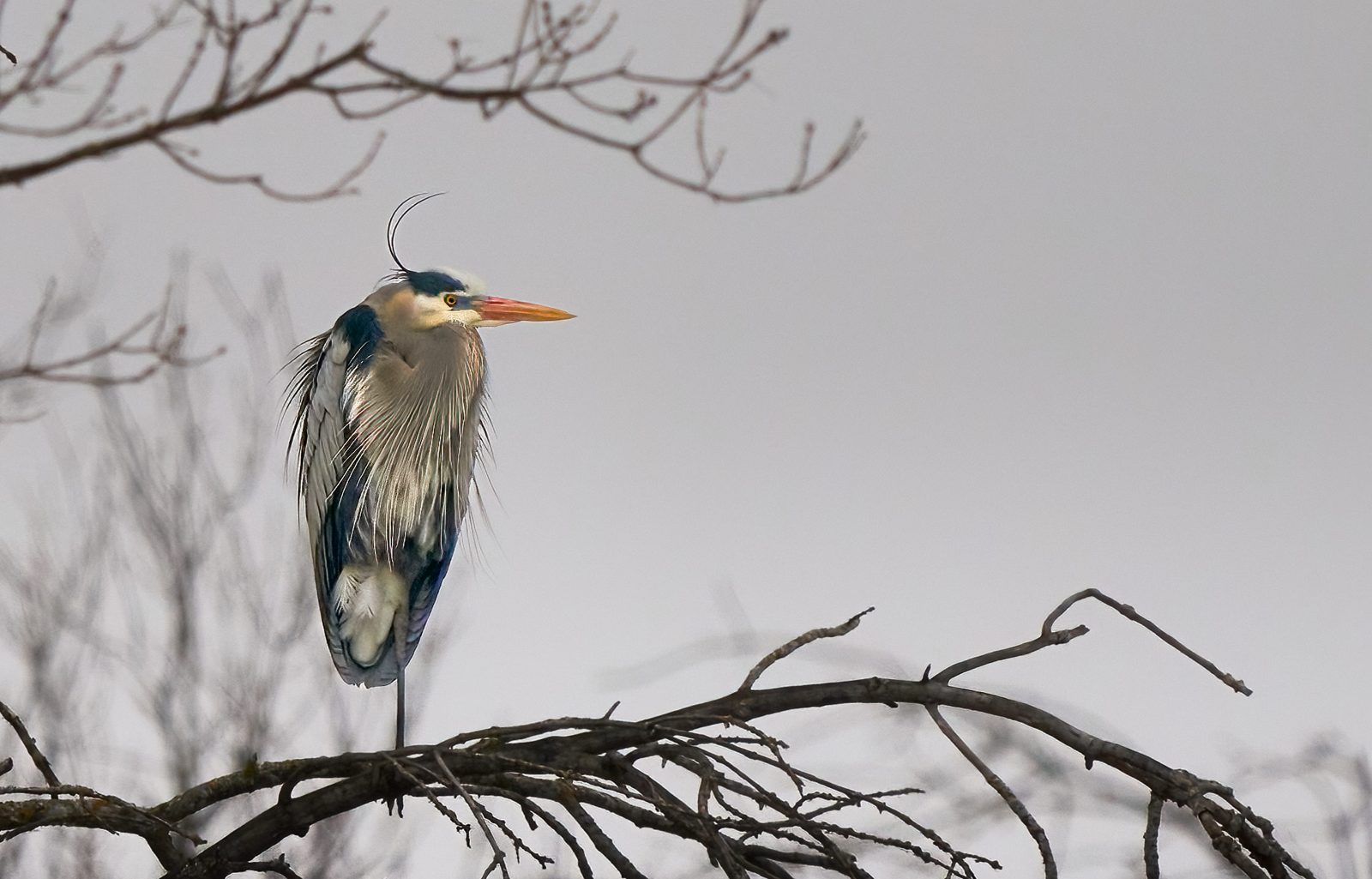
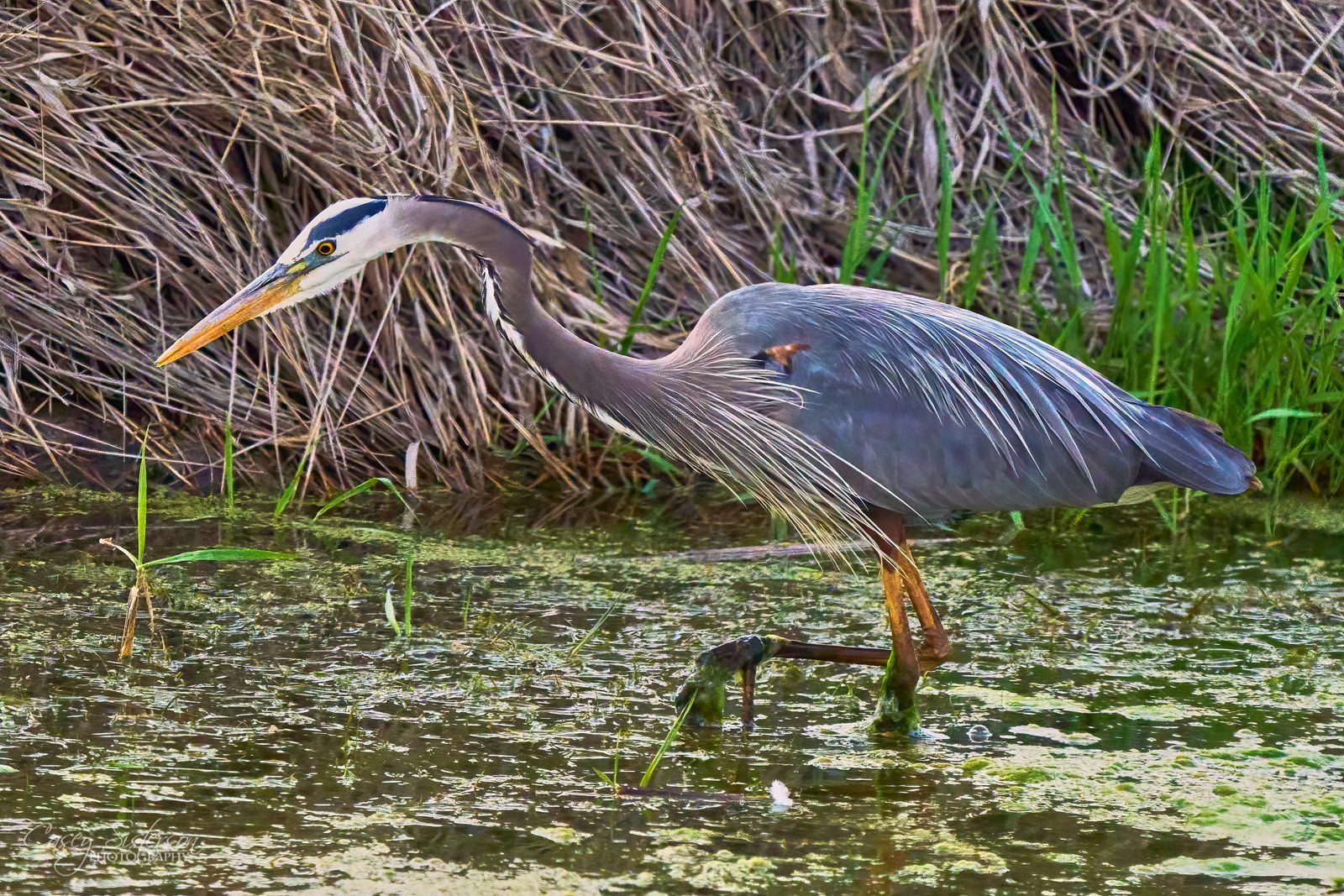
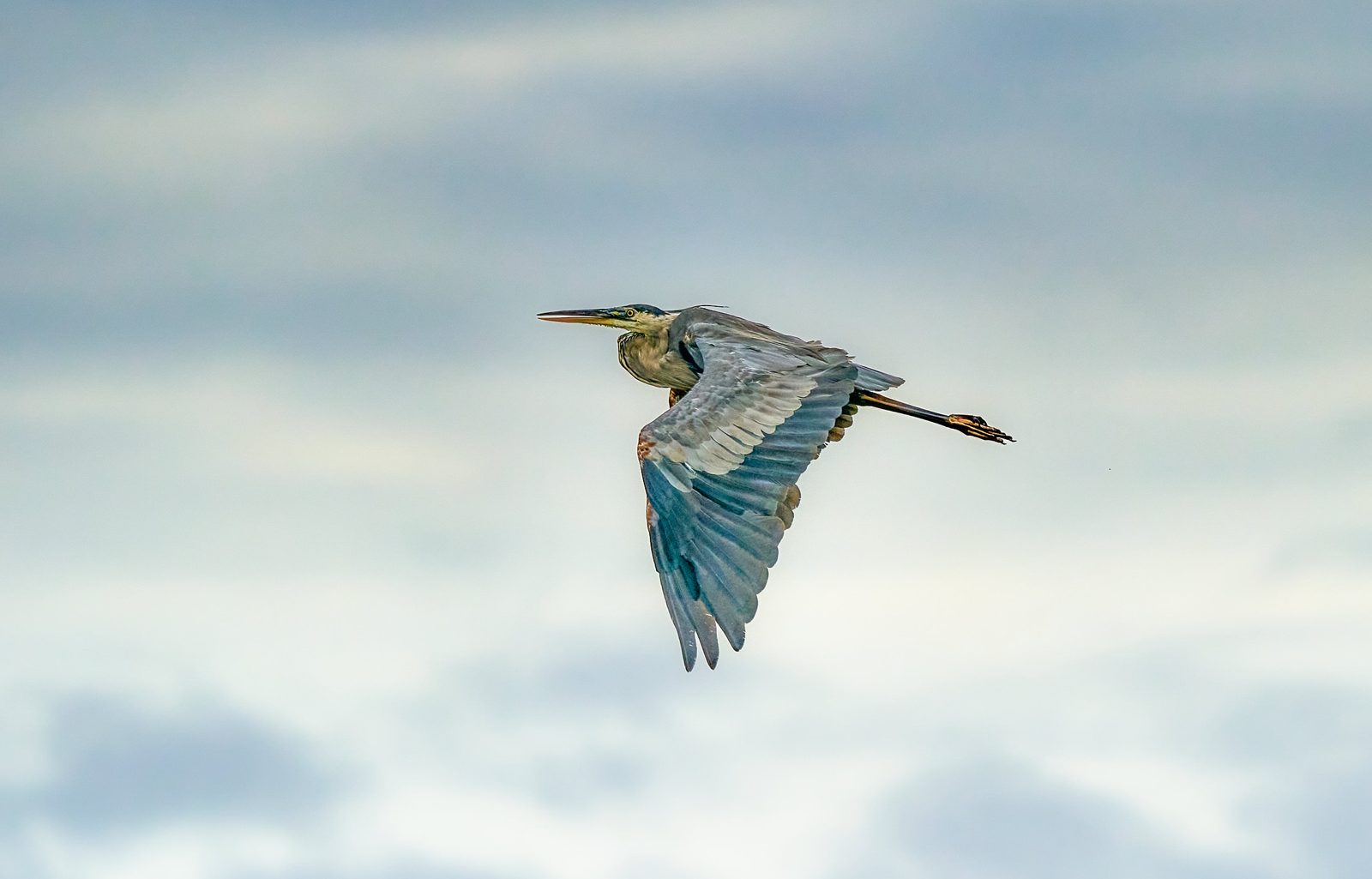
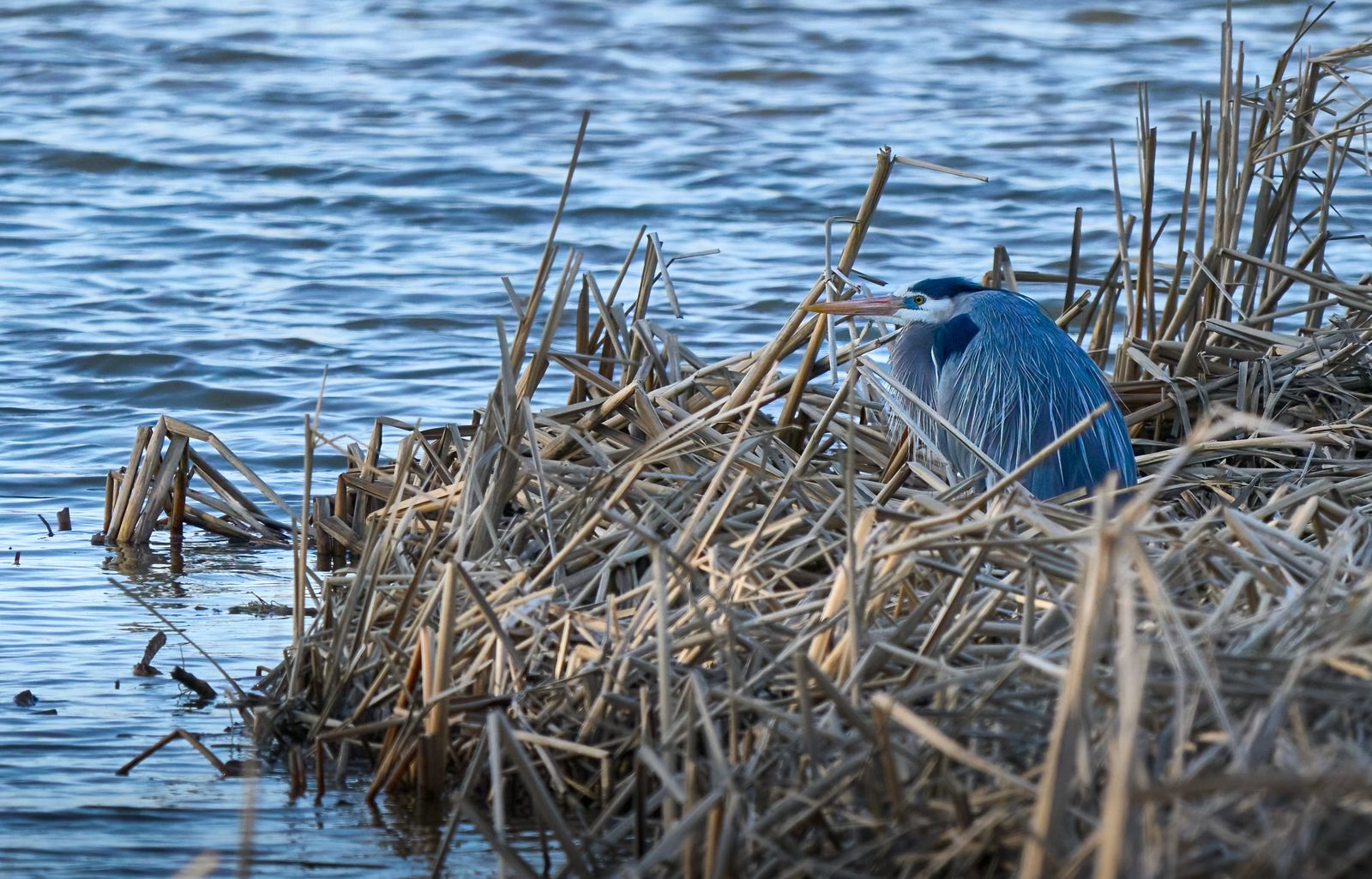
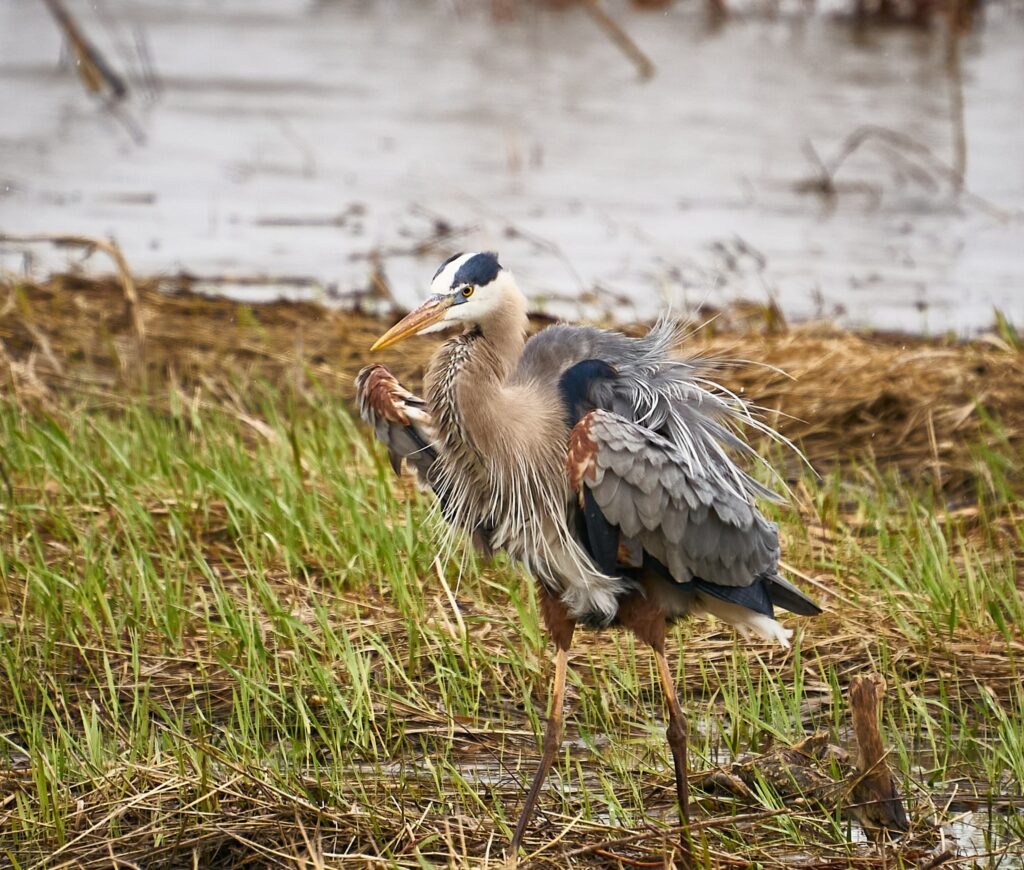
In April, once the ice has gone out, a grey-blue figure stands motionless at the edge of the marsh, so still it could be a snag left over from last year’s reeds. Then the neck uncoils and the strike is over before you register it. The great blue heron is Manitoba’s largest and most familiar heron, and patience is its whole method. Standing over a metre tall, the great blue heron is the largest heron in North America, wading slowly through shallow water with a patience that rewards photographers. In flight it folds its neck into an S-shape and trails long legs behind.
Standing over a metre tall, it weighs only about 2.5 kilograms, thanks to hollow bones. In flight it folds its neck into an S and trails its legs, with slow, deep wingbeats. Herons nest in treetop colonies called heronries, often returning to the same site for years. They arrive in April and most head south by October, once the shallows start to freeze. Herons nest in colonies, called heronries, building large stick nests high in trees near the water, and they return to Manitoba as soon as the ice opens up.
To learn more about the great blue heron and its habitat, visit its species page at All About Birds.
Field notes in photographs
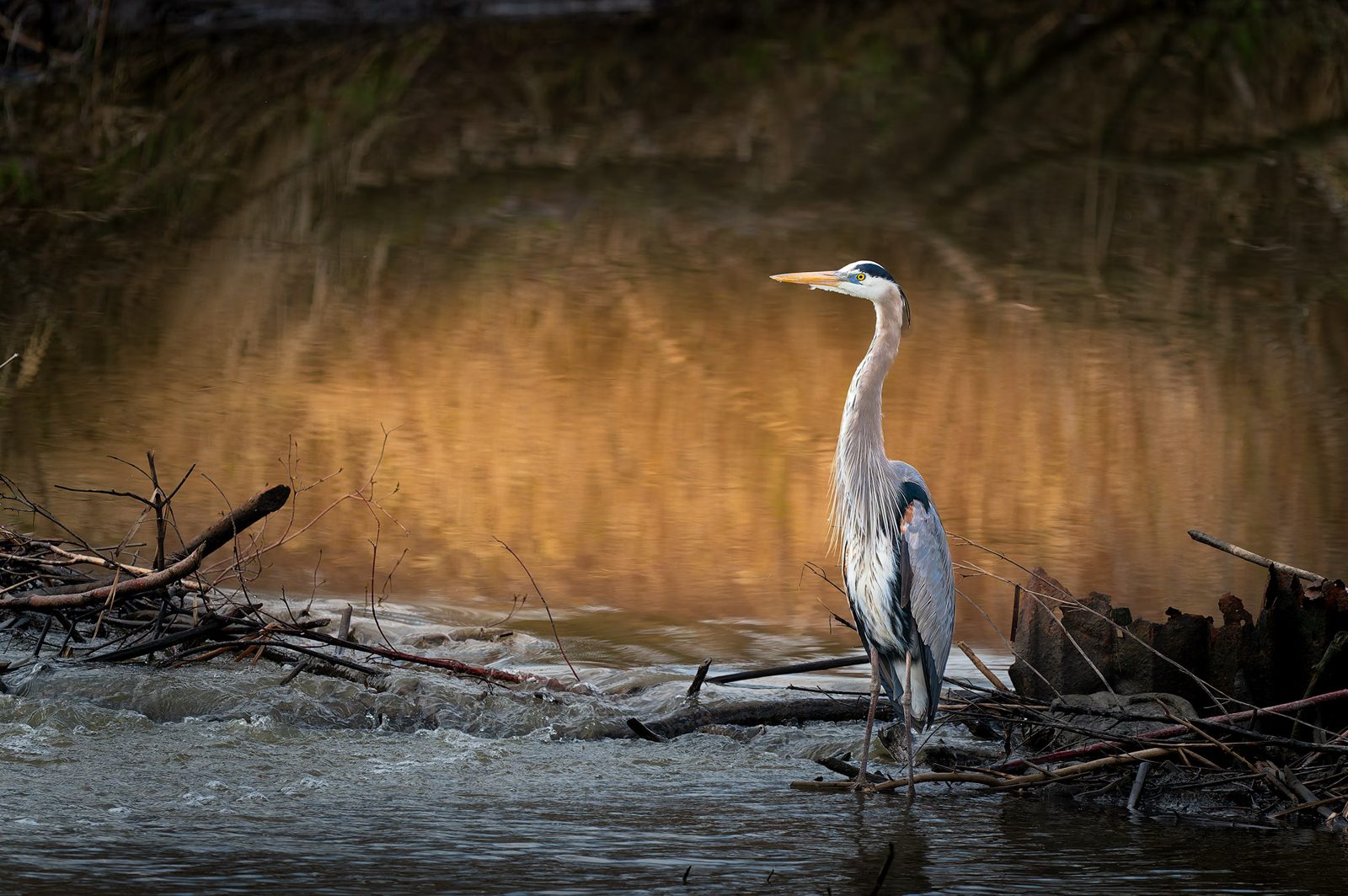
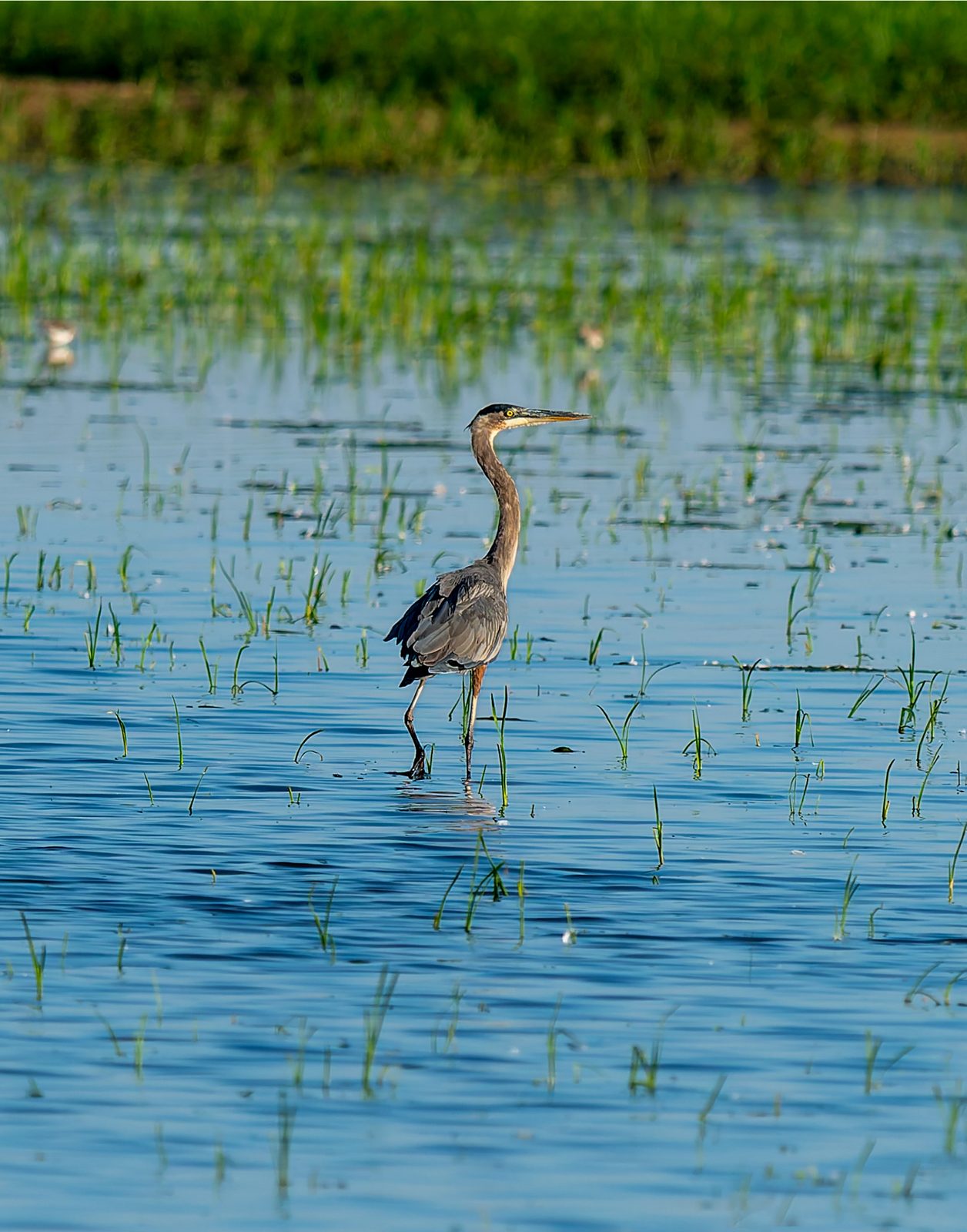
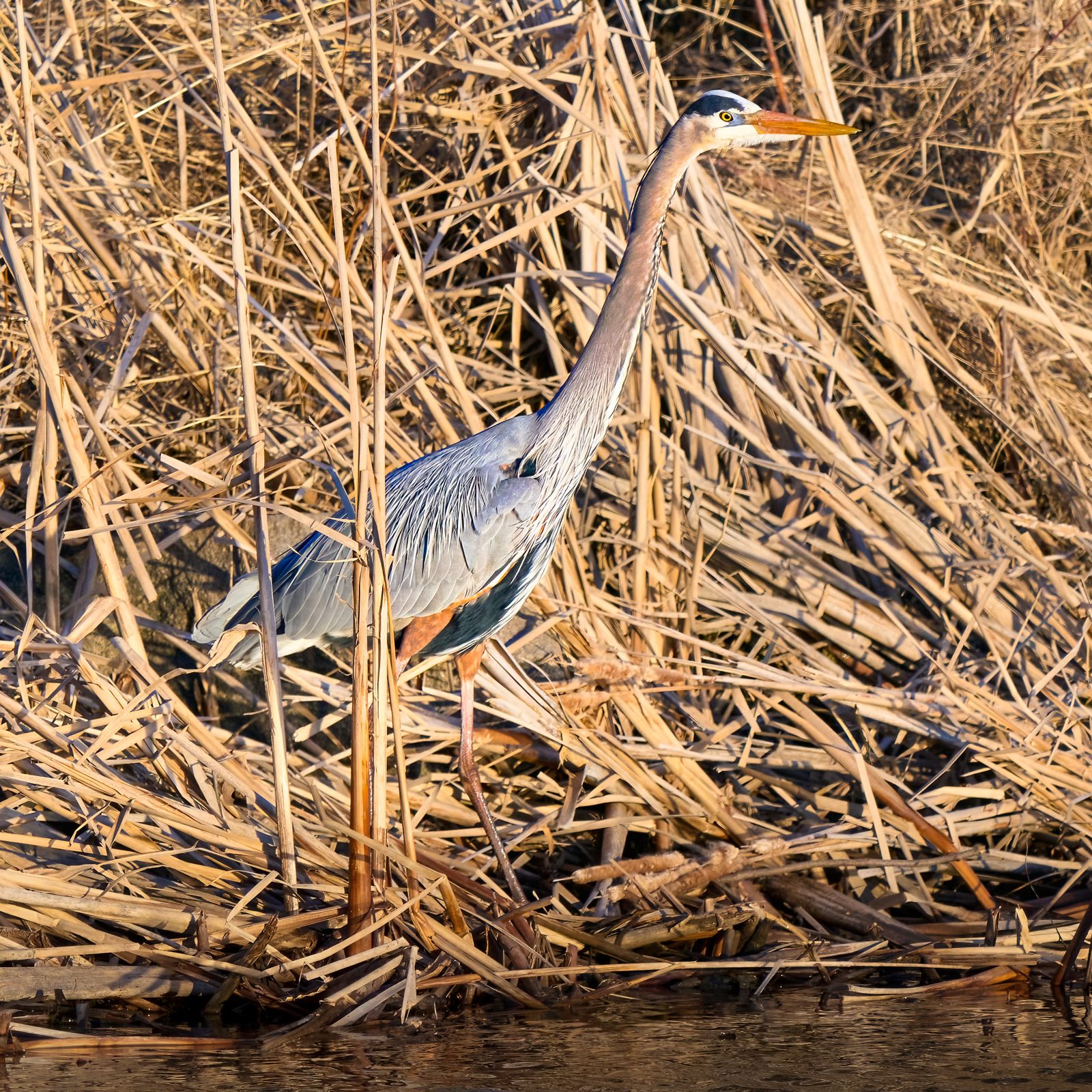
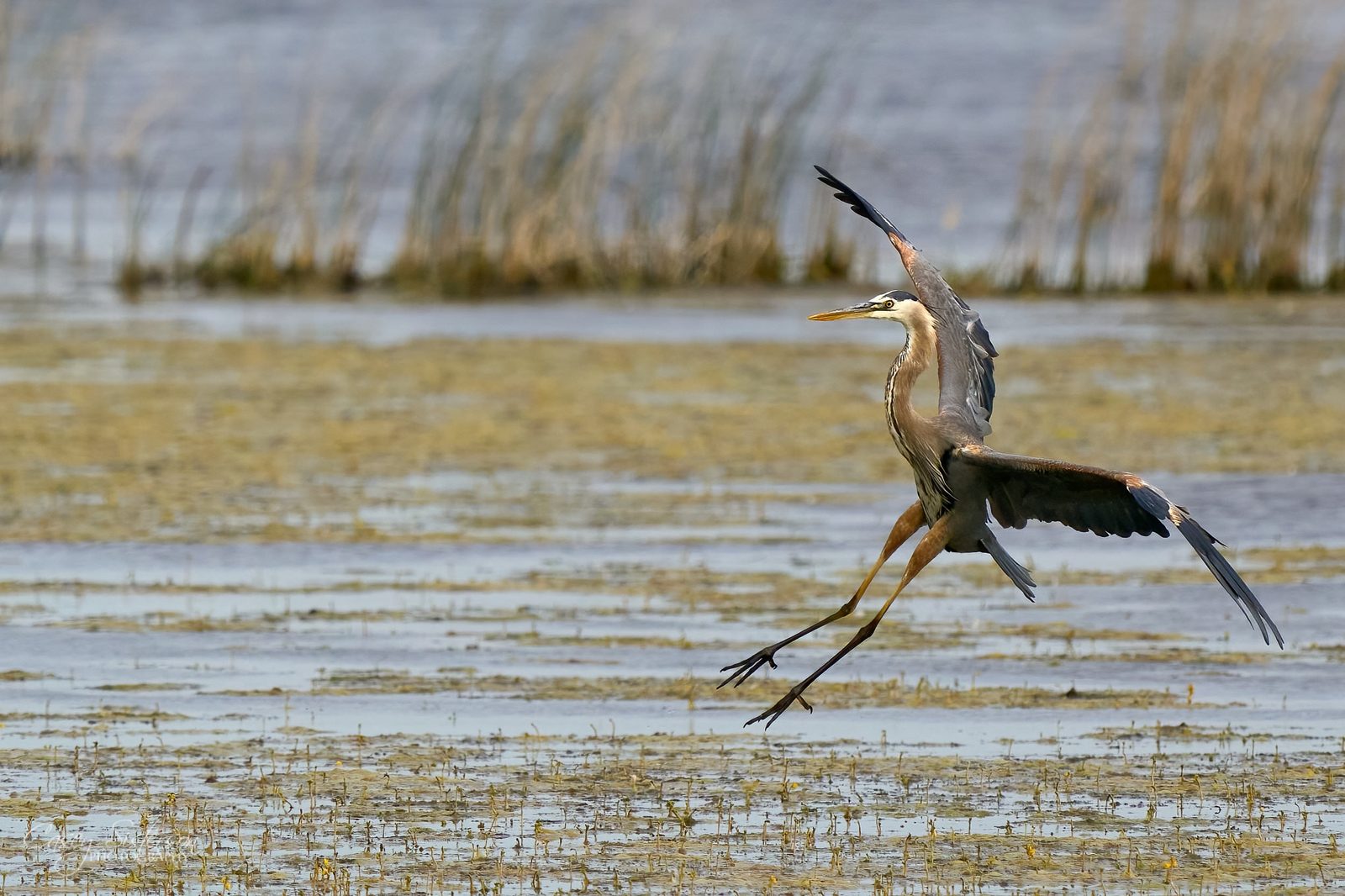
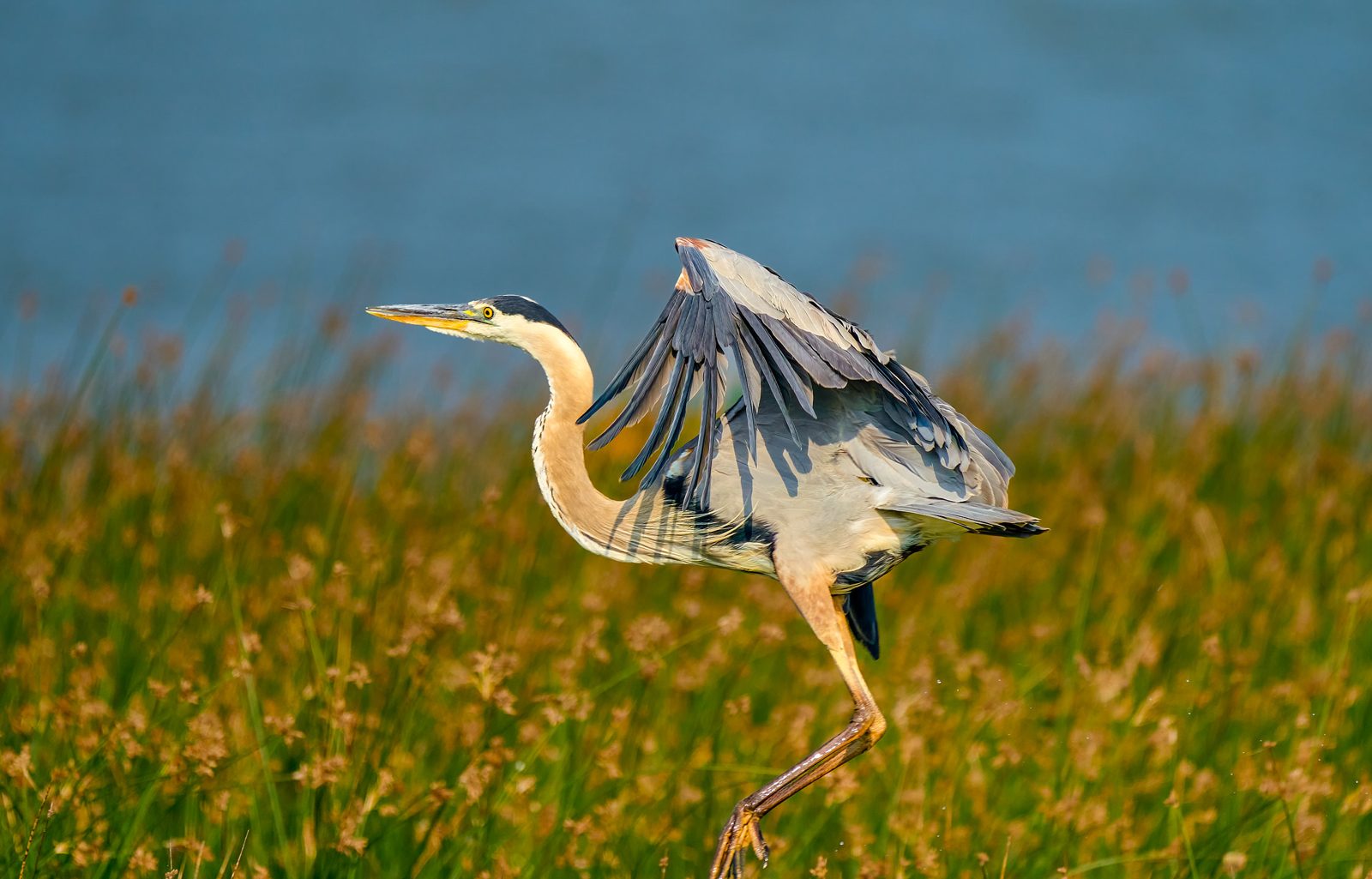
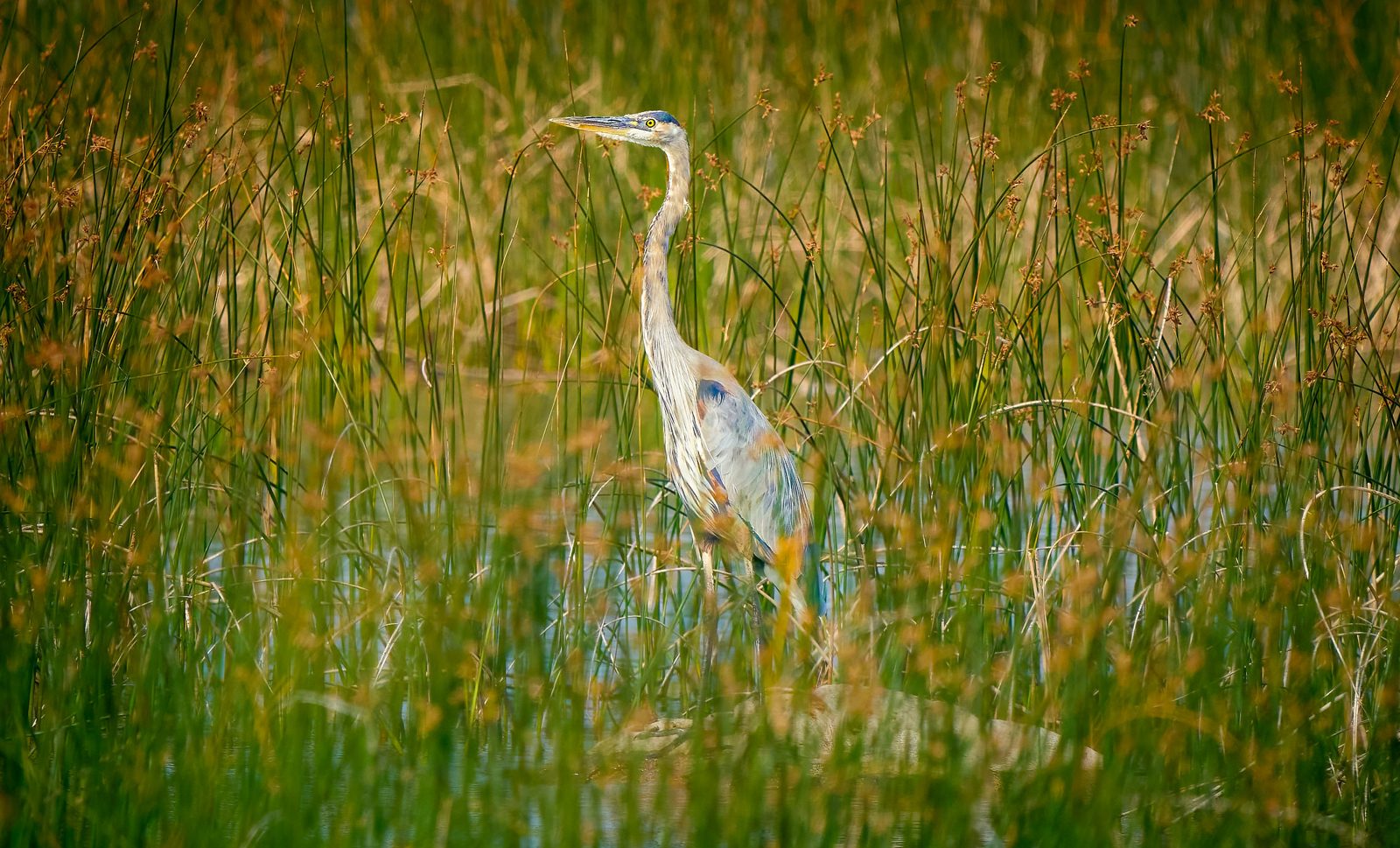
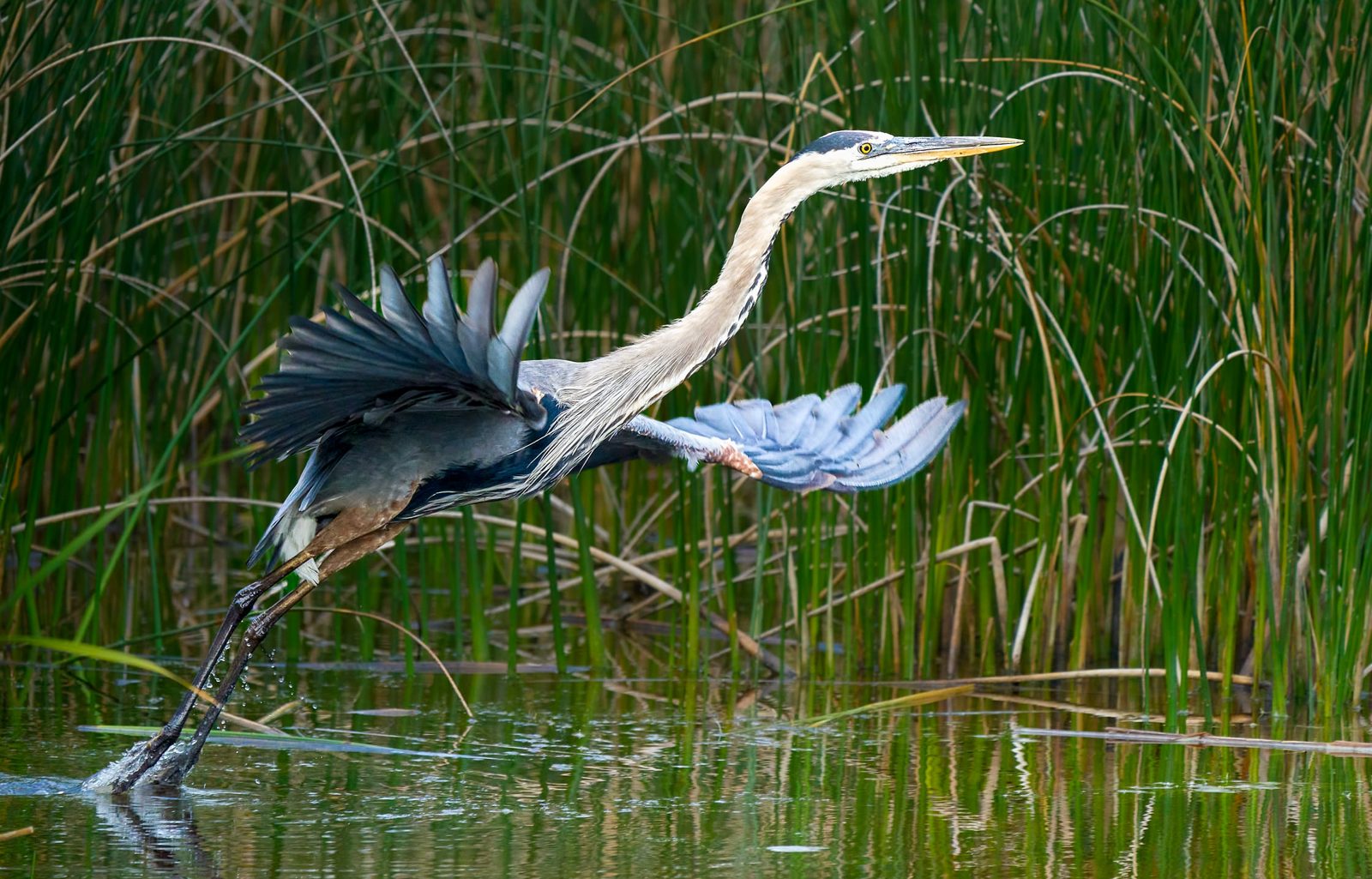
Great blue heron Manitoba sightings
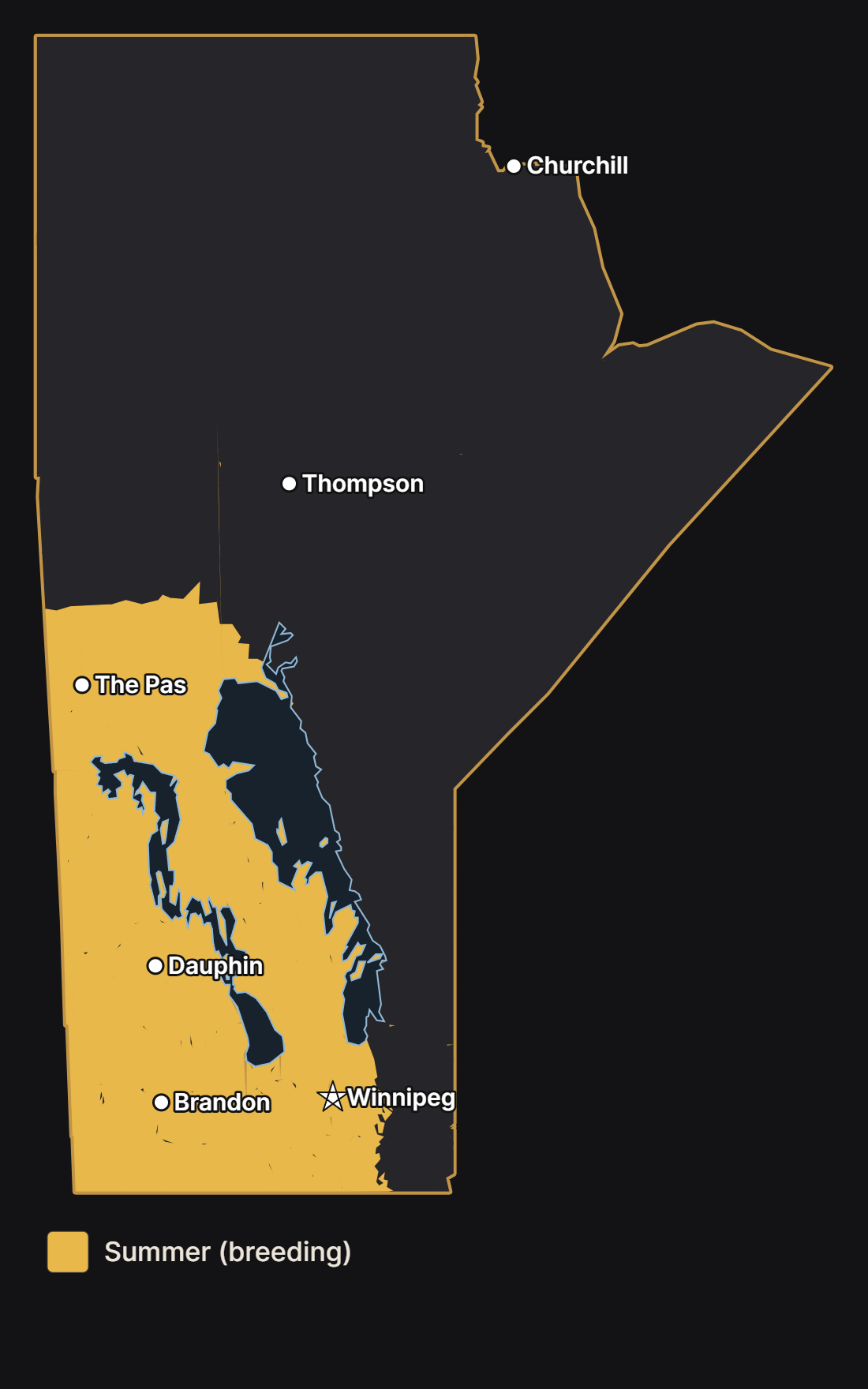
Where and when you can find the great blue heron in Manitoba depends on the season and the habitat. You can see more species in the Manitoba birds section.
Back to Manitoba bird photography, or see the portfolio.