
Sharp-tailed grouse
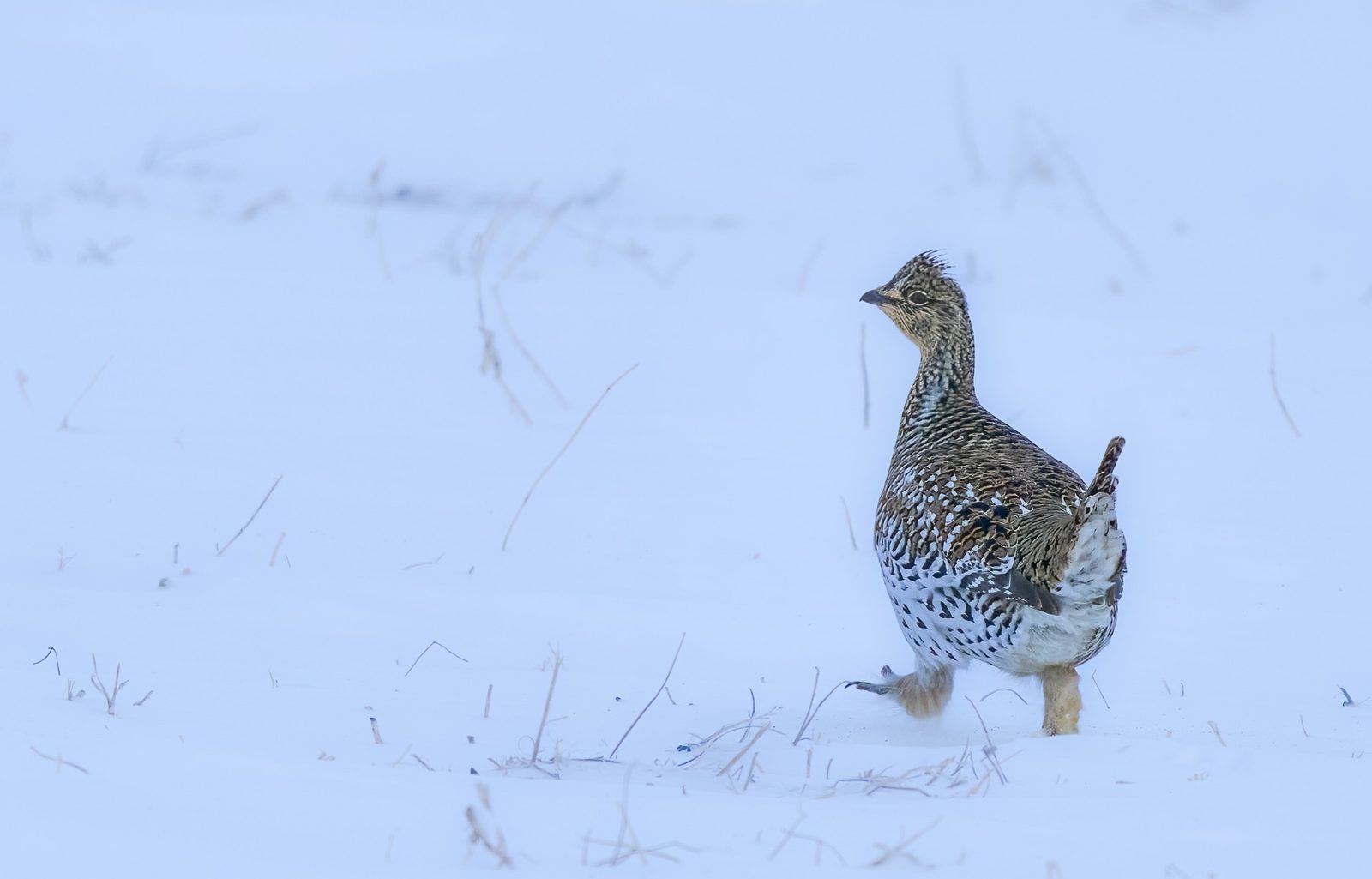
Spring on the Manitoba prairie belongs to the sharp-tailed grouse. At dawn, the males gather on traditional dancing grounds known as leks, where they stamp their feet in a blur, rattle their tails, and inflate purple air sacs on their necks, all to impress the females.
It is a bird of grassland and brushy edges, with a spotted brown body, a pale belly, and a short pointed tail with white outer feathers. It stays in Manitoba all year, burrowing into snowdrifts to roost in winter and eating buds, berries, and seeds. Sharp-tailed grouse are a cultural icon of the prairies, and their dance has been watched for centuries.
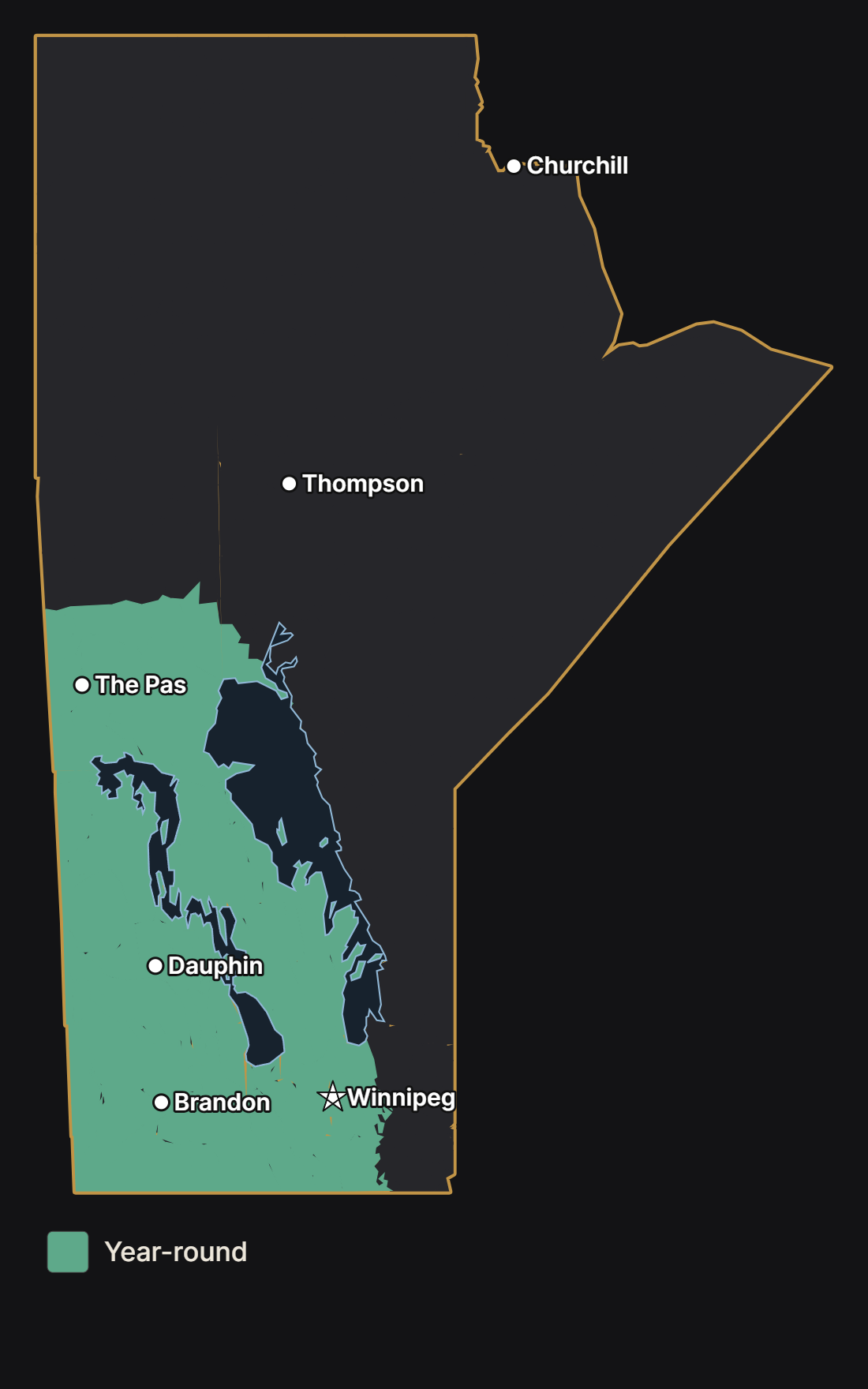
In Manitoba, look for the sharp-tailed grouse on open grassland, in prairie parkland, and along the edges of aspen stands. In winter, small flocks gather near shelterbelts, farmyards, and fields where seeds, buds, and berries are easy to find. The map shows the parts of the province where this bird lives all year, with major cities and lakes for reference.
For more on the sharp-tailed grouse and its habitat, see its species guide at All About Birds.
Here are some of my favourite frames of this bird.
Field notes in photographs
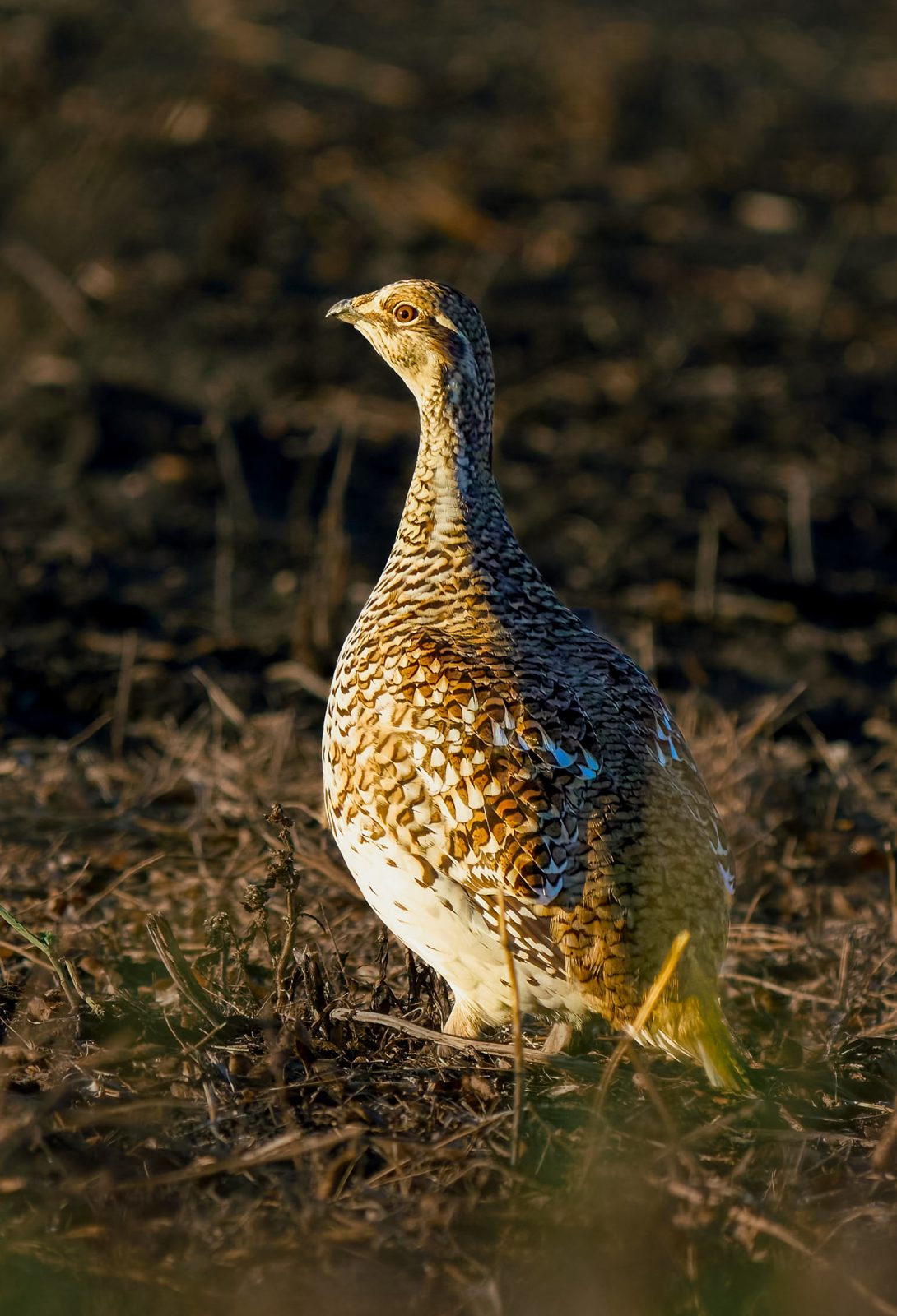
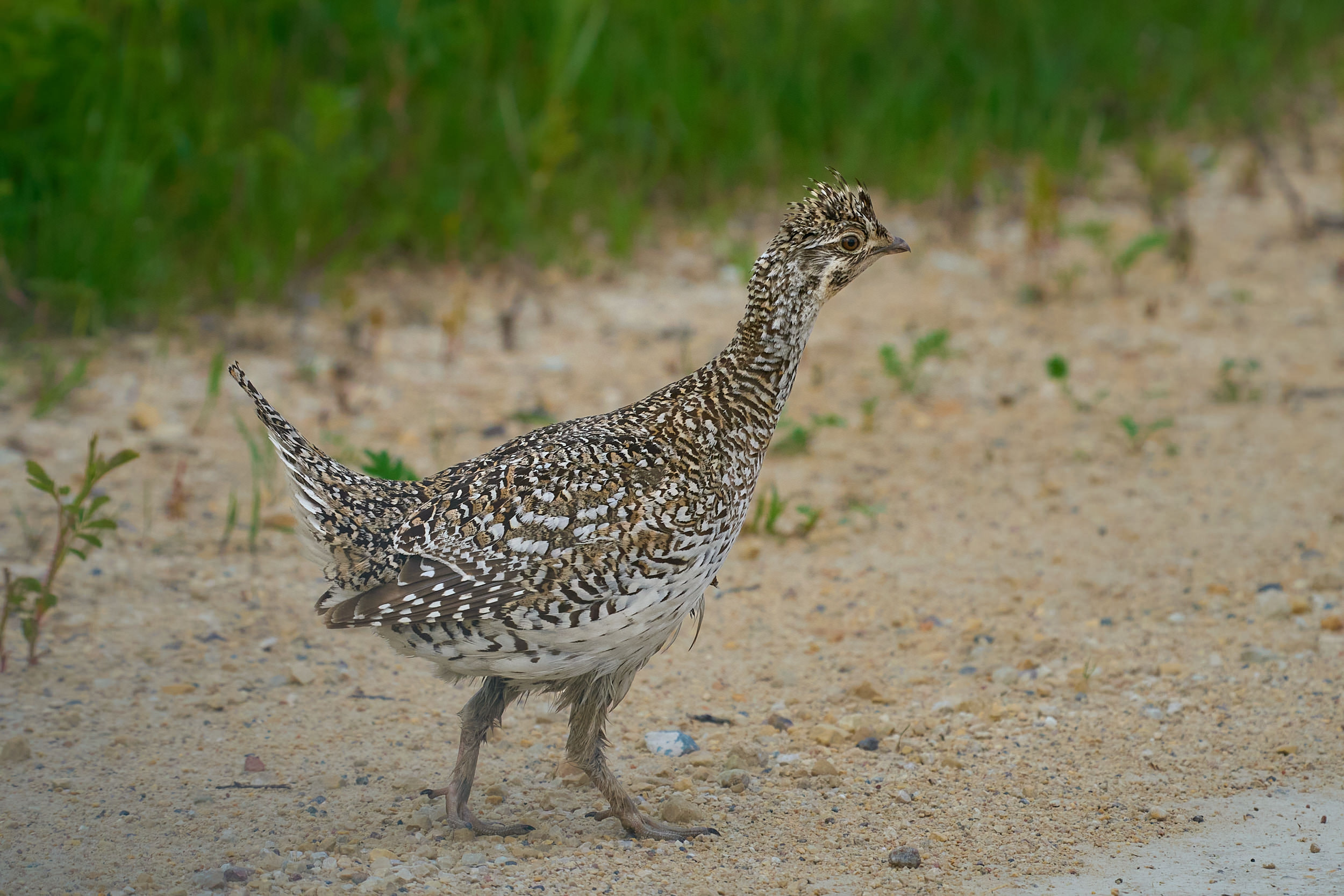
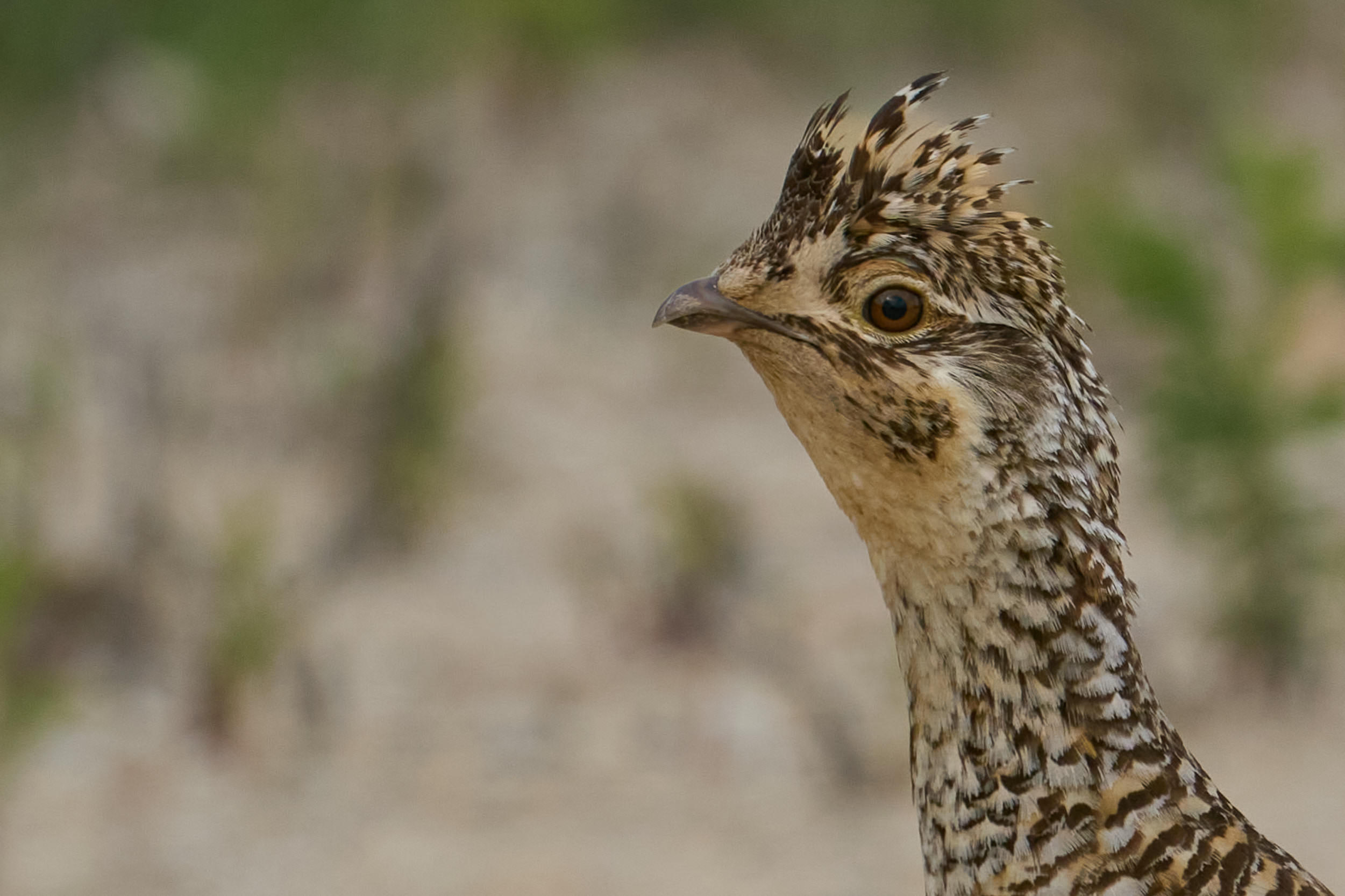
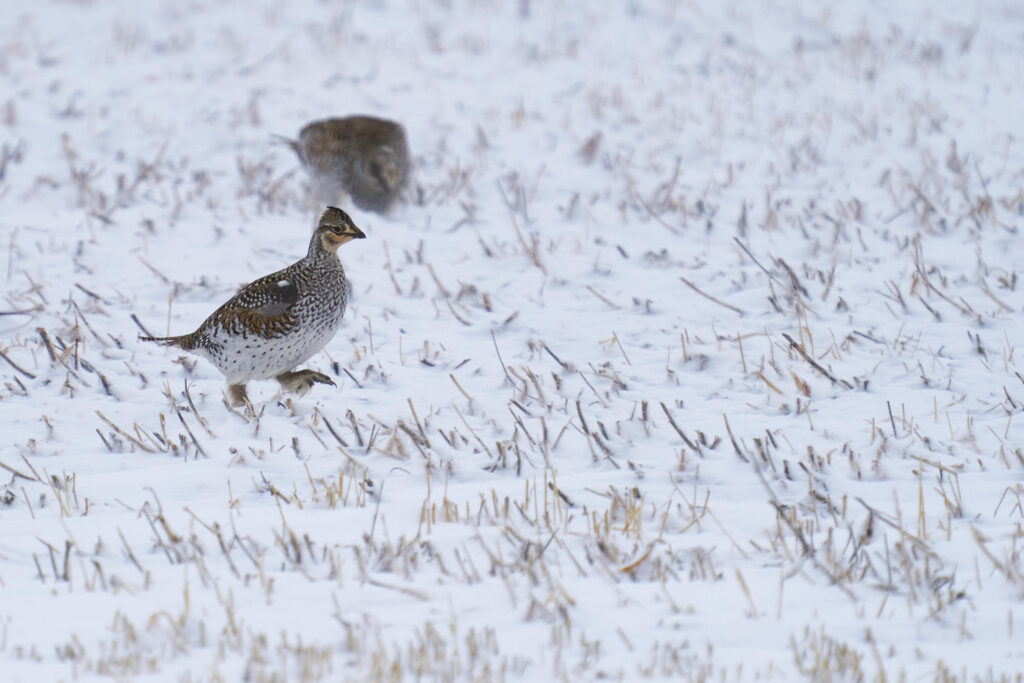
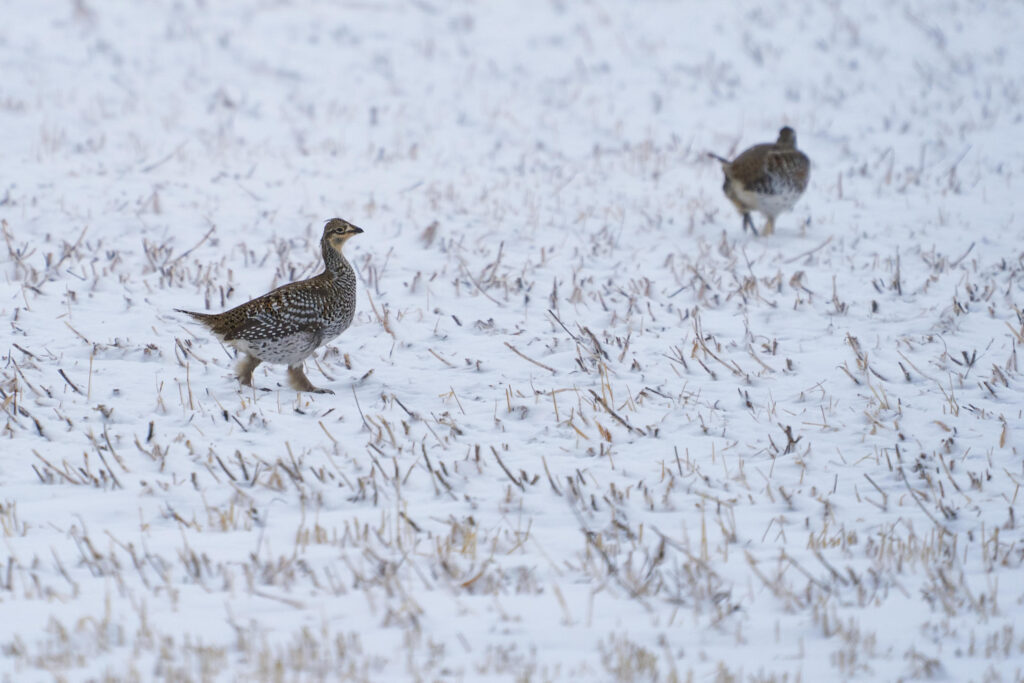
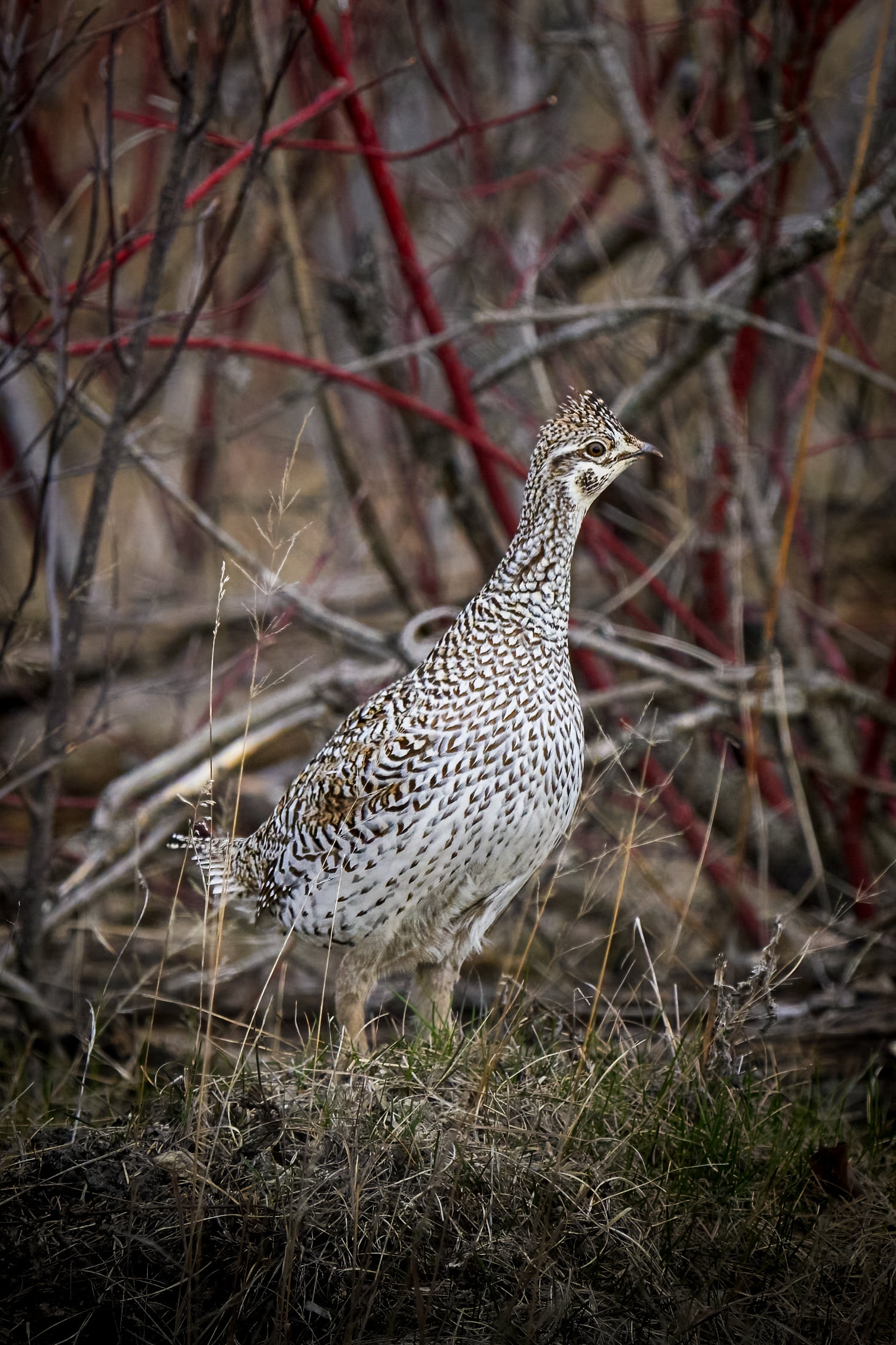
Sharp-tailed grouse Manitoba sightings
Where and when you can find the sharp-tailed grouse in Manitoba depends on the season and the habitat. You can see more species in the Manitoba birds section.
Back to Manitoba bird photography, or see the portfolio.