
Horned lark
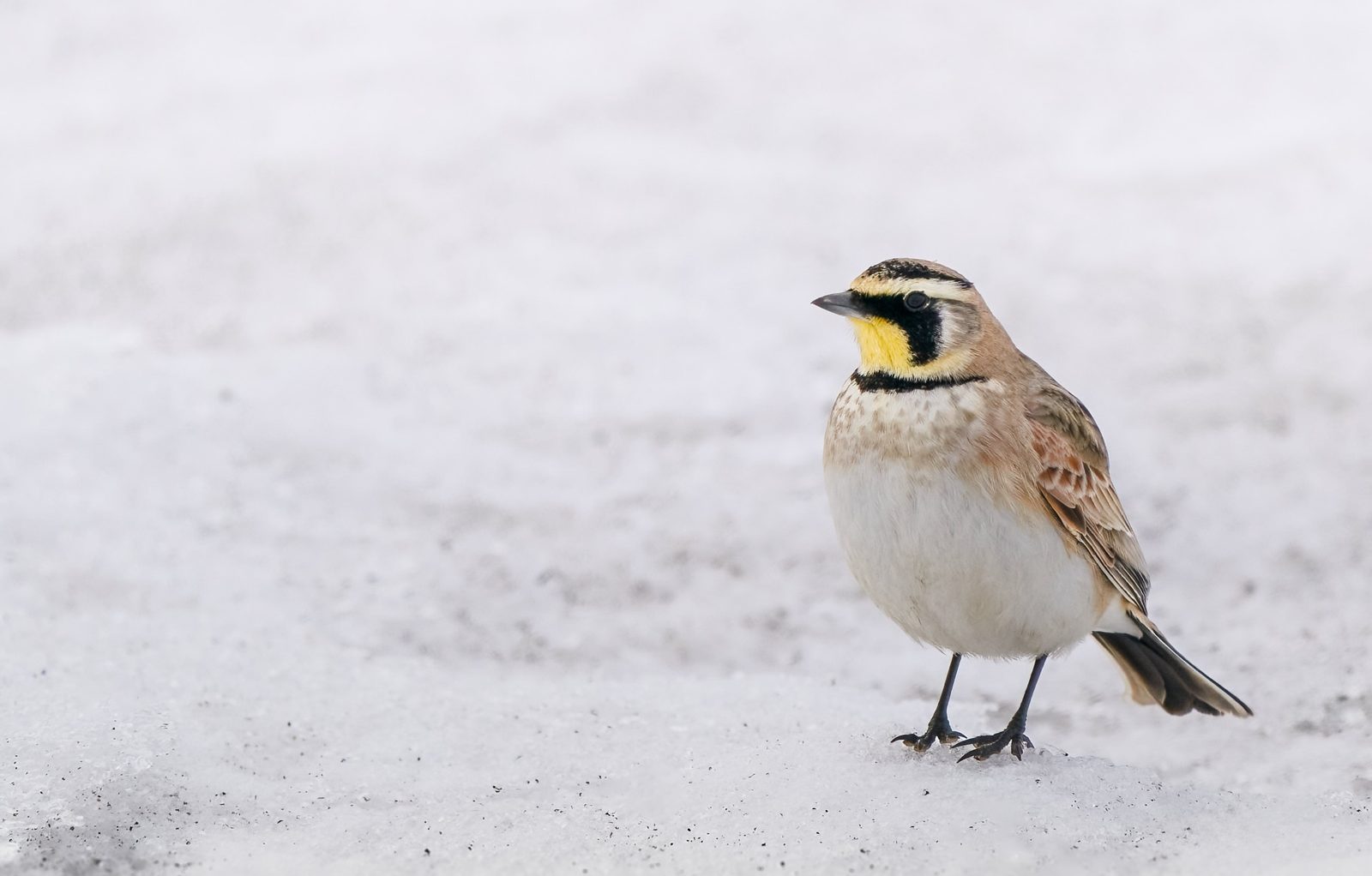
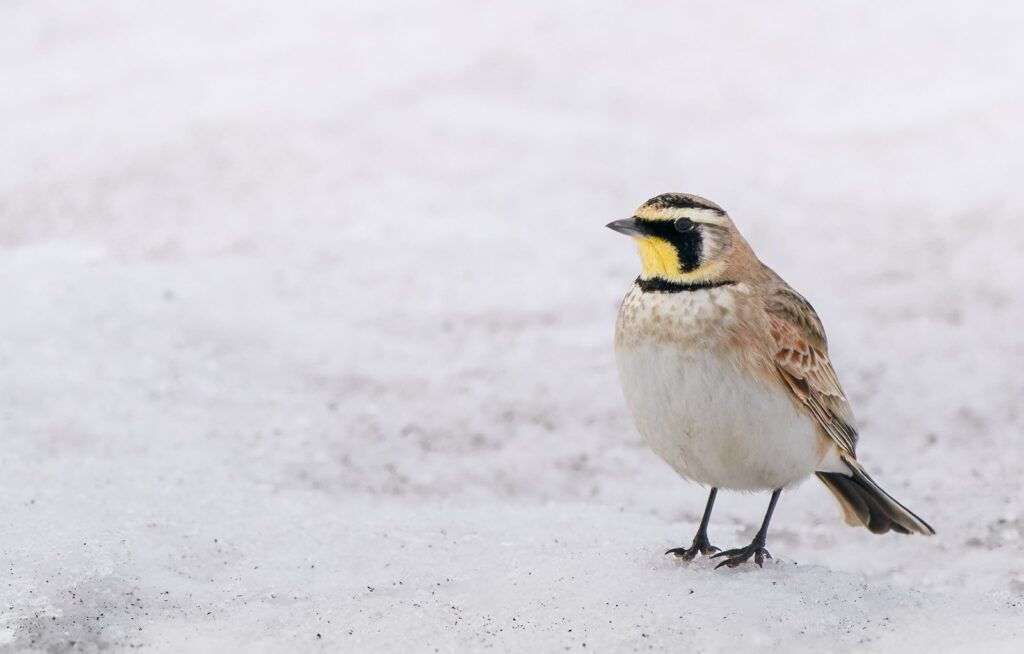
The horned lark is one of the first songbirds to return to the prairie in late winter, sometimes appearing while the snow is still on the ground. It is a small, ground-loving bird with a yellow face, a black mask, and two tiny black feather tufts that look like horns. It runs rather than hops, along gravel roads and across bare fields.
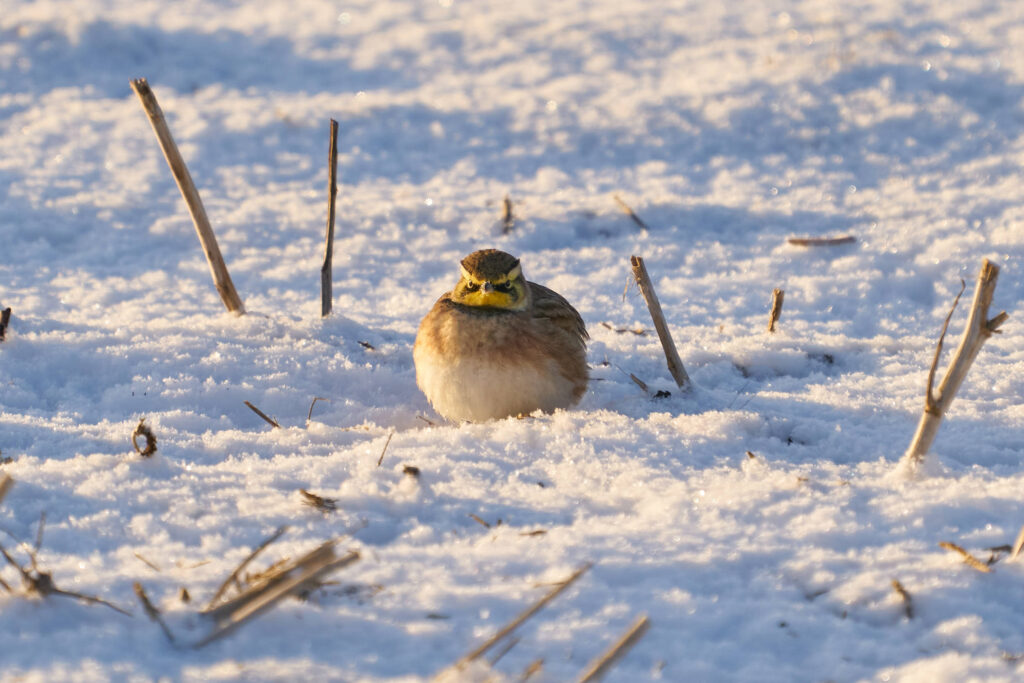
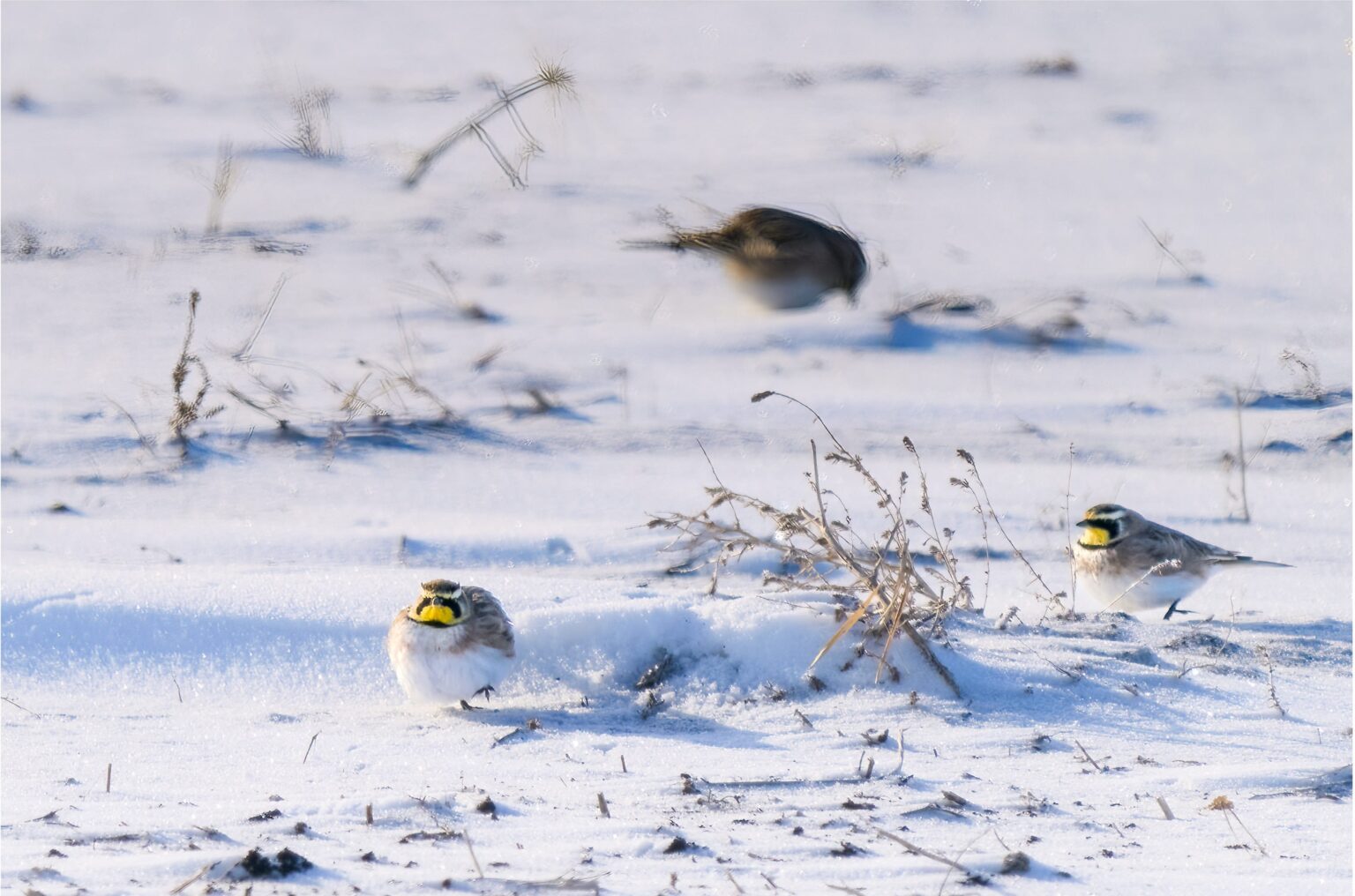
Horned larks nest on the ground in open country, from the Arctic tundra to the southern prairies. The male sings a tinkling song while in flight, climbing high and then dropping. In winter, flocks gather on snow-swept fields and roadsides to pick seeds, often alongside longspurs and snow buntings, and they are a reminder that the prairie is never empty.
I like the tiny black “horns” and yellow face of a horned lark, a bird that makes its home on bare, open ground.
Curious about the horned lark and its habitat? Learn more on its page at All About Birds.
Field notes in photographs
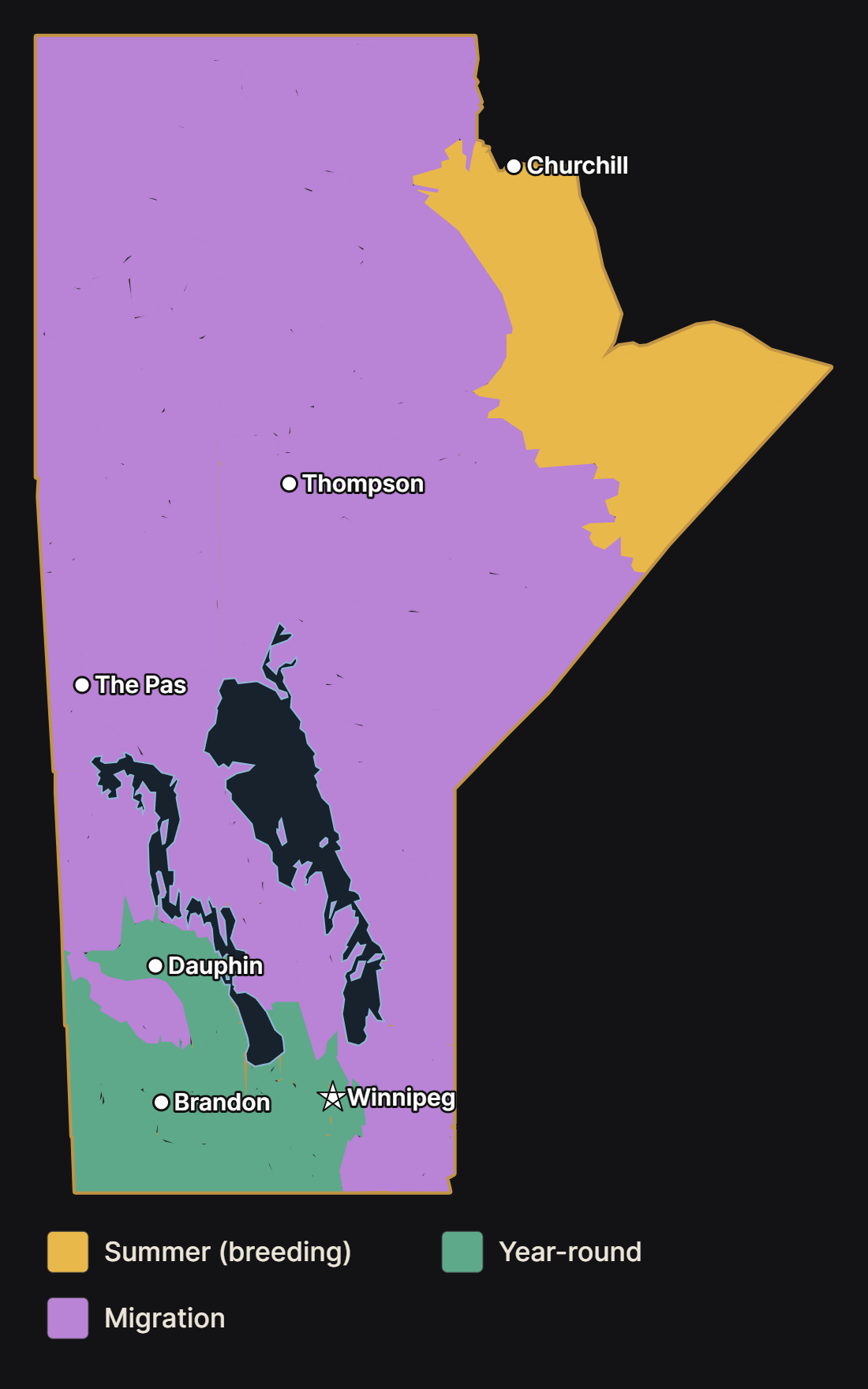
Horned lark Manitoba sightings
Where and when you can find the horned lark in Manitoba depends on the season and the habitat. You can see more species in the Manitoba birds section.
Back to Manitoba bird photography, or see the portfolio.